
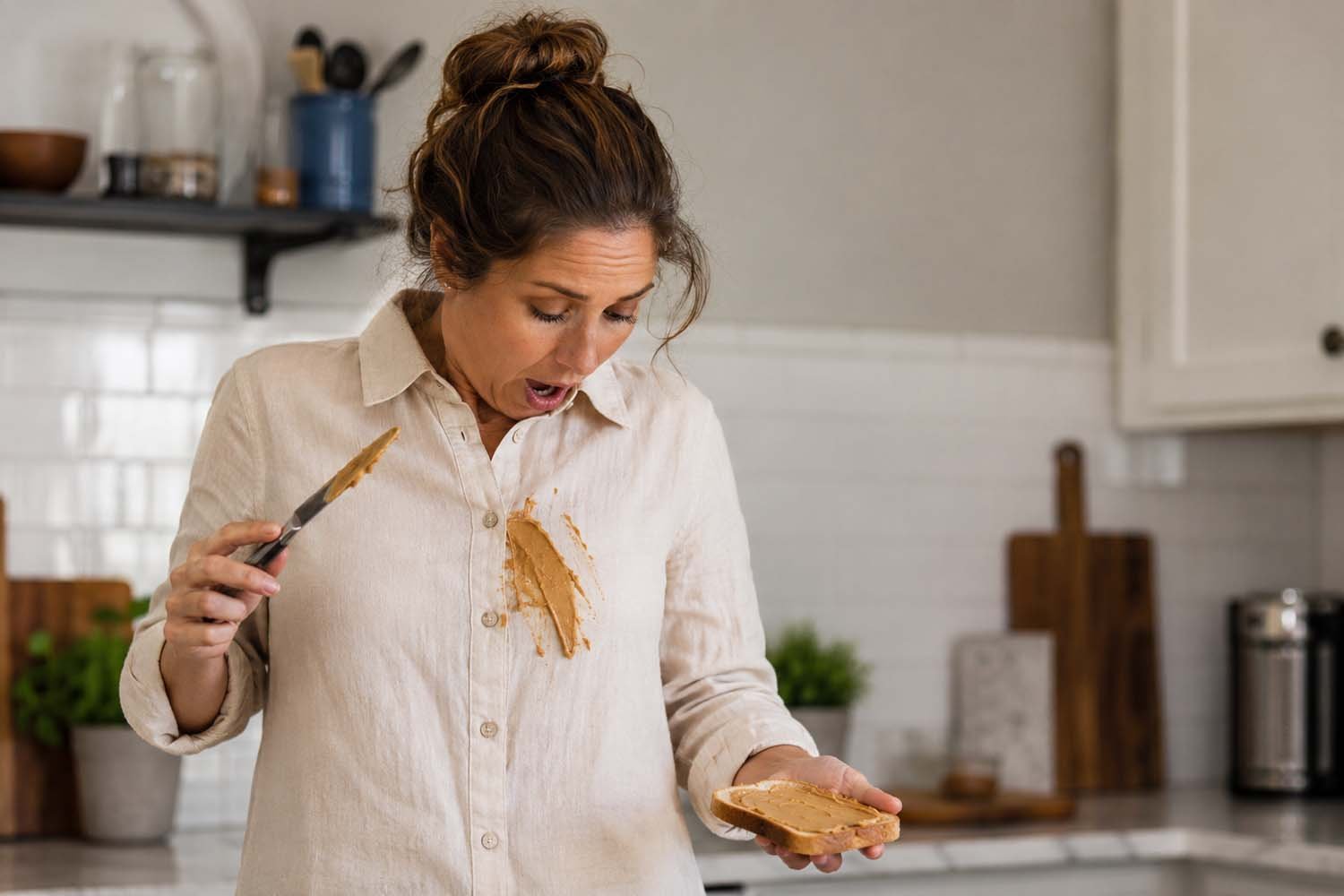
I was making toast with peanut butter and the knife slipped. A good-sized smear landed on the front of my shirt.
I did what everyone does: grabbed a damp paper towel, blotted at it, rinsed it under the tap, and tossed the shirt in the wash that evening. The next morning I pulled it out and held it up to the light. The stain was lighter. It was also still there, a faint greasy ring at the exact spot, slightly darker than the fabric around it.
I washed it again. Still there. I had been treating a peanut butter stain as if it were one problem when it is actually two. The oil and the protein in peanut butter each require different chemistry to remove, and most cleaning methods only address one of them. That leftover ring is almost always the protein component that dish soap missed.
Once you understand the two-part nature of this stain, the fix is straightforward. Here’s exactly what to do, in the right order.
The Short Answer:
To get peanut butter out of clothes: scrape off the bulk, absorb surface oil with baking soda or cornstarch, treat with dish soap for the oil, follow with enzyme stain remover for the protein, wash in warm water, and confirm the stain is gone before drying.
In full: scrape off as much peanut butter as possible with a dull knife or spoon, working from the outside of the stain toward the center. Sprinkle baking soda or cornstarch over the stain and let it sit for 15 to 30 minutes to absorb surface oil, then brush it off. Apply dish soap directly to the stain, work it in gently, and let it sit for 10 to 15 minutes to address the oil. Follow with an enzyme-based stain remover for 15 to 30 minutes to address the protein. Wash in warm water and check before drying. Do not put the garment in the dryer until the stain is completely gone.
For a dried or already-washed-and-dried stain: apply dish soap directly to the dry fabric, work it in gently, leave for 30 minutes, then follow the full protocol above before rewashing.
Why Peanut Butter Stains Are Harder Than They Look
Peanut butter is roughly 50% fat by weight, plus proteins, sugars, and salt. When it contacts fabric, it behaves as a combination stain: the oils penetrate deep into the fiber structure while the proteins bond to the fiber surface. These two components require different chemistry to lift.
Oil is hydrophobic and responds to degreasing agents like dish soap, which emulsifies the fat and carries it away. Protein responds to enzyme cleaners that contain protease, an enzyme that breaks down protein bonds at a molecular level. Treating only with dish soap removes most of the oil but leaves protein residue behind. That residue is the ring you find after washing. Treating only with enzyme cleaner addresses protein but may leave oily residue. The correct approach is degreaser first, then enzyme, in that order.
Sugar compounds the problem. As peanut butter dries, its residual sugars concentrate and lower the local pH, which makes them sticky and increasingly adhesive to fabric fibers over time. Heat accelerates this: hot water can cook both the protein and sugar components into fabric, making them significantly harder to lift. This is why warm water (not hot) is recommended throughout this guide, and why the dryer is the enemy of every peanut butter stain that hasn’t been fully cleared.
The Rule That Matters Most: Scrape Before You Do Anything Else
Every stain guide says this and most people skip it. Scraping peanut butter off fabric before applying any liquid is the single highest-leverage step in the entire process. Here’s why it matters more than it sounds.
When you apply water, dish soap, or any liquid to peanut butter that is still sitting on the fabric surface, you are dissolving it into the fiber. You are converting a stain that is partially sitting on top of the fabric into one that is fully inside it. Scraping first removes the bulk of the stain physically before any chemistry begins, which dramatically reduces how much oil and protein the fabric absorbs.
Use a dull knife, the back of a spoon, or a stiff card. Work from the outside edge of the stain toward the center. Never scrape outward, which spreads the stain. Don’t press hard enough to push the peanut butter deeper. Lift it off. Then proceed to the rest of the protocol.
Does Peanut Butter Stain Clothes Permanently?
Peanut butter can permanently stain clothes if the oils are allowed to set for more than 24 to 48 hours on natural fibers like cotton and linen, or if heat is applied before the stain is removed. On synthetic fabrics like polyester, permanent staining is less common because synthetic fibers are less absorbent, but heat still sets the oil into the polymer structure and makes it much harder to lift.
The most common cause of a permanent peanut butter stain is running the garment through the dryer before the stain was fully treated. Heat bonds the fat and protein residue to the fibers in a way that repeated washing cannot reverse. If you have already dried a stained garment, it is not necessarily ruined, but rescue becomes more difficult. See the dried stain protocol below.
The Absorption Powder Step Most People Skip
After scraping, and before applying any liquid, sprinkling an absorbent powder over the stain is the most underused step in peanut butter stain removal.
Baking soda, cornstarch, or talcum powder all work by drawing surface oil out of the fabric fibers through absorption. Spread a generous layer over the stained area, pressing it gently into the fabric without rubbing. Leave it for 15 to 30 minutes. The powder will absorb a significant amount of oil from the fiber surface before any liquid treatment begins, which means less oil for the dish soap to have to emulsify. Brush or shake it off over the trash and proceed to the dish soap step.
This step costs 15 minutes and noticeably reduces the amount of oil treatment the stain requires afterward. For a fresh peanut butter stain, it is worth doing every time.
Four Methods, Ranked
1
2
3
4
Pro tip: The scrape-first rule applies everywhere peanut butter goes, not just clothes. If you’re making rainbow spring rolls with peanut sauce or apple pretzel nachos and peanut butter lands on an upholstered chair or the tablecloth, scrape before you blot. Adding liquid to peanut butter before removing the bulk drives it into the surface. The scrape-first rule applies to every fabric and surface.
If you regularly cook with peanut butter and find yourself treating these stains often, keeping a stain remover pen in the kitchen drawer is worth it. A few seconds of enzyme treatment applied directly to a fresh stain before it dries is more effective than the full protocol the next morning.
Same oil-based chemistry applies to butter and cooking oil stains: how to get butter out of clothes and how to get grease out of clothes cover the sister stains.
Stain Variants: What Situation Are You In?
Fresh stain, still wet: The best case. The absorption powder step makes the biggest difference here. Scrape, powder, dish soap, enzyme, warm wash. Most fresh peanut butter stains clear completely in one pass.
Dried stain, not yet washed: Rehydrate the stained area with a small amount of warm water before applying dish soap. This softens the dried oil and protein, making them more receptive to the cleaning agents. Follow the full two-part protocol.
Washed but not dried (stain still visible after machine wash): Do not put it in the dryer. Repeat the dish soap and enzyme protocol, paying attention to whether it’s the oil component (shiny or greasy-looking residue) or the protein component (dull, slightly stiff ring) that remains. If it’s the protein ring, enzyme cleaner is the priority. If it’s still greasy, dish soap and a repeat wash.
Already run through the dryer: The hardest situation. Heat has bonded the fat and protein residue to the fabric. Apply dish soap directly to the dry stain, work it in gently with a soft brush, and leave it for 30 minutes before adding any water. Then add warm water, work in enzyme cleaner, and wash. Expect to repeat the process two or three times. WD-40 applied to the dry stain before dish soap is worth trying on cotton and denim.
Jelly also on the shirt: PB&J stains are a combination of peanut butter’s oil and protein with jelly’s fruit pigment and sugar. Scrape first, then treat the peanut butter components as above. The jelly stain responds to enzyme cleaner and a cool water rinse. Treat them simultaneously with the enzyme step rather than separately.
By Fabric Type
Cotton and cotton blends: The most forgiving situation. Cotton tolerates dish soap, enzyme detergent, warm water, and oxygen bleach. This is the fabric where the full two-part protocol works best and most reliably. Check before drying every time.
Denim: Same chemistry as cotton and equally forgiving. The main risk with denim is set stains; the dense weave traps oil deeply. Warm water and enzyme pre-treatment, and allow extra dwell time for enzyme cleaner on denim.
Polyester and synthetic blends: Polyester is hydrophobic, meaning it repels water but absorbs oil readily. Dish soap and enzyme detergent work well. Avoid hot water, which can set oil into the synthetic polymer structure. Warm water only. WD-40 can cause issues with some synthetics; test on a hidden area first.
Silk: Do not use enzyme detergent on silk. Protease enzymes break down protein, and silk is a protein fiber. Enzyme cleaner applied to silk can permanently damage the fabric structure. Blot excess oil with a clean cloth, apply a small amount of mild detergent formulated for delicates in cool water, work gently, and rinse. For a significant peanut butter stain on silk, a dry cleaner is the right call. Tell them what it is.
Wool and cashmere: Same warning as silk. Protease enzymes in standard enzyme cleaners can damage wool protein fibers. Use only a wool-safe detergent in cold water. No hot water, no standard enzyme cleaner, no machine spin cycle. For any significant stain on wool or cashmere, professional cleaning is strongly recommended.
White and light-colored fabrics: Same protocol as cotton with one addition: oxygen bleach can be added directly to the wash cycle to address any remaining discoloration. Do not use chlorine bleach on peanut butter stains; chlorine bleach is not recommended for protein-based stains and can damage fabric. Use oxygen bleach instead.
Dry-clean-only garments: Scrape carefully, blot gently with a clean dry cloth to absorb surface oil, and get it to a dry cleaner as quickly as possible. Do not apply water. Tell the cleaner it is a peanut butter stain so they can address both the oil and protein components.
The Full Protocol, Step by Step
Step 1: Scrape. Use a dull knife or spoon to lift as much peanut butter off the fabric as possible, working from the outside of the stain toward the center. Do not press the peanut butter deeper. Lift it off.
Step 2: Absorb. Sprinkle baking soda or cornstarch generously over the stain. Press gently into the fabric without rubbing. Leave for 15 to 30 minutes. Brush or shake off over the trash.
Step 3: Degrease. Apply dish soap directly to the stain. Work in gently with a fingertip or soft brush. Let sit for 10 to 15 minutes. Rinse with warm water from the back of the fabric.
Step 4: Enzyme treatment. Apply enzyme-based stain remover to the same area. Let sit for 15 to 30 minutes. Do not rinse this off before washing.
Step 5: Wash in the warmest water the care label allows. Use your regular laundry detergent. For white fabrics, add oxygen bleach to the wash cycle.
Step 6: Check before drying. Remove from the washing machine and inspect in good light. If any grease or residue is visible, do not dry. Repeat Steps 3 through 5.
Step 7: Air dry and reinspect. Even if the stain appears gone wet, confirm it is gone dry before the next machine wash. Some residue is only visible once the fabric has dried completely.
Never do these things:
- Don’t put it in the dryer before confirming the stain is gone. Heat permanently bonds oil and protein residue to fabric fibers. This is the single most common cause of a peanut butter stain becoming permanent.
- Don’t use hot water as a first step. Hot water can cook the protein component of peanut butter into fabric fibers, making it significantly harder to remove. Always start with warm water, not hot.
- Don’t rub the stain. Rubbing spreads the oil and protein laterally across a wider area and pushes them deeper into the fiber structure. Blot and press only.
- Don’t apply liquid before scraping. Adding water or cleaning agents to peanut butter that is still sitting on the fabric surface drives it into the fibers. Scrape first, every time.
- Don’t use enzyme cleaner on silk or wool. Protease enzymes in standard enzyme cleaners break down protein fibers. Silk and wool are protein fibers. Enzyme cleaner on these fabrics can cause permanent damage.
- Don’t use chlorine bleach. Chlorine bleach is not recommended for protein-based stains and can damage fabric. Use oxygen bleach instead.
What Does Not Work
Cold water alone: Cold water alone, without a degreaser, cannot emulsify the oil component of a peanut butter stain. It removes some water-soluble residue and helps prevent protein from setting further, but it leaves the oil and most of the protein in place. It feels productive and accomplishes very little for the stain itself without a cleaning agent alongside it.
Dish soap alone: Handles the oil component but leaves protein residue behind. This is why the stain ring remains after washing. Dish soap is step one of a two-part treatment, not the complete treatment.
Rubbing with a wet napkin: The instinctive response. Spreads the oil across a wider area, pushes it deeper, and makes the eventual cleaning harder. Blot and lift; never rub.
More oil or butter: Sometimes suggested as “like dissolves like.” Adding oil to an oil stain increases the total amount of oil in the fabric. This does not help.
Bar soap: The fatty molecules in bar soap can compound an oil-based stain. Liquid dish soap is the right tool.
Waiting to see if it washes out: Peanut butter oil migrates deeper into fabric over time. A stain that is treated immediately requires one pass. A stain left overnight may require several. A stain that has been through the dryer may not fully come out.
The One Thing I Wish I’d Known Sooner
The shirt was a complete save. I rewashed it with enzyme cleaner after the second failed attempt and it came out clean. But I had already gone through two wash cycles treating it as a grease stain when the problem was that I was ignoring the protein half. The greasy ring that persists after washing is almost never oil residue. It’s protein residue. Enzyme cleaner in the right place solves it in one pass. If your peanut butter stains keep surviving the wash, you’re probably skipping the enzyme step.
Final Thoughts
Peanut butter stains are persistent not because they’re unusual but because they’re a two-part problem that most single-step treatments can’t fully address. Oil needs degreaser. Protein needs enzyme cleaner. Sugar needs to be caught before heat sets it. Do those three things in the right order and most peanut butter stains come out completely, even dried ones with a little extra dwell time.
If you’re curious how long your peanut butter will last before the next spill happens, see the guide to does peanut butter go bad. For the same oil-based chemistry on other common stains, see how to get butter out of clothes and how to get grease out of clothes.
Frequently Asked Questions
Does peanut butter stain clothes permanently?
Peanut butter can permanently stain clothes if the oils are left untreated for more than 24 to 48 hours on natural fibers, or if the garment is run through the dryer before the stain is removed. Heat bonds the fat and protein residue to fabric fibers in a way that repeated washing cannot reverse. Most peanut butter stains treated before the dryer come out completely with the right protocol.
Does peanut butter come out in the wash?
Not reliably without pre-treatment. Machine washing alone removes some of the oil but leaves the protein component behind as a dull residue ring. Pre-treating with dish soap and enzyme stain remover before the wash cycle is what fully clears the stain. Always check before drying; if any residue remains after washing, repeat the pre-treatment before the garment goes in the dryer.
How do you get dried peanut butter out of clothes?
Rehydrate the dried stain with a small amount of warm water to soften the hardened oil and protein. Apply dish soap and work it in gently, then apply enzyme-based stain remover. Let both sit for 30 minutes each. Wash in the warmest water the care label allows and check before drying. For a stain that has been through the dryer, apply dish soap directly to the dry fabric, work it in with a soft brush, leave for 30 minutes before adding water, then proceed with the full protocol.
Can you use WD-40 to remove peanut butter stains?
Yes, on dried or set stains where the oil has hardened in the fabric. WD-40 is a petroleum-based solvent that dissolves hardened vegetable oil effectively. Apply it to the stain, let it sit for 15 to 20 minutes, then apply dish soap to remove the WD-40 residue, rinse, follow with enzyme pre-treatment, and wash. It adds a step but is effective on dried stains that dish soap alone can’t penetrate. Test on a hidden area first, and use cautiously on synthetics.
How do you get peanut butter out of a white shirt?
Follow the standard two-part protocol: scrape, absorb with baking soda or cornstarch, dish soap pre-treatment, enzyme pre-treatment, wash. For white fabric specifically, add oxygen bleach to the wash cycle to address any remaining discoloration. Chlorine bleach is not recommended for protein-based stains; use oxygen bleach instead.
How do you get peanut butter out of delicate fabric?
For silk: do not use enzyme detergent. Protease enzymes break down protein fibers and silk is a protein fiber. Blot excess oil, apply mild detergent formulated for delicates in cool water, work very gently, rinse. For significant stains on silk, take it to a dry cleaner and tell them what it is. For wool and cashmere: same warning applies. Use only wool-safe detergent in cold water. Professional cleaning is the right call for any significant peanut butter stain on wool.
What removes peanut butter stains from clothes most effectively?
The combination of dish soap followed by enzyme-based stain remover is the most effective approach for most washable fabrics. Dish soap emulsifies the oil component; the enzyme cleaner breaks down the protein component. Neither fully removes the stain on its own. The scrape-first step and the absorption powder step reduce how much of the stain the cleaning agents need to address. For set or dried stains, an oxygen bleach soak after the two-part pre-treatment gives the best results.
How do you get peanut butter out of carpet?
Scrape off as much as possible with a dull knife or spoon, working from the outside in. Blot with a clean white cloth to absorb surface oil; do not rub, which spreads the stain into the carpet pile. Mix one tablespoon of dish soap and one tablespoon of white vinegar with two cups of warm water. Apply the solution to the stain with a clean cloth, blotting from the outside in. Rinse by blotting with cold water. Repeat until the stain lifts. For a dried or set peanut butter stain in carpet, apply an enzyme-based carpet cleaner and follow the product instructions. Air dry away from heat.
Better Living may earn commissions through affiliate links and may occasionally feature sponsored or partner content. If you make a purchase through our links, we may receive a small commission at no cost to you.
