

Tapatíos went crazy following Mexico’s World Cup win against South Korea in Guadalajara Stadium, while also embracing Korean visitors who were in town for the game. In other news, researchers at the University of Guadalajara have identified a new reason for the city’s recurrent flooding problem and MiBici has upgraded its fleet with new e-bikes.
Korean fans descended on Guadalajara, and Mexicans were smitten
An estimated 2,000 fans from South Korea have visited Guadalajara during the 2026 World Cup, and have fully embraced the experience, enjoying cantaritos (tequila-based cocktails served in small clay jars), attending lucha libre matches and basking in the locals’ warm hospitality.
Despite a significant language barrier (South Korean tourists generally speak English as a second language), there has been widespread enthusiasm for South Korea’s fans.
In the streets of the Historic Center (both in Guadalajara and Zapopan), the scenes on match days have been pure celebration. It’s been common to see Mexican fans singing, dancing and taking selfies with South Korean fans.
“Everyone is super friendly and has supported us a lot,” noted one South Korean visitor.
Despite the warm welcome, it was a difficult week for the Republic of Korea team. Players and South Korean sports media got into a tussle, a mysterious drone was spotted flying over the team’s training camp and the skies dumped plenty of rain.
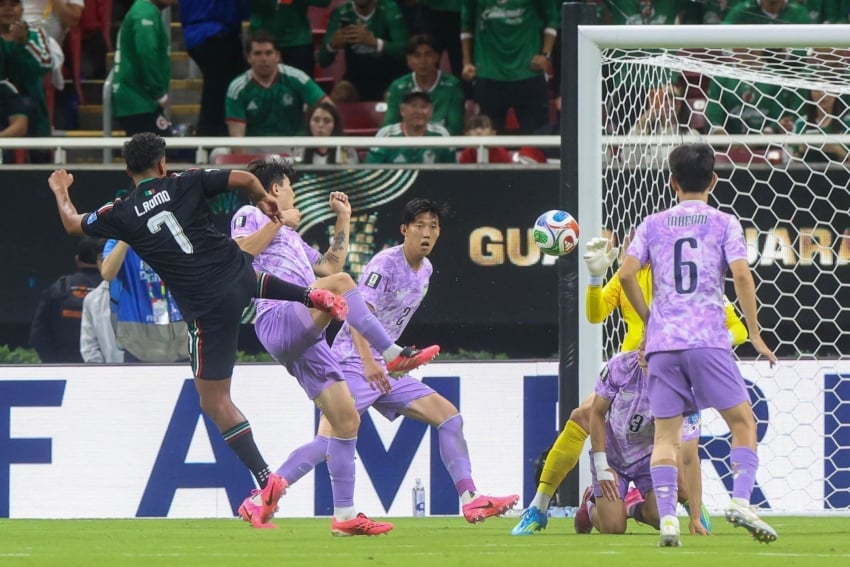
In last Thursday’s highly anticipated head-to-head, Mexico and South Korea dueled for more than half the match with no score. Then, early in the second half, Mexico took advantage of a botched defensive play by Korea’s goalie Kim Seung-gyu, and midfielder Luis Romo found the net.
When Mexico had at last sealed the victory, local fans erupted in spontaneous dancing, singing, bawdy chanting and flag-waving all over town, with plenty of tequila and beer to lubricate the celebration.
The revelry lasted into early Friday morning around Zapopan’s historic center, with no South Korean fans in sight.
Flooding in Guadalajara from summer rains exposes infrastructure gaps
When dangerous flooding occurs around Guadalajara in summertime, inundating roads, cars and even pedestrians, local officials typically blame either excess rainfall within a short timespan or sewers blocked by garbage.
But researchers at the University of Guadalajara (UDG) are now calling attention to an entirely different reason for the widespread flooding.
The UDG team claims that decades of disorganized growth in Mexico’s second-largest city is now the main cause of repeat flooding. The academics recently identified 670 recurring flood points throughout the Guadalajara Metro Area (GMA), several hundred of which pose an especially high risk to residents due to the speed and depth of flooding following major storms.
Luis Valdivia Ornelas, one of the UDG researchers, warned that underpasses, valleys and other low-lying areas continue to be the most dangerous places, and urged residents not to attempt crossing flooded streets during and immediately after storms.
The specific locations considered especially high risk for dangerous flooding are Ciudad del Sol, Avenida Patria, Puerto Melaque and San Andrés. Ornelas also noted that each flood-prone area is unique and warrants a dedicated study to determine what types of interventions are needed to remedy drainage problems.
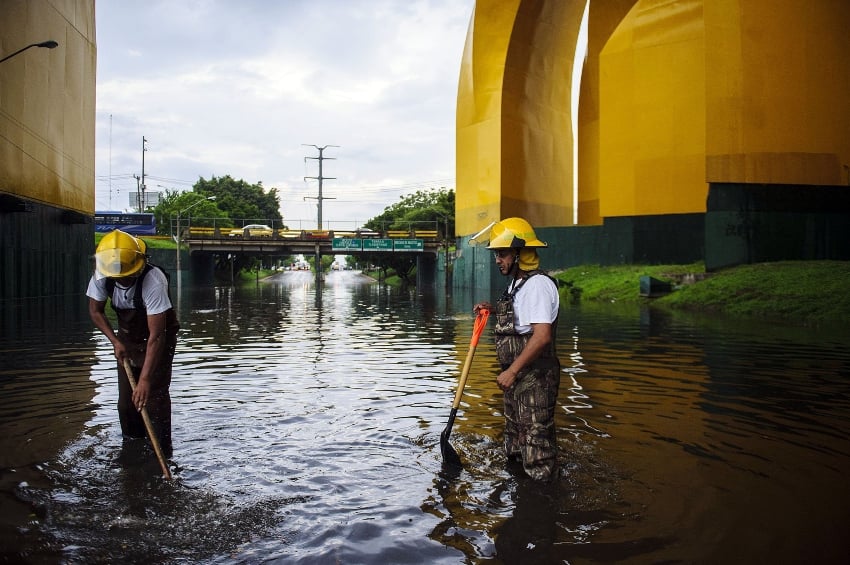
In a critique of current methods for managing flood risk, the team cautioned against overreliance on sumps and pumps to facilitate drainage.
The reason? Human failure to turn on the pumps can result in catastrophic flooding during a major storm, with high water causing considerable property damage and danger to the public.
Furthermore, the UDG researchers questioned city officials’ downplaying of the problem and urged them to expand urban green space and urban planning to avoid further loss of life during the rainy season.
Meanwhile, an enormous sinkhole measuring approximately 25 meters long by 10 meters wide opened up this past weekend along López Mateos Avenue in Zapopan’s La Calma neighborhood. The crater-sized opening damaged water pipes and left residents in the surrounding area without water.
“They cut off the water because the pipe is indeed broken and we have no water … It’s not the first time; we’re frequently without water, and we’ve already lost electricity and internet because of that construction,” Ana Martel, a resident of the neighborhood, told El Mural.
According to SIAPA, Guadalajara’s water utility, a large construction project underway immediately adjacent to the sinkhole was a precipitating factor.
MiBici adds electric bicycles to its fleet
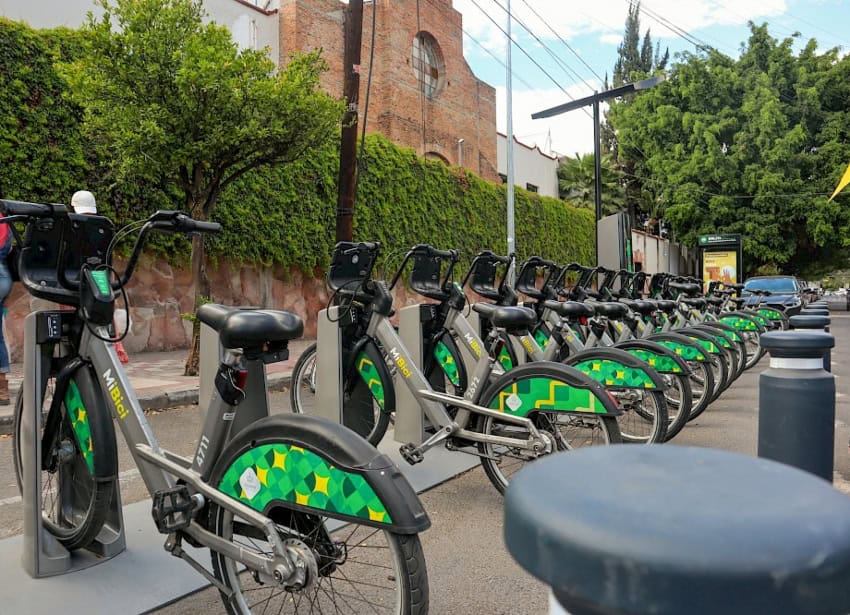
To expand residents’ usage of city bikes offered through the public MiBici program, which spans Guadalajara, Zapopan and Tlaquepaque, local officials recently unveiled a new initiative to add electric bicycles to their fleet.
Antonio Martin del Campo, head of the Metropolitan Infrastructure Agency for Mobility (AMIM), the organization responsible for the program, highlighted that this change places Guadalajara at the forefront of urban transport innovation in Latin America.
“This expansion will allow for better connection with mass transit and will strengthen both the first and last mile of people’s journeys,” he said.
For the initial rollout, 150 electric bicycles are being added to 16 stations in June. Ultimately, the program seeks to distribute 1,000 e-bikes to 470 stations.
Besides giving residents a wider range of biking options, Del Campo highlighted how the initiative also supports better connectivity with Guadalajara’s existing mass transit infrastructure.
For his part, Jalisco Governor Pablo Lemus stated that he is working to eliminate the 10-peso charge for unlocking each electric bicycle via an initiative presented to the Jalisco Congress. “Now it’s up to the representatives to approve this proposal,” he said.
According to official government statistics, MiBici’s current infrastructure includes 368 active stations, with more than 4,000 bicycles and over 212,000 registered users.
MND Writer Dawn Stoner is reporting from Guadalajara.
