
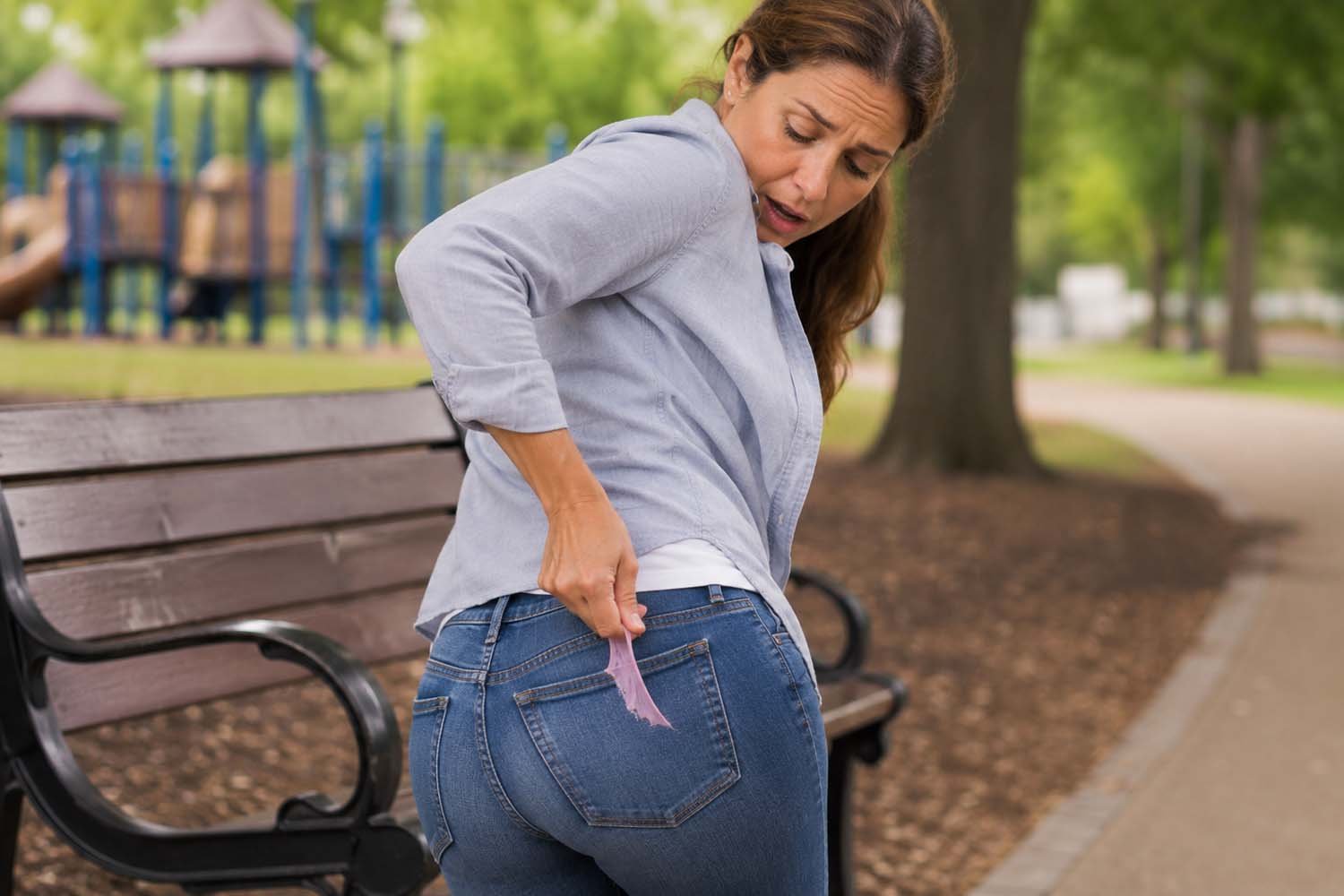
I sat down on a park bench and stood up with gum on the back of my jeans. My first instinct was to reach back and pull it off. That was the wrong move. The gum stretched, split, and worked itself deeper into the denim. By the time I stopped pulling I had made the situation significantly worse. I spent the walk home trying to remember if I had any ice at home and whether that was actually a thing that worked or just something people said.
It works. But the reason it works is not what most people think, and understanding the reason is what tells you why everything else you are probably trying is failing. Getting gum out of clothes is not a chemistry problem. It is a physics problem. Once you treat it that way, the fix is simple.
The Short Answer:
To get gum out of clothes: place the garment in a sealed plastic bag with the gum exposed and freeze for one to two hours until the gum is completely solid. Scrape the hardened gum off with a plastic spoon or dull knife. Wash the garment normally to remove any residue.
If you cannot get to a freezer: press ice directly onto the gum for 15 to 20 minutes until it hardens completely, then scrape. Or spray with canned air (computer keyboard duster) to freeze it instantly.
Do not pull at room-temperature gum. Do not put the garment in the washing machine before the gum is removed. Do not put anything with gum in the dryer.
Why Gum Is Different From Every Other Stain
Every other stain in a laundry guide is a chemistry problem. A pigment, a protein, an oil: something that can be dissolved, broken down, or lifted from fabric fibers with the right cleaning agent. Gum is not a stain in that sense. It does not absorb into fabric. It bonds to fabric. And the chemistry of that bond is what makes everything you would normally try completely useless.
Gum base typically contains synthetic polymers: primarily polyisobutylene, styrene-butadiene rubber, and polyvinyl acetate, plus resins, plasticizers, and waxes. These are the same class of materials used in car tires and industrial rubber. They are hydrophobic, meaning they repel water. They are insoluble in water. And critically, hydrophobic polymers attract other hydrophobic surfaces, which is exactly what fabric fibers are.
When you chew gum, the water-soluble components (sugar and flavoring) gradually dissolve and are released. What remains is the pure polymer base: synthetic rubber, now warm and pliable, adhering to whatever surface it contacts. When it contacts fabric, the polymers lock into the fiber structure through hydrophobic attraction. Water cannot reach them because water and hydrophobic polymers repel each other. Soap helps with many oil-based stains but cannot dissolve a cross-linked synthetic rubber polymer. Scrubbing spreads it. Pulling stretches it, and stretched polymers work their way deeper into the weave.
This is why nothing in your usual cleaning toolkit touches gum. You are not dealing with a substance you can dissolve. You need to change its physical state.
The Golden Rule: Do Not Pull at Room-Temperature Gum
Pulling at warm or room-temperature gum is the most common mistake and the one that most directly makes the problem harder. Gum’s synthetic polymers are designed to stretch rather than break: that elasticity is the entire point of the product. When you pull at room-temperature gum stuck to fabric, the polymers stretch, and as they stretch they work into the gaps between fibers, embedding more of the gum into the weave. You end up with the same amount of gum in a larger area at greater depth.
The correct first move is to stop touching it and get it cold. Cold changes the polymer’s physical state from elastic to rigid and brittle. Frozen gum does not stretch. It cracks and breaks cleanly off the surface of the fabric without penetrating further because it is no longer capable of deforming under pressure. The physics flips entirely: instead of a substance that gets worse the more you work it, you have a substance that snaps off cleanly if you work it correctly.
Does Gum Come Out of Clothes in the Wash?
No. Putting a garment with gum directly into the washing machine is one of the worst things you can do. The wash cycle uses warm or hot water, which softens the gum’s polymers and makes them more adhesive. The agitation spreads the gum within the garment and can transfer it to other items in the load. Any gum that makes it through the wash cycle intact will then go into the dryer, where heat melts it, spreads it onto the dryer drum, and causes it to transfer to every subsequent item you dry. Gum in the dryer is a serious household problem.
Always remove the gum before washing. Always check before drying.
Five Methods, Ranked
1
2
3
4
5
Pro tip: The peanut butter method works but creates a second problem. The fats in peanut butter can break down gum’s resin adhesiveness enough to loosen it from fabric, but they also leave a grease stain that you then have to treat separately. If you use peanut butter or cooking oil to remove gum, apply dish soap immediately after to address the grease before it sets, and follow the full protocol from the guide to getting peanut butter out of clothes. The freezer method is faster, cleaner, and does not create a secondary problem.
The iron-and-cardboard method (placing gum side down on cardboard and ironing the back) also works but is less reliable than freezing because it requires careful heat control to avoid melting the gum further into the fabric instead of onto the cardboard. Use it only if freezing is genuinely not possible and the fabric can tolerate medium iron heat.
Situations: What Are You Actually Dealing With?
Fresh gum, still pliable: Do not touch it further. Get it into the freezer immediately. The freezer method works on fresh gum just as well as on hardened gum. Resist the instinct to pick at it while it is soft.
Dried or hardened gum: Easier to handle than fresh gum because it is already partially set. It still benefits from full freezing before scraping. Do not assume that because it looks solid it can be picked off at room temperature; it may still have enough flexibility to embed further when handled.
Gum washed into the machine accidentally: Do not run the dryer. The gum is now on multiple items in the load. Remove each piece, treat the gum spots individually with the freezer method, and rewash before drying.
Gum in the dryer drum: Warm or hot dryer heat melts gum onto the drum surface. Dampen a cloth with rubbing alcohol or apply a small amount of WD-40 to a clean cloth and wipe the drum. Remove all residue before running the dryer again. Run an empty cycle with a few old rags before doing laundry to confirm the drum is clean. Gum transferred from the drum onto clean laundry is a worse version of the original problem.
Gum in a pocket, spread through the wash: Check every item individually. Frozen-off residue, followed by a rewash with detergent, handles most pocket-gum situations. The items that went through the wash with gum on them may have waxy residue; the enzyme-based stain remover as a pre-treatment step before rewashing helps clear it.
By Fabric Type
Cotton, denim, canvas: Most forgiving. All four methods are safe. Rubbing alcohol for residue is fine on these fabrics. Machine wash normally after gum removal.
Polyester and synthetic blends: Freezer method and ice method are safe. Rubbing alcohol can damage synthetic fibers and may affect certain synthetic dyes. Spot test before using alcohol on polyester. Machine wash in cold or warm water after gum removal.
Silk: Freezer method only. No rubbing alcohol, no vinegar, no heat methods. Remove as much gum as possible by freezing and gentle scraping. For any remaining residue on silk, take it to a dry cleaner. Do not attempt to dissolve gum residue on silk at home.
Wool and wool blends: Freezer method is safe for most woven wool. For wool knits, freezing can cause distortion if the garment is shaped oddly in the bag; lay it flat and shape the bag around it rather than bunching. No rubbing alcohol on wool. Gentle hand wash after gum removal with wool-safe detergent in cold water. Dry flat.
Rayon and viscose: Freezer method only. Rayon is sensitive to moisture and alcohol. Gentle hand wash after removal.
Dry-clean-only garments: Freeze and scrape off as much gum as possible at home without applying any liquid. Take to a dry cleaner promptly and tell them what the residue is. Do not attempt rubbing alcohol or any solvent treatment on dry-clean-only fabric at home.
Delicates and structured garments: Freezer method in a bag, working carefully to avoid distorting the garment’s shape. Dry cleaner for any residue. Do not pull, scrub, or apply solvents.
The Full Protocol, Step by Step
Step 1: Stop. Do not pull at the gum, rub it, or apply any liquid. Every intervention at room temperature makes the situation harder.
Step 2: If there is excess gum sitting above the fabric surface, use a dull plastic edge to lift off as much as possible without pressing down or spreading it. Do this gently and only if the gum is already stiff enough not to smear.
Step 3: Place the garment in a sealed plastic bag with the gum exposed and facing outward. Put in the freezer for one to two hours. The gum must be completely solid before proceeding.
Step 4: Remove from the freezer and work immediately. Scrape the hardened gum with a plastic spoon, dull knife, or credit card, working from the outer edges toward the center. The frozen gum should crack and lift off cleanly.
Step 5: If any residue remains, return to the freezer for 15 to 20 minutes and repeat the scraping step. Press a piece of duct tape or packing tape firmly onto any remaining sticky residue and peel it off; the tape lifts fine particles the scraper cannot reach. For stubborn waxy residue on cotton or denim, rubbing alcohol on a cotton swab can help. Rinse the treated area with water before washing.
Step 6: Apply an enzyme-based stain remover to the area where the gum was and let it sit for 15 minutes. This addresses any waxy or resin residue the scraping left behind.
Step 7: Wash normally per the care label. Check before drying. If any sticky or waxy residue is still present, repeat Steps 5 and 6 before the garment goes in the dryer.
Never do these things:
- Don’t pull at room-temperature gum. The polymers stretch rather than break, embedding the gum deeper into the fabric weave. Freeze first.
- Don’t put the garment in the washing machine before removing the gum. Warm water and agitation spread the gum through the garment and transfer it to other items in the load.
- Don’t put anything with gum in the dryer. Heat melts the gum’s polymers and transfers them to the dryer drum, where they bond and require significant effort to remove.
- Don’t use rubbing alcohol on delicate fabrics, silk, rayon, or wool. Alcohol can damage these fibers and affect certain dyes. Freezer method only for delicates.
- Don’t use the iron method on synthetic fabrics. Iron heat can melt synthetic fibers. The iron method is for natural fiber fabrics only and requires careful temperature control.
- Don’t put a garment treated with rubbing alcohol directly into the washer or dryer without rinsing first. Rubbing alcohol is flammable. Rinse the treated area thoroughly with water before laundering.
Methods That Don’t Work as Well as Advertised
Water and scrubbing: Gum base is hydrophobic and insoluble in water. Scrubbing with water and soap accomplishes nothing for the gum itself and may spread any surface residue. Water can be part of the post-removal wash but has no effect on the gum bond.
Pulling: The instinctive response that makes the situation worse every time. The stretchy polymer structure means pulling spreads the gum laterally and pushes it deeper into the weave. Do not pull at any temperature above frozen.
Peanut butter: It works, but adds a grease stain that must then be treated separately. Not recommended as a first choice when the freezer method is available. If you have already used it, follow the protocol in the guide to getting grease out of clothes for the resulting oil stain.
Hair dryer: Warming the gum with a hair dryer softens it rather than hardening it, making it easier to peel in some cases but also more likely to smear into the fabric if you apply too much heat or pressure. It is less controlled than the iron-and-cardboard method and is generally not recommended over any cold method. Use only on heavy natural fiber fabrics if no cold option is available, and keep heat on medium rather than high.
Vinegar: Warm white vinegar can soften gum’s resin component slightly, making it easier to work off the fabric. It is not as reliable as freezing and adds moisture to the fabric. Use white vinegar only; apple cider vinegar can stain light-colored fabrics and should be reserved for dark or black garments. Useful as a backup when no cold option is available.
Toothpaste: Sometimes recommended online. The mild abrasives in toothpaste can help work off surface residue but have no effect on the polymer bond itself. Works only on residue after the main gum body has been removed by another method.
How to Get Gum Out of Clothes Without Ice or a Freezer
If you are away from home and have no access to ice or a freezer, canned air is the most effective emergency option. Any can of compressed air sold for cleaning electronics works: the propellant releases as a cold spray that freezes gum on contact. Spray directly onto the gum in short bursts, have your scraping tool ready, and work immediately when the gum hardens.
If canned air is also not available, the vinegar method is the next option: warm white vinegar applied with a soft toothbrush can soften the resin component enough to work off chunks. It is slower and less complete than cold methods but better than pulling.
The key in any away-from-home situation is not to make the situation worse before you can treat it properly. Stop touching it, keep it from spreading, and get to a freezer as soon as you can.
The One Thing I Wish I Had Known Sooner
The pull was the mistake. I knew it the moment the gum stretched across three inches of denim. Everything after that was cleanup from an error I made in the first five seconds. The gum that was sitting on the surface of the fabric, removable with a cold intervention, was now distributed throughout the weave in a way that took two rounds of freezing to fully clear.
Gum removal requires you to stop your instinct and do nothing until you have cold. That is the whole discipline. Every method that works is a version of making the gum brittle before touching it. Every method that makes it worse is a version of touching it while it is warm.
Final Thoughts
Gum is genuinely different from every other laundry problem because it is not a stain. It is an adhesive bond between a synthetic polymer and fabric fibers. The correct response is not a cleaning agent; it is a change in physical state. Freeze the gum until it is rigid, break it off cleanly, then wash the residue. That is the complete method. Everything else is a variation on that sequence or a common mistake that makes the sequence harder.
Check the garment before the dryer every time. Gum in the dryer is a problem that extends well beyond the original stain.
Frequently Asked Questions
Does gum come out of clothes in the wash?
No. Putting a garment with gum directly into the washing machine is one of the most common mistakes. Warm water softens the gum’s polymers and makes them more adhesive. The agitation spreads the gum and can transfer it to other items in the load. Remove the gum completely before washing, and always check before putting anything in the dryer.
How do you get dried gum out of clothes?
Dried gum is actually slightly easier to handle than fresh gum because it has already partially hardened. Place the garment in a sealed plastic bag and freeze for one to two hours until the gum is completely rigid. Scrape off with a plastic spoon or dull knife, working from the outer edges toward the center. Wash normally after removal. For any waxy residue, apply rubbing alcohol on cotton or denim, or an enzyme pre-treatment before washing.
How do you get gum off clothes without ice?
The fastest ice-free method is canned compressed air (sold for cleaning electronics). Hold the can upside down and spray the propellant directly onto the gum until it hardens, then scrape immediately. Alternatively, warm white vinegar applied with a soft toothbrush can soften gum’s resin component enough to work off pieces. The iron-and-cardboard method (gum side down on cardboard, iron the back of the fabric on medium heat) also works for natural fiber fabrics. None of these is as reliable as freezing.
Does rubbing alcohol remove gum from clothes?
Rubbing alcohol dissolves the resin component of gum and is effective for removing sticky residue after the main gum body has been scraped off. It is not sufficient for removing an intact wad of gum on its own. It is safe on cotton, denim, and canvas but can damage silk, rayon, wool, and synthetic fibers and may affect certain fabric dyes. Always spot test first. Rinse thoroughly with water before machine washing as rubbing alcohol is flammable.
What dissolves chewing gum?
The gum base polymer is not truly dissolved by common household substances. Isopropyl alcohol breaks down the resin component and softens the adhesive properties. Acetone (nail polish remover) is more aggressive but damages most fabrics. Petroleum-based solvents like WD-40 and lighter fluid can break down the polymer adhesion but leave residue that must then be cleaned. For practical clothing use, freezing and mechanical removal is more reliable and safer than attempting chemical dissolution.
How do you get gum out of clothes that have been washed and dried?
Heat from the dryer can make gum harder to remove by softening and then re-setting the polymer into the fabric. Freeze the garment in a sealed bag for one to two hours, then scrape off as much as possible. Apply rubbing alcohol (for durable fabrics) or an enzyme pre-treatment to the residue area. Wash in cold water and check before drying again. Some heat-set gum may require multiple treatment cycles.
How do you get gum out of a dryer?
Dampen a clean cloth with rubbing alcohol or apply a small amount of WD-40 to a cloth. Wipe the gum residue from the drum surface firmly. Remove all visible residue. Wipe down the entire drum interior with a damp cloth and mild detergent. Run an empty dryer cycle with a few old towels or rags to pick up any remaining residue before running a normal load of laundry.
Better Living may earn commissions through affiliate links and may occasionally feature sponsored or partner content. If you make a purchase through our links, we may receive a small commission at no cost to you.
