
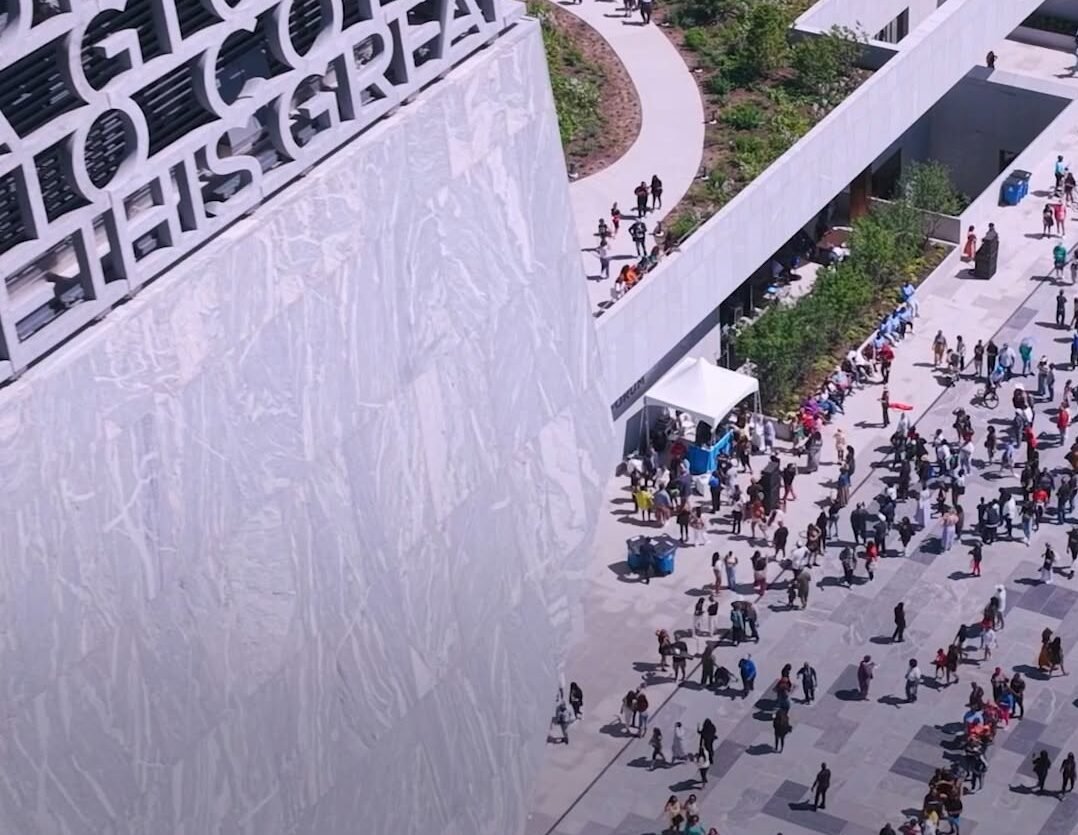
The Obama Foundation published a message this week positioning the Obama Presidential Center not as a monument to its founders, but as a space built for the communities it serves.
The Foundation’s Instagram message put it plainly: “The Obama Presidential Center might be named for the Obamas, but it is built for you.” The post also called the Center “a vibrant, living celebration of community” and “a beacon of hope.” It invited visitors to return repeatedly, framing the space as a destination rather than a one-time stop.
That framing is deliberate. Presidential libraries typically function as archival institutions, housing documents, artifacts, and records from an administration. The Obama Presidential Center is operated by the Obama Foundation, a private nonprofit. That structure gives it more flexibility in defining its mission and its audience.
The Center sits on the South Side of Chicago. Barack Obama worked there as a community organizer. He went on to serve as a U.S. Senator from Illinois and the 44th President of the United States. Michelle Obama was raised on the South Side. The location carries weight beyond symbolism.
The post drew roughly 92,000 likes on Instagram. For an institutional message without a specific event or program attached, that’s a notable response to what is, essentially, a framing statement.
Barack Obama’s public profile since leaving office has remained high. He has spoken at civic events, published memoirs, and stayed connected to Democratic Party networks. He has largely steered clear of day-to-day political commentary. Michelle Obama has kept her own profile active through her memoir, a Netflix partnership, and continued advocacy around education and wellness.
The Center’s development stretched over several years. Early planning sparked debate about its placement in Jackson Park. The park is a historic green space on Chicago’s South Side lakefront, designed in the 19th century by Frederick Law Olmsted. Critics raised concerns about building within it. The project navigated community input, legal challenges, and city approvals. Construction eventually moved forward.
The Center is now open. The Foundation is making clear how it wants the space understood. The choice to separate the Center’s identity from the Obamas’ personal legacy is a specific communication decision. Institutions of this kind rarely disclaim the idea that the building exists as a tribute to its namesakes. This one did.
The Foundation’s message calls the Center “a monument to unshakable values.” Three are named explicitly: equality, empathy, and inclusion. That distinction shapes what visitors are being invited to expect.
The Center’s ability to become that living hub will depend on its programming and sustained engagement with South Side residents over time. The messaging sets a high bar. Meeting it is the longer project.
