
Listen to this article
Estimated 4 minutes
The audio version of this article is generated by AI-based technology. Mispronunciations can occur. We are working with our partners to continually review and improve the results.
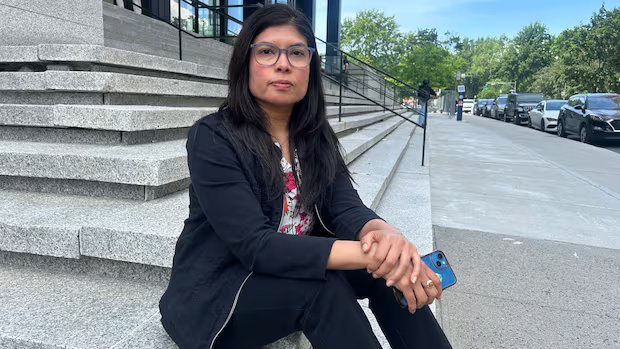
Marta Rincón, a Montrealer of Venezuelan descent, is waiting nervously to hear from two of her friends, whom she’s not been able to reach since two earthquakes struck north central Venezuela on Wednesday afternoon.
“I don’t know if their building is one of the buildings that collapsed,” Rincón told CBC’s Daybreak on Thursday.
The earthquakes — one a magnitude of 7.2 and the other 7.5 — struck just one minute apart, causing widespread devastation and triggering the collapse of several buildings in the capital Caracas and in the state of La Guaira.
According to the president of Venezuela’s National Assembly Jorge Rodriguez, as of Thursday afternoon, 188 people are confirmed dead, 1,520 are injured and about 200 people are trapped.
However, the U.S. Geological Survey estimates the death toll could ultimately range between 10,000 to 100,000.
“It has been very disturbing,” Rincón said.
While her family is safe, living beyond the hardest-hit areas, she remains worried about her friends — and the country as a whole.
“Obviously, in any country, an earthquake is something to be very careful about, but we’re talking about a country that in the past years has already had a very delicate situation in hospitals where patients have been asked to bring their own supplies,” she said.
Rincón said she is currently discussing with friends ways to organize aid and support for those affected.

Fellow Venezuelan Montrealer Antonio Lobo is also grappling with worry. His 70-year-old mother lives alone in her Venezuela home and has been without electricity since Wednesday.
“She didn’t sleep because we don’t know if a replica [earthquake] or something like that could happen,” Lobo said.
Beyond concerns for his mother’s safety, he also fears for the countless people who have lost their homes.
The country has been rocked by a series of hardships in recent years, including a collapsed economy, among other socioeconomic and political crises. For many, this could be their last straw.
“It’s not easy for me to be focused on my work right now … because my mind right now is on this situation,” Lobo said. “It’s hard because we’re safe here.”

Death tolls are expected to rise this morning in Venezuela after two earthquakes struck near the capital, trapping people beneath the rubble of collapsed buildings and setting off powerful aftershocks.
‘All the stairs and parts of the building collapsed’
For hours, Soraya Benitez feared the worst as she and her family waited for news from her brother in the hard-hit coastal region of La Guaira. When Benitez finally heard from him, he recounted a terrifying escape.
“He told us that he went down the stairs with his family, and two or three seconds later, all the stairs and parts of the building collapsed,” Benitez said.
“The situation is tough. The victims, we know [the death toll] will be heavy. We’re not doing well.”
Benitez said Venezuela will need international help, particularly from countries experienced in responding to earthquakes.
“We need everyone’s support,” she said.
Daybreak Montreal6:09Venezuelan Montrealer reacts to deadly earthquakes in Caracas
Last night, two powerful earthquakes wreaked havoc in and around Venezuela’s capital. At least 164 people died and 971 were injured, according to acting President Delcy Rodriguez. Daybreak caught up with Venezuelan Montrealer, Marta Rincón, to see how she’s holding up.
Prime Minister Mark Carney says Canada is preparing to provide humanitarian assistance in Venezuela, but he said responding to the disaster is complicated by Canada’s limited diplomatic presence in the country.
Foreign Affairs Minister Anita Anand says the suffering is “heartbreaking” and “many are facing unbearable days ahead without shelter, food or certainty.”
Global Affairs Canada officials are in touch with regional partners and aid groups, and Anand said Canada will “contribute to humanitarian efforts as appropriate.”
