
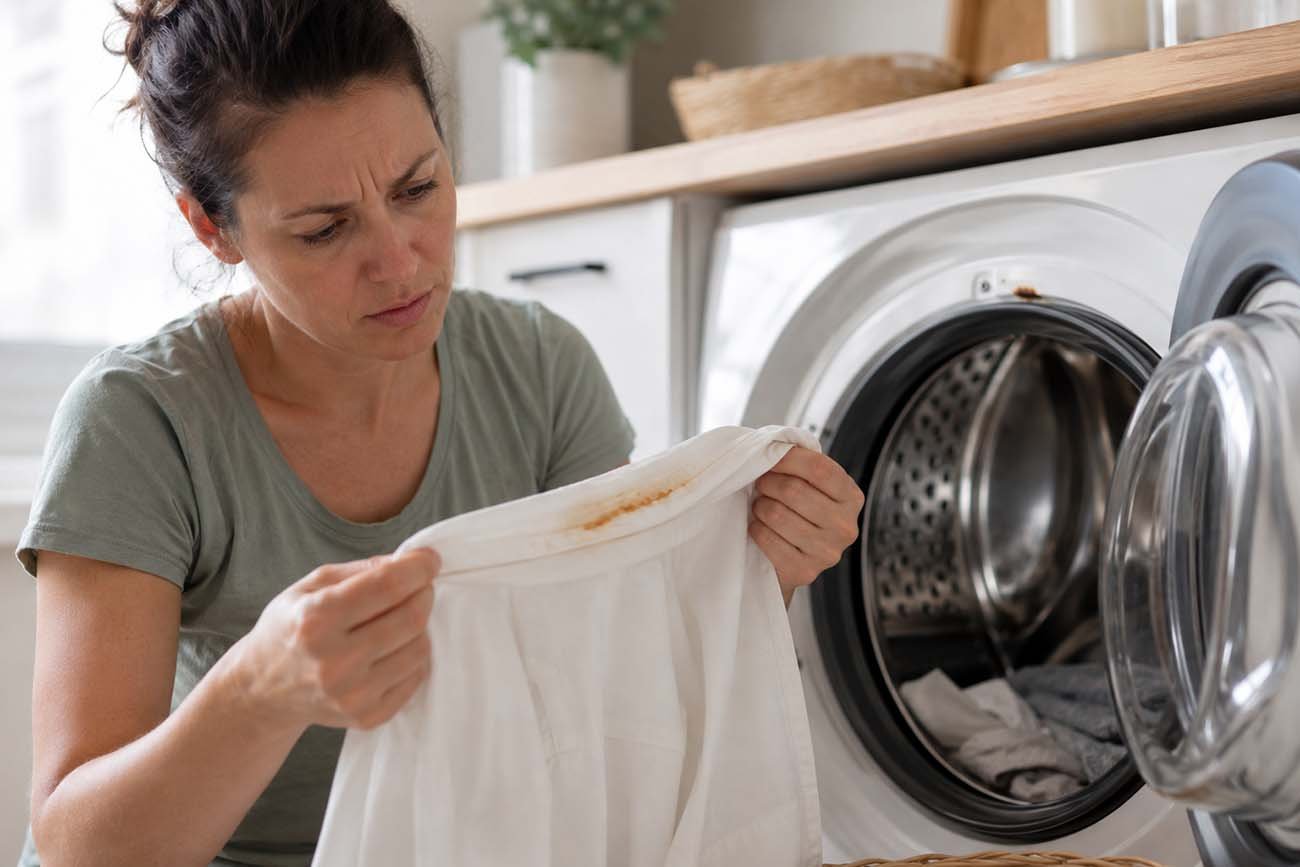
I pulled a shirt out of the washing machine and found a rust stain along the collar I had not put there, an orange-brown streak I could not explain. I had no idea where it came from until I looked at my machine drum and noticed rust around an old chip in the enamel. The shirt had gone in clean and come out stained. I rewashed it. The stain did not move. I added extra detergent. Same result. I assumed the shirt was ruined.
It was not ruined. But the reason regular detergent cannot touch rust is not obvious, and until you understand it the stain looks unsolvable. Rust is iron oxide, a chemical compound that bonds directly to fabric fibers through a process that has nothing to do with the chemistry detergents are designed to address. Soap and water lift surface residue and dissolve organic matter. Iron oxide is neither of those things. The correct tool is an acid that reacts with the iron oxide compound, converts it to a water-soluble salt, and releases it from the fiber. Several household acids do this reliably. Once you know that, the stain is straightforward.
The Short Answer:
To get rust stains out of clothes: apply lemon juice directly to the stain and cover with table salt. Place the garment in direct outdoor sunlight for 30 to 60 minutes. Rinse with cold water and wash normally. For set or stubborn stains, use a commercial rust remover containing oxalic acid or sodium hydrosulfite and follow the product instructions before washing.
Never use chlorine bleach on a rust stain. Bleach reacts with iron oxide and can permanently set the discoloration into the fabric rather than removing it.
Sunlight is not optional decoration in this process. UV exposure in combination with the acid reaction is what drives the removal. Testing without the sun step consistently produces weaker results than testing with it.
Why Rust Stains Are Different From Every Other Fabric Stain
Most clothing stains are organic: food, beverage, oil, blood, sweat. They respond to surfactants, enzymes, or oxidizing agents because those tools are designed to interact with organic compounds. Rust is inorganic. It is iron oxide, formed when iron reacts with oxygen and moisture. When iron oxide contacts fabric, it does not sit on top of the fibers the way food stains do. It forms chemical bonds with the fiber structure directly.
Standard laundry detergent contains surfactants to lift grease and organic residue from fabric surfaces. It does not contain anything that reacts with iron oxide. Running a rust-stained garment through the wash accomplishes exactly nothing for the stain itself. It may even set it slightly, because heat from the dryer can drive the iron oxide deeper into the fiber structure. This is why the stain looks the same after one wash, two washes, and five washes with progressively stronger detergent.
The chemistry that actually works is chelation: a process where an acid or chelating agent grabs onto the iron ions and converts the iron oxide into a water-soluble compound that can be rinsed away. Citric acid (lemon juice), acetic acid (white vinegar), and oxalic acid (in commercial rust removers like Bar Keepers Friend and Whink) all work by this mechanism. The acid reacts with the iron oxide, breaks the chemical bond with the fiber, and produces a compound that water can carry away.
Sunlight accelerates this process significantly. Real-world testing across multiple sources consistently finds that the lemon juice and salt method works adequately without sun but works substantially better with it. The UV component activates and accelerates the acid-iron oxide reaction in a way that is not fully replicated by leaving the garment to sit in shade.
The Golden Rule: Never Use Chlorine Bleach
Chlorine bleach is the instinctive move for a tough stain on white fabric, and on rust it is exactly wrong. Chlorine bleach is an oxidizing agent. Rust is already an oxidized compound. Rather than dissolving the rust, bleach further oxidizes the iron ions, which can permanently bond them to the fabric fiber and turn a recoverable stain into a permanent one. Multiple professional sources including Purex, Anita’s Housekeeping, and The Clean Home all confirm this: bleach makes rust stains worse, not better, and should never be used on a rust stain at any stage.
Oxygen bleach (sodium percarbonate) also does not effectively remove rust bonded directly to fabric. It is designed for organic pigment and tannin stains, not metal oxide compounds. One exception: for general iron-water discoloration on a full load of white items where iron-rich tap water has left a overall tint rather than a specific bonded stain, adding oxygen bleach to a cold water soak may help with general brightening. For a specific rust stain bonded to fabric, the answer is not bleach of any kind. It is acid.
Does Rust Come Out of Clothes?
Yes, in most cases. Fresh rust stains treated within 24 hours respond well to lemon juice and salt, white vinegar, or commercial rust removers and usually come out completely. Stains that have been on the fabric for several days take more effort but are typically still recoverable. The two situations where rust may not fully come out are garments that have been through a hot dryer before treatment (heat drives the iron oxide deeper into the fiber structure) and very old or deeply set stains on natural fibers where the iron oxide has had extended time to bond.
The key variable is speed. A rust stain treated the same day is almost always fully removable. A stain left untreated for a week is significantly harder. A stain that has been through the dryer requires repeated treatment cycles and may not fully clear.
Where Rust Stains Come From
Knowing the source matters because some sources produce recurring stains that need a structural fix rather than repeated treatment. Common sources include: rusty metal surfaces like patio furniture, garden tools, and outdoor fixtures; metal hangers left in contact with damp fabric; rust inside a washing machine drum (typically from chipped enamel, a corroded drum edge, or rusty water inlet pipes); and tap water with high iron content, which is particularly common in homes on well water. If rust stains appear repeatedly on clothes coming out of the wash and you cannot find a source on the clothing itself, check the washing machine drum and water quality.
Four Methods, Ranked
1
2
3
4
Pro tip: If your clothes are developing rust stains from the washing machine rather than from external contact, the root cause is almost always chipped enamel on the drum, a corroded drum edge, or high iron content in the water supply. Treating the clothes removes the stain but does not prevent the next one. Inspect the drum interior carefully with a flashlight, running your hand slowly along the surface to feel for rough spots. A rust-colored smear on a damp white cloth wiped around the drum confirms the source. Minor chips can be repaired with appliance epoxy paint. For iron-rich water, a sediment filter on the water inlet line is the most reliable fix.
Prevention tip: replace metal wire hangers with plastic or wooden ones for damp or wet clothing. Wire hanger rust transfers directly to fabric at the shoulder and collar, and it is one of the most common sources of clothing rust stains that people cannot trace to an obvious incident. Also check pockets for small metal objects (screws, safety pins, coins) before every wash. These items rust during the wash cycle and transfer iron oxide directly to the garment. Skip fabric softener during any stain treatment wash cycle; it can leave residue on the fabric that interferes with acid-based removal in a subsequent treatment round.
The Full Protocol, Step by Step
Step 1: Do not run the garment through the dryer before treating. If the stain has already been through one wash cycle without treatment, that is fine. Do not add the dryer to it.
Step 2: Do not apply chlorine bleach at any stage. Set this rule before you start and do not revisit it.
Step 3: Identify the fabric type. Cotton, linen, and denim can handle lemon juice, vinegar, and commercial rust removers. Synthetics (polyester, nylon) tolerate baking soda paste and mild commercial rust removers but may not tolerate strong acids well; spot test first. Silk and wool require professional cleaning for significant rust stains; diluted vinegar applied carefully is the maximum safe home treatment on these fabrics.
Step 4: Brush off any loose rust particles from the surface of the fabric gently with a soft brush before applying any liquid. Do not rub.
Step 5: Apply your chosen method. For lemon juice and salt: saturate the stain with lemon juice, cover with salt, press gently without rubbing. For vinegar and salt: saturate, salt, leave. For commercial rust remover: apply per package directions.
Step 6: Place in direct outdoor sunlight. 30 to 60 minutes for lemon juice, one to two hours for vinegar, or follow product instructions for commercial removers.
Step 7: Rinse thoroughly with cold water. Do not use hot water.
Step 8: Inspect the stain. If it has significantly lightened but not cleared, repeat Steps 5 through 7 before washing. If it has cleared, wash normally in cold or warm water with your regular detergent. Skip fabric softener during this wash; it can leave residue that interferes with acid-based removal if a second treatment round is needed.
Step 9: Check before drying. Air dry and inspect in good light. If any orange-brown discoloration remains, repeat the treatment cycle before the garment goes in the dryer.
Never do these things:
- Don’t use chlorine bleach. Bleach oxidizes iron oxide and can permanently bond it to the fabric fiber. This is the most common cause of rust stains becoming permanent.
- Don’t use oxygen bleach (OxiClean). Oxygen bleach is formulated for organic pigment and tannin stains. It does not react effectively with iron oxide and will not clear the stain.
- Don’t put the garment in the dryer before treating. Heat drives the iron oxide deeper into the fiber structure and makes the stain significantly harder to remove.
- Don’t use naval jelly or phosphoric acid-based rust removers on fabric. These are formulated for heavy rust on metal surfaces and can damage fabric fibers.
- Don’t rub the stain. Rubbing works loose rust particles deeper into the fiber weave. Brush gently to remove surface particles, then blot and press.
- Don’t apply acid treatments to silk or wool without diluting first. Undiluted lemon juice or vinegar can damage protein fibers. Dilute to a 1:3 ratio with water and test on a hidden seam before treating. For significant rust on silk or wool, take it to a dry cleaner.
By Fabric Type
Cotton and linen: The most forgiving situation. Lemon juice and salt, white vinegar, and commercial rust removers including oxalic acid-based products are all safe on cotton and linen. Full-strength acid treatments without dilution are appropriate. Sunlight in combination with the acid treatment gives the best results.
Denim: Same as cotton. Handles all acid-based methods. For dark denim, limit lemon juice sun exposure to 30 minutes and rinse promptly to minimize fading risk.
Polyester and nylon: Synthetic fabrics do not tolerate strong acids as well as natural fibers. Baking soda paste (mild alkaline abrasive) is a lower-risk first option. Diluted white vinegar (1:1 with water) is safe on most polyester. For commercial rust removers, use products specifically labeled safe for synthetics and spot test first. Avoid undiluted lemon juice on nylon as it can affect the fiber surface.
Wool: Wool is a protein fiber and is sensitive to both acid and heat. Diluted white vinegar (1:3 with water) applied carefully for no more than 15 minutes, then rinsed with cold water, is the maximum safe home treatment. For any significant rust on wool, professional cleaning is the correct call. Tell the cleaner what the stain is and how long it has been there.
Silk: Same as wool. Protein fiber, sensitive to acids. Diluted vinegar only, carefully applied and rinsed quickly. For significant stains, professional cleaning only. Do not use lemon juice undiluted on silk; the citric acid and bleaching effect can permanently affect the dye.
White fabrics: Full-strength lemon juice, commercial rust removers, and in a pinch, hydrogen peroxide after the primary treatment. The lemon juice bleaching effect is an advantage on white fabric rather than a risk.
Dry-clean-only garments: Do not apply any liquid treatment. Blot gently with a dry cloth to remove loose rust particles and take to a dry cleaner promptly. Describe the stain and its source. A professional cleaner has access to stronger rust removal compounds and the expertise to use them without damaging delicate fabrics.
What Does Not Work
Regular laundry detergent: Formulated for organic stains and surface residue, not inorganic metal oxide compounds. Running a rust-stained garment through repeated wash cycles with increasing amounts of detergent will not clear the stain.
Chlorine bleach: Makes the stain worse. The oxidation reaction between chlorine bleach and iron oxide can permanently set the discoloration.
OxiClean and other oxygen bleaches: Effective on tannins, anthocyanins, and organic pigments. Not effective on iron oxide, which is an inorganic metal compound.
WD-40: Effective for removing rust from metal surfaces by loosening and displacing rust particles mechanically. Not recommended for rust stains on fabric because it leaves an oil residue that creates a secondary grease stain. On clothing, lemon juice or vinegar is a better choice.
Standard dish soap: Has no mechanism for reacting with iron oxide. Better than nothing for a fresh rust mark with surface particles, but will not remove the bond between iron oxide and fabric fibers.
Toothpaste: Non-gel toothpaste is sometimes suggested for small, very fresh rust marks. The mild abrasives can help lift surface rust particles before they fully bond. It is not effective on stains that have had any time to set, and it is not a substitute for acid-based treatment even on fresh marks. Worth trying only if no other option is immediately available.
How to Get Rust Stains Out of Clothes from the Washing Machine
Rust from a washing machine is a specific situation that requires treating both the clothes and the source. The clothes come out of the wash already stained, which means the rust entered during the cleaning process itself.
Treat the affected garments using the lemon juice and salt or commercial rust remover method above. For white loads where multiple items are affected, the UGA Family and Consumer Sciences extension recommends adding one cup of oxygen bleach to the detergent and soaking the clothes for 10 to 15 minutes before laundering. Note that oxygen bleach works here not because it removes rust chemically but because the high-iron water problem creates a secondary staining issue that OxiClean can address; for direct fabric rust staining, acid-based methods are still more effective.
Then address the machine. Wipe the drum interior with a cloth dampened in white vinegar or a commercial appliance cleaner. Check the water inlet valve for rust buildup. If you are on well water, test the iron content and consider a whole-house iron filter or a sediment filter on the washing machine inlet if iron levels are above the EPA secondary standard of 0.3 mg/L.
The One Thing I Wish I Had Known Sooner
The drum. I treated the shirt, it came clean, and six weeks later there was another orange-brown mark in the same place on a different shirt. I treated that one too. Third shirt, same thing. I finally looked at the drum interior with a flashlight and found a chip in the enamel near the back. A two-dollar tube of appliance epoxy paint and twenty minutes later, the problem stopped. I had been treating the symptom for months when the fix was in the machine, not the laundry.
If you are seeing rust stains regularly on clothes that came out of the wash clean, do not assume it is coming from external contact with metal surfaces. Check the machine first.
Final Thoughts
Rust stains are a category of their own because the chemistry is completely different from every other common fabric stain. The staining agent is inorganic, the bond is chemical rather than physical, and the tools that solve everything else (detergent, enzyme cleaners, oxygen bleach) accomplish nothing on iron oxide. The tools that work are acids: lemon juice and salt for household use, commercial rust removers with oxalic acid or sodium hydrosulfite for set or stubborn stains. Never chlorine bleach. Always check before the dryer.
The fact that the stain looks orange-brown and permanent before treatment does not mean it is. Most rust stains treated with the right method clear completely. The appearance is discouraging and the treatment is counterintuitive, but the chemistry is reliable.
Frequently Asked Questions
Does rust come out of clothes?
Yes, in most cases. Fresh rust stains treated with lemon juice and salt in direct sunlight, white vinegar, or a commercial rust remover usually clear completely. Stains that have been on the fabric for more than a few days take more effort. Stains that have gone through the dryer before treatment are the most difficult and may not fully reverse.
What is the best home remedy for rust stains on clothes?
Lemon juice and salt with direct outdoor sunlight is the most reliably effective household method based on real-world testing across multiple sources. The lemon juice provides citric acid to chelate the iron oxide; the salt provides mild abrasion; the UV exposure accelerates the chemical reaction. Apply generously, leave in sun for 30 to 60 minutes, rinse with cold water, and wash normally.
Does white vinegar remove rust stains from clothes?
Yes, for fresh to light rust stains. White vinegar contains acetic acid, which reacts with iron oxide by the same chelation mechanism as lemon juice. It is slightly less effective than lemon juice for set stains because acetic acid is weaker than citric acid, but it is safer on dark and colored fabrics because it has a lower bleaching risk. Apply undiluted, add salt, leave in direct sunlight for one to two hours, then rinse and wash.
Will OxiClean remove rust stains from clothes?
No. OxiClean is an oxygen bleach (sodium percarbonate) that is effective on organic pigment stains such as wine, coffee, berries, and chocolate. It does not react meaningfully with iron oxide, which is an inorganic metal compound. Using OxiClean on a rust stain will not clear it. Use an acid-based method instead.
Can you use bleach on rust stains?
No. Chlorine bleach is an oxidizing agent that reacts with iron oxide and can permanently set the discoloration into the fabric rather than removing it. This is the most common cause of rust stains becoming permanent. Never use chlorine bleach on a rust stain at any stage of treatment.
How do you get rust stains out of white clothes?
Use the full-strength lemon juice and salt method with direct sunlight. On white fabric, the mild bleaching effect of lemon juice is an advantage rather than a risk, and the combination of citric acid, salt abrasion, and UV exposure produces the best results. For set stains on white cotton or linen, a commercial rust remover containing oxalic acid (Whink, Zud) applied before washing is the most effective option. Hydrogen peroxide applied briefly after the primary acid treatment can also help clear any residual discoloration on white fabric.
How do you get rust stains out of jeans?
Use lemon juice and salt or white vinegar and salt, placing the jeans in direct sunlight for 30 to 60 minutes. For dark denim, limit the lemon juice sun exposure to 30 minutes and rinse promptly to minimize fading. White vinegar is safer on dark denim if you are concerned about the acid’s bleaching effect. For stubborn stains on denim, a commercial rust remover applied per package directions and rinsed thoroughly before washing is the next step.
How do you get rust stains out of clothes that came from the washing machine?
Treat the clothes with lemon juice and salt or a commercial rust remover per the standard protocol above. Then identify and address the source in the machine. Inspect the drum interior for chipped enamel, check the water inlet valve for rust buildup, and if you are on well water, test the iron content. Recurring rust stains from the washing machine require fixing the machine or the water supply, not just treating the clothes.
Better Living may earn commissions through affiliate links and may occasionally feature sponsored or partner content. If you make a purchase through our links, we may receive a small commission at no cost to you.
