
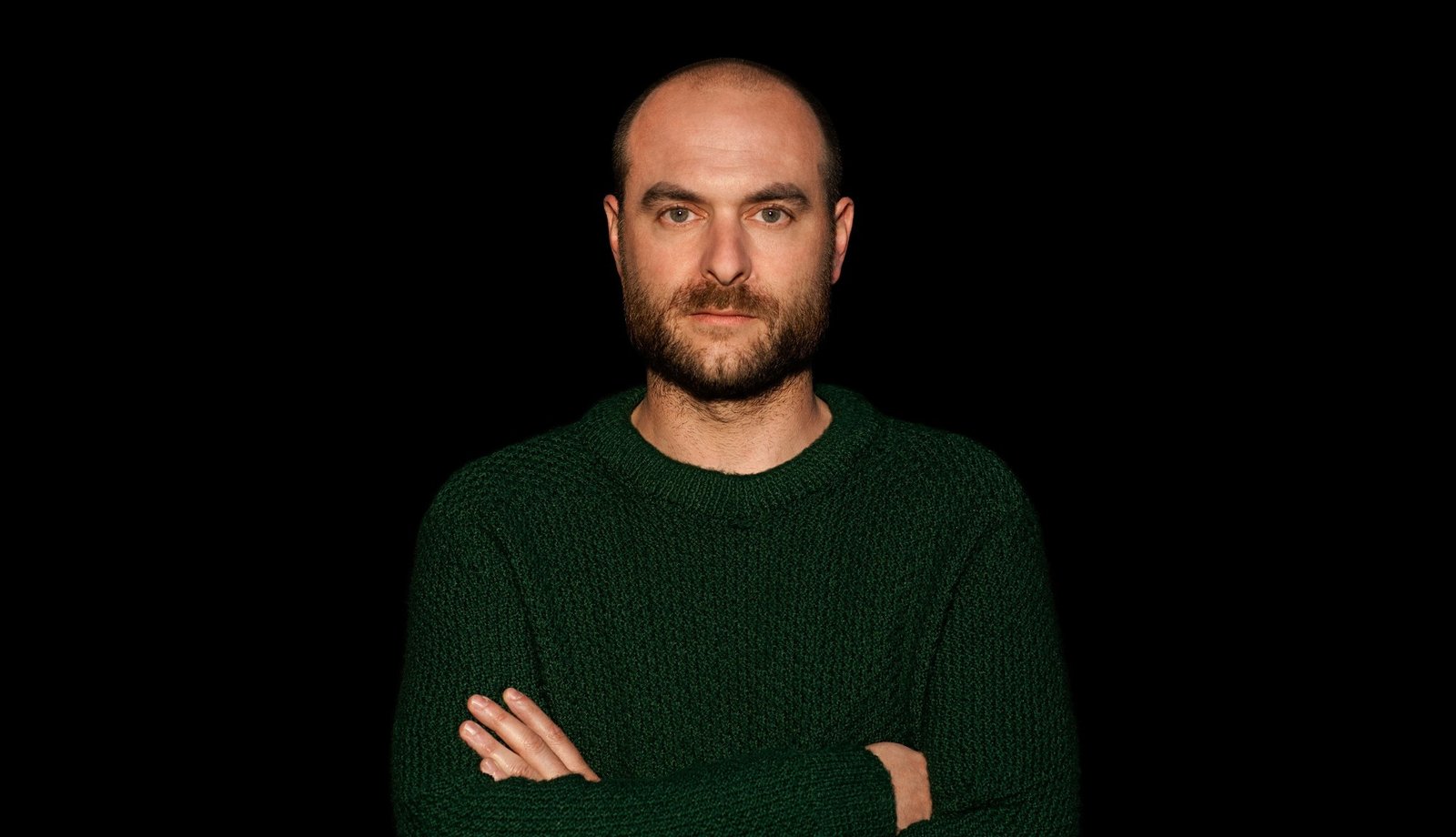
– The Spanish director discusses his tale of an unemployed mouse and the craziness that surrounds him
Highly existential and original, Decorado left the Annecy Film Festival clutching the Paul Grimault Prize (see the news). Its director, Alberto Vázquez – also behind Unicorn Wars – discusses his tale of an unemployed mouse, Arnold, and the crazy world that surrounds him.
Cineuropa: There is something extremely relatable about your film, even despite these crazy characters. Do you think it hits harder this way?
Alberto Vázquez: Yes, I think it works because of the contrast. I’m interested in using anthropomorphic animals that remind us of fables, children’s stories or the early days of animation, but placing them in contemporary situations that are recognisable and often quite hard.
That contrast is also in the characters. Many of them can make you laugh, but there’s something sad or painful about them. I like that mixture because it’s quite close to life itself. There’s comedy and drama at the same time, sometimes even in the same situation. These characters don’t belong completely to a specific time or place, and that allows audiences from different cultures to recognise themselves in them.
Still, it’s like a social realist film – but with mice and a musical demon. Why did you want to talk about such normal struggles, like unemployment and a crumbling marriage, and add this fantastical element to it?
I’m interested in talking about reality, but always through fantasy, metaphor and symbolism. I think that’s why I use animation. I like speaking about contemporary problems because, even if you work with fantasy, it’s impossible not to have one foot in reality. There are many things that worry me: superficial relationships, economic crises, mental health, mega-corporations controlling our data and especially this feeling that, at certain moments in our lives, the things around us are a little fake. Working through fantasy allows you to give another vision of reality, one that maybe live-action cinema cannot provide. That’s what makes animation interesting and different for me.
I also like creating a rich imaginary world of characters. In Decorado, you have these anthropomorphic cartoon animals that can remind you of classic Disney flicks or the early years of animation. But at the same time, there are more absurd and fantastical figures, like a demon, an inverted mermaid or a mushroom man. For me, it is a way of building my own mythology, a world where the everyday and the strange live side by side naturally.
From the very beginning, you create a sense of impending doom. Everyone is waiting for something, and the forest is already burning. Does it mirror your current state of mind?
I wouldn’t say it reflects my current state of mind, but rather the state of mind of the film. Personally, I feel quite good and I’m happy with my life. But I’m very worried about the direction that certain social issues are headed in: megalomaniac leaders, wars, artificial intelligence and increasingly superficial relationships.
I have the feeling that, just like the world of Decorado, our world is always about to burn. There is this constant sense of a threat, of something terrible approaching, but I don’t think the film stays only in that dark place. Deep down, it also talks about what can save us from all these disasters: real love, real relationships, family, friends, your partner… Those five, six or seven people with whom you know you can be yourself, and who will always be there.
Do you see it as a social commentary?
At first, I thought it was a film about society, but little by little, I realised that it’s also a movie about myself. It talks about certain things I have lived through, and also things that friends or people close to me have experienced. For example, everything related to mental health and that feeling of not fitting into the world.
I think the audience sees the film through the eyes of Arnold. He’s a paranoid character, someone who’s always looking for answers and trying to understand what’s behind what he sees. And that turns the film into a social journey, but also an intimate one. It is a way of looking outwards and inwards at the same time.
The chant kept ringing in my ears after the movie.
I’m glad the chant stayed in your head because that was the idea. It’s a pretty depressing song, with a slow rhythm and choral music that has something almost ecclesiastical or sacred about it. I wanted it to sound almost like a ritual.
How do you understand this concept of a fake universe?
For me, the idea of a fake universe has to do with the roles we perform every day in our lives. We are used to many superficial relationships, at work, in society, and sometimes even inside the family. We all play a role in some way. We all have a social mask.
Almost all of the characters have two faces. When we see their inner world, we discover that they think or feel things that are very different from what they show socially. I think this has a lot to do with our current society, where everything moves very fast, where there is too much information, a lot of public exposure and, sometimes, a lot of superficiality. The fake world of Decorado speaks a little about that: the distance between what we show and what we really are.
You manage to make things funny and then heartbreaking. Do you like it because it wakes people up?
Something curious also happens with my films. Many times, when people see the artwork, they think they are going to watch a children’s movie or a family flick. But then the film is actually sad, ironic and cynical, with a lot of sarcasm and black humour. That contrast can be quite shocking, especially for young people, because it’s not what they expect from an animated film.
For me, this contrast works a little like a Trojan horse. It allows you to talk about subjects that are not always present in animation. I think that’s one of the things that interests me the most: using a form that appears “friendly” to speak about uncomfortable things.
