
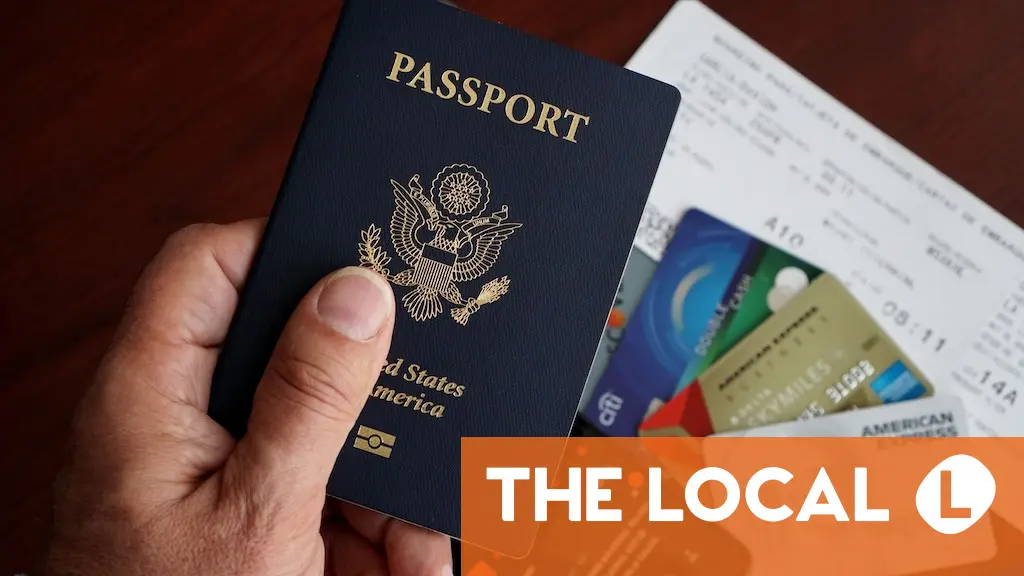
If you’re living in Spain on certain types of visas such as the Digital Nomad Visa, you will no longer be denied a renewal for absences longer than 183 days in a year. The Local spoke to visa experts about the latest court ruling.
Last May, Spain’s Supreme Court issued a ruling declaring that Article 14.3 of Royal Decree 240/2007 would be null and void.
Although this latest ruling was linked to the EU family member residence card and it no longer being cancelled after absences of more than six months in a year, the implications are more far reaching, as they reinforce and extend the Supreme Court’s stance on the 183-day rule for all visa renewals, a situation which has been developing since 2023.
According to legal experts consulted by The Local, all these rulings further support the fact that it’s not necessary to show that you’ve stayed at least 183 days in Spain in order to renew a residency visa.
The main reason the Supreme Court gives for this stance is because this 183-day rule was written in a bylaw and not an actual law. In order for this to hold up, it would have to be enshrined into actual law.
According to lawyer María Luisa de Castro at Costa Luz Lawyers, there have been a series of Supreme Court decisions that have gradually reshaped the relationship between physical presence in Spain and the right to maintain a residence permit.
The first of these was back in June 2023, which annulled the equivalent absence rule for ordinary temporary residence permits. Together with more rulings in July 2024 and October 2025, they confirmed that “prolonged absences from Spain cannot automatically justify the loss of a temporary residence permit” she explained.
READ ALSO: How the requirements for Spain’s Digital Nomad Visa are getting stricter
Digital Nomad Visa holders
For many people such as those on the Digital Nomad Visa (DNV) this is good news as work or family circumstances mean they might need to be outside of Spain for longer. It also means that they don’t necessarily have to stay in Spain for six months if they don’t want to and are still able to renew their visa to return the following year.
Maya Middlemiss from Remote Work Europe told The Local that Spain is not alone in having created something commonly called a “Digital Nomad Visa” which was actually not suited for all types of digital nomads, who often spend less than a year in any one particular country or place.
“I think this shift is a recognition of that,” she said. “Digital nomads, as a category, are facing an unpleasant backlash in some parts of Spain but this change in the regulation is an acknowledgement that there’s a big spectrum of different behaviour within that group, including many who want to integrate and contribute and make Spain a regular part of their lives, even if it doesn’t mean settling down in one permanent place,” she continued.
De Castro agreed with this sentiment saying: “The Supreme Court’s recent jurisprudence strengthens the argument that internationally mobile professionals should not automatically lose residence rights simply because they travel extensively or divide their time between multiple countries. For remote workers and entrepreneurs operating internationally, the Court’s approach reflects the reality of modern professional life far more accurately than the previous system.”
Tax implications
The question many people will be asking however will be whether or not this has any tax implications. Typically you are considered a tax resident if you are in Spain for more than 183 days, but if you don’t have to stay that long in order to renew your visa, does that mean you could have a DNV and not be considered a Spanish tax resident?
“The tax implications of these decisions may prove even more significant than the immigration implications,” said De Castro.
She told The Local that it doesn’t necessarily mean that holders of those visas won’t have to pay tax even if they spend less than 183 days. “They are two distinct concepts,” she clarifies.
As she explains, Spanish tax law also considers factors such as your centre of economic interests, where your family live and if there are double tax treaties in place.
Each individual case is unique, so one person may be considered a tax resident even if they spend less than 183 days while another will not.
READ ALSO: Spain clarifies two key rules of the Non-Lucrative Visa
Non-Lucrative Visa holders
Finally, one important point to remember is that these 183-day visa renewal rules don’t apply to those on Spain’s Non-Lucrative Visa (NLV).
Royal Decree 1155/2024, which came into force in May last year, states under Article 64 f) that applicants seeking renewal of an NLV must demonstrate “real and effective residence in Spain for more than 183 days during each calendar year”.
Previously “there was bit of a legal tug-of-war between what the old rules said and what the Court decided”, confirmed De Castro.
This meant there was no longer any room for interpretation when it comes to NLV holders because Article 64 f) established a positive condition that applicants must satisfy when applying for renewal.
