
– Rooted in Cypriot folklore and maternal grief, Minos Papas’ feature is an uneven but distinctive folk-horror tale whose local specificity proves more powerful than its explicit scares
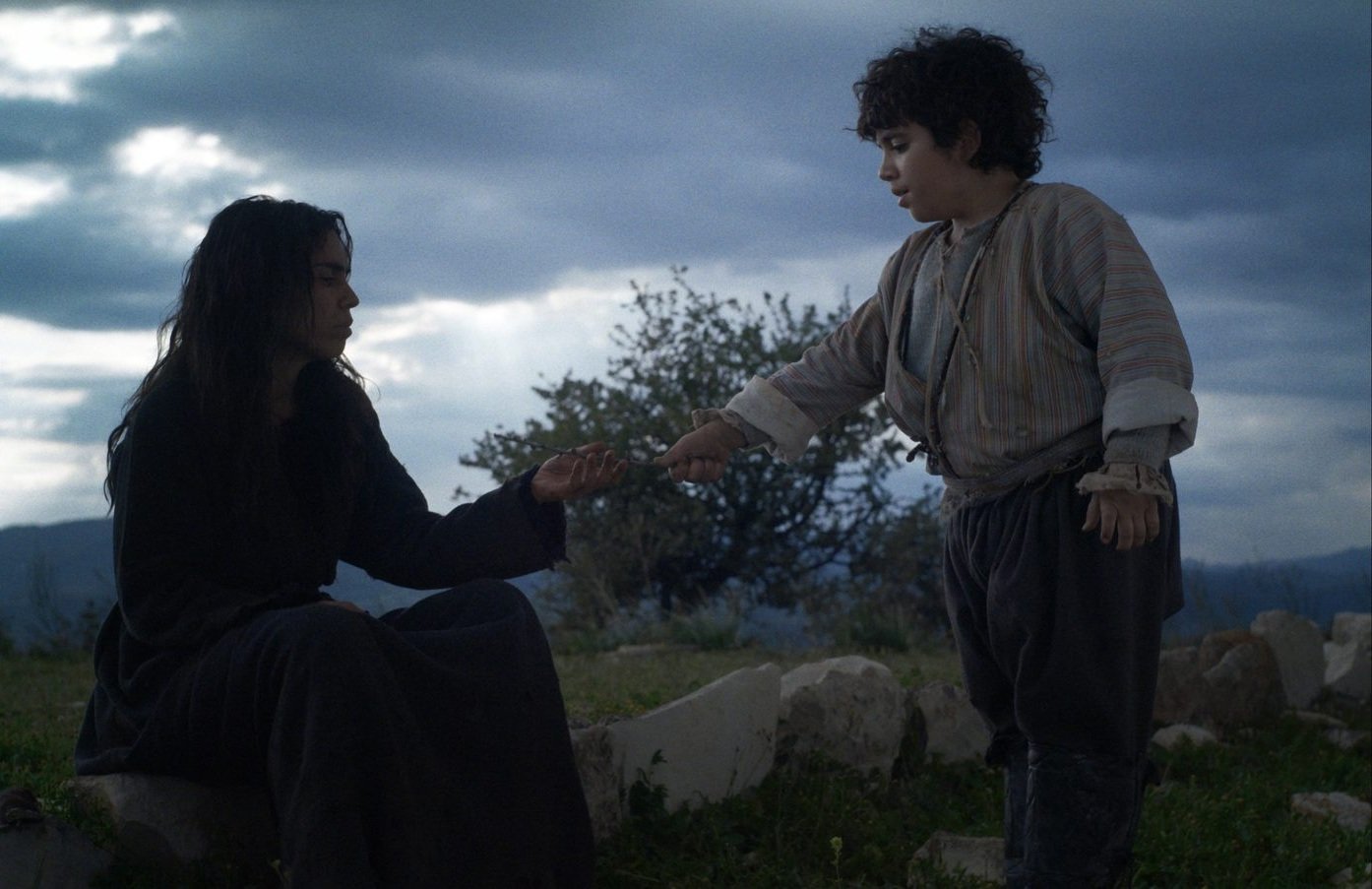
Minos Papas’ Motherwitch rocks up in the Mediterrane Film Festival’s Mediterranean Competition after world-premiering in IFFR’s Harbour strand earlier this year, and it is easy to see why it travels as a genre offering with a strong regional identity. Set in Cyprus in 1882, under early British rule, the film follows Eleni (played by Margarita Zachariou), a French-educated painter whose life collapses when her three children die in a freak accident. Shunned by the village and swallowed up by grief, she turns to an image-making ritual that promises resurrection, but instead opens the door to the Kalikantzari, spirits drawn from Cypriot folklore.
That summary may suggest a relatively familiar folk-horror arc: bereavement, superstition, forbidden ritual, punishment and, eventually, a confrontation with the thing that grief has summoned. Yet Motherwitch is at its best when it leans into the particularity of its setting. Papas, who co-wrote the screenplay with Nikolas Kouroumtzis and Euripides Dikaios, treats Cyprus not merely as a backdrop, but as the film’s very lifeblood. Greek, English and French, local dialects and oral traditions, the rural locations, and the tension between Christianity, pagan residue and colonial authority give the film a cultural texture that makes its imperfections easier to forgive.
Visually, Motherwitch is often assured. Jack McDonald’s cinematography favours a contrast between the daytime scenes, bright yet rarely reassuring, frequently covered by heavy clouds that seem to hang over the characters like a bad omen, and the night-time passages, poorly lit in the productive sense: murky, unstable and disquieting, rather than merely underexposed. The crumbling stone architecture and barren spaces do much of the atmospheric work, whilst Charles Humenry’s sombre score supports the tension without over-explaining it. It is not music that lingers afterwards, but it knows where it belongs.
The cast is solid, though not evenly calibrated. Zachariou has the difficult task of embodying grief in both an intimate and an operatic way, and there are moments when her performance reaches a strange, compelling intensity. There are also passages, partly because of dialogue that can feel emphatic and theatrical, where the role tips towards overacting. The effect is sometimes alienating in a useful way, as if Eleni were already half inside a fairy tale; elsewhere, it weakens the credibility of the drama. By contrast, young Sifis Katsoulakis provides the movie with its most persuasive moments as Michalakis, the abused boy drawn into Eleni’s ritual. He brings candour and vulnerability to the role, and his bond with Eleni gives the film its spine.
Where Motherwitch falters most clearly is in some of its digital imagery. The demonic faces and creaturely apparitions are not always convincing, and they occasionally soften the dread that the mise-en-scène has patiently built. This is a pity because the pic’s more suggestive elements are often stronger than its explicit horror images. Papas understands the fairy-tale dimension of the material, and the story’s movement from mourning to destructive fantasy, then towards a fragile idea of creation, is effective.
Thus, Motherwitch is not fully controlled, and its emotional register can become too heightened for its own good. Still, it remains a peculiar and worthwhile Cypriot-Greek folk-horror tale: visually neat, culturally rooted and driven by a sincere belief that myths survive because ordinary pain keeps finding new bodies to inhabit.
Motherwitch was produced by Caretta Films (Cyprus), in co-production with Cyprian Films New York (USA) and Focus Pocus Films (North Macedonia). Paris-based B-Rated International handles its world sales.
