
All leads followed by the narcotics agents pointed to a store whose display window was usually filled with mannequins, bicycles and BBQ grills. The shop was located in Norcross, a suburb north of Atlanta, Georgia. Posters for remittance companies hung in the windows of Pulga La Esperanza, and these were the focus of a fentanyl-trafficking network linked to the Jalisco New Generation Cartel (CJNG). Every member of the criminal cell questioned by the DEA pointed the finger at the store owner, Sandra Hernández Chilel. According to their testimony, the woman had arranged the transfer of more than $1 million to Mexico for a drug trafficker nicknamed El Viejo. She concealed the transfers using false names amid numerous legitimate remittances that migrants made to their families back home.
Yet the amount handled by Pulga La Esperanza seems modest compared with the $4.2 million that a Guatemalan woman wired to a group of traffickers through a chain of stores in the Pacific Northwest. And this in turn pales beside the $10 million that flowed from a western-wear shop in Dallas to bosses of the feared Jalisco cartel.
Modest businesses owned by Hispanic families and located in suburbs with high concentrations of migrants and limited police presence remain one of the methods Mexican cartels use to move illicit proceeds from drug sales in the United States. In recent years, authorities have dismantled at least seven such schemes in Georgia, Oregon, Texas, Ohio, Virginia, Missouri and Washington. Three of those cases mention local CJNG distributors.
This illicit activity is concealed amid the huge flow of remittances that travels each year from the United States to Mexico. Remittances are the country’s main source of foreign exchange: in 2025 they totaled $61.8 billion, just below the record $64 billion from the previous year. The average transfer is $403. Guanajuato, Jalisco and Michoacán top the list of recipient states — a coincidence that also places them within the sphere of influence of some of the country’s most powerful cartels.
The money‑laundering operation at Pulga La Esperanza in Georgia is one of the most recent. At the head of the network was El Tío, a Jalisco Cartel operator also known by his paternal surname, González. He had lived for several years in Atlanta before moving to Morelia, Michoacán. From there he directed, through coded WhatsApp messages and phone calls, a cell of distributors operating in different parts of Georgia.
El Tío’s drug shipments crossed the border in freight trucks through a checkpoint in McAllen, Texas. A driver was handed car batteries loaded with fentanyl pills. The instruction was to pass customs inspection between 6.00 am and 7.00 am, never at night. Once in Atlanta, the organization distributed the fentanyl and a cocaine–fentanyl mix they called “Frank Lucas,” a reference to the notorious boss who dominated New York drug trafficking in the 1960s and 1970s, according to a DEA report filed in court.
Members of the cell who agreed to cooperate with authorities revealed that when profits accumulated they brought bundles of less than $10,000 to Pulga La Esperanza and used Uber to avoid suspicion. In a private area at the back of the store, they counted the money in front of Hernández Chilel, her daughter or an employee. In just two months they delivered more than $1 million through a drip operation. Almost all the cash was destined for Michoacán. Money was sent to El Tío in remittances under $1,000 to evade federal controls. They used fictitious sender and recipient names, while the trafficker provided photographs of authentic Mexican IDs to give the transactions a veneer of legality. The indictment states that this woman “maintained constant communication with him regarding the money deliveries.”
The DEA began tracking the organization in September 2024. A year later it managed to incarcerate several of El Tío’s collaborators. Hernández Chilel, the store owner, was sentenced to five years in prison for conspiracy to launder money and operating an unlicensed money-transfer business. Lacking legal immigration status, the 50‑year‑old woman will be deported to her native Guatemala once she has served her sentence. The Michoacán boss who hired her remains at large.
The stores that laundered $12 million
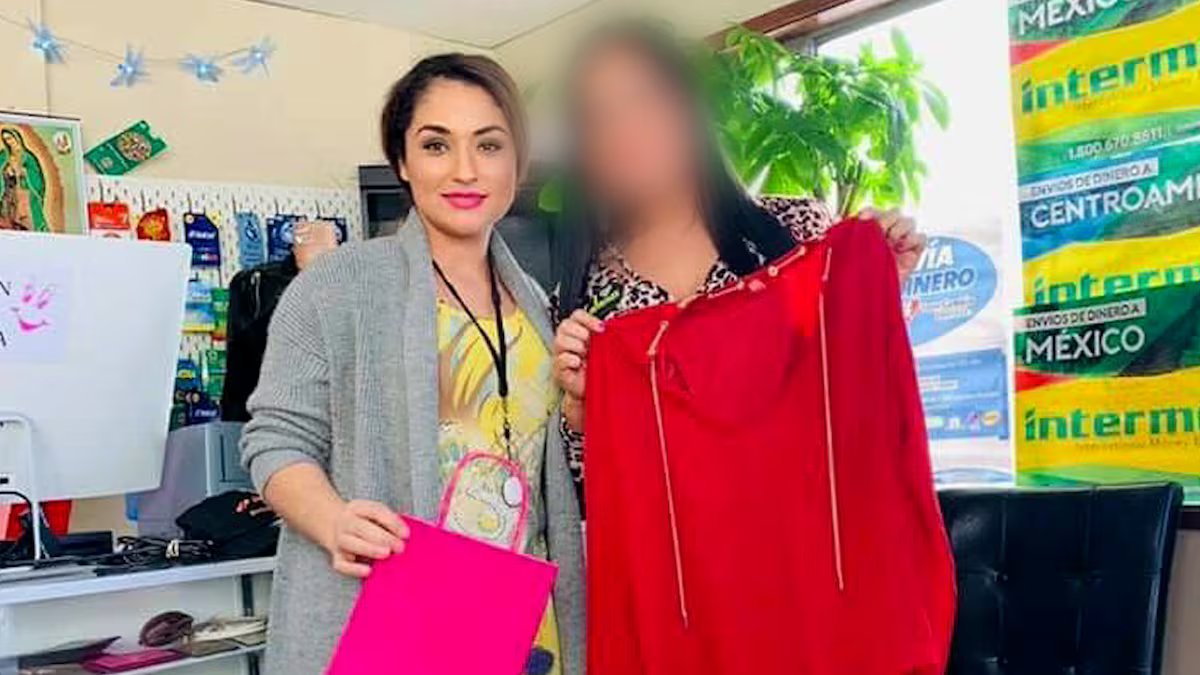
Brenda Barrera was a businesswoman who was active on social media. In several Facebook videos she appeared organizing raffles and handing out gifts to people who sent money to their home countries through La Popular, a chain of Latin American goods stores that at one point had six branches in Oregon and Washington. “I hope you visit and support us,” she said to the camera as she greeted her first customers during the summer of 2020. The business quickly grew and she was soon seen driving a luxury Cadillac SUV.
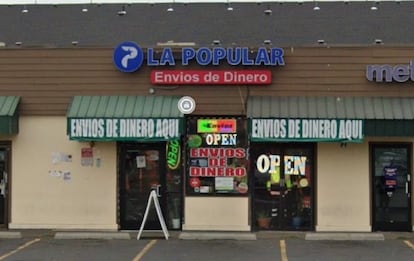
But the US Department of Justice says that apparent “success” was a smokescreen. Her main source of income was a 10% commission on every remittance she sent for Mexican traffickers. Between August and November 2024 alone she transferred more than $4.2 million to “locations in Mexico associated with drug trafficking.” Since being contacted by members of organized crime in 2021, she sent more than $12 million and earned $1.2 million in profits, according to court documents.
Barrera, 40, originally from Guatemala, also fabricated identities to carry out transfers. “For $500 or even $1,000 we don’t ask for any ID,” she said in one of her videos.
Her role came to light thanks to two traffickers who became informants for Homeland Security Investigations (HSI). Both assisted in five operations in which they handed over thousands of dollars. They told her the money was from a cartel. Later, two undercover agents posing as couriers for a drug trafficker handed her $10,000 in the parking lot of a Home Depot.
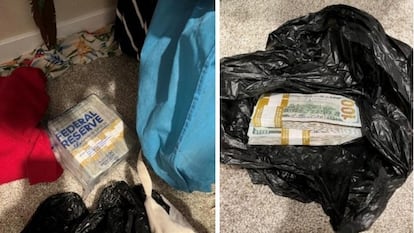
Federal agents arrested her on April 16, 2025. Searches of her home in Beaverton, Oregon, uncovered $120,000 in cash, jewelry and high‑end clothing. In January she was sentenced to nearly four years in prison. When she is released, in February 2028, she will be deported.
The same method was used by Mexican national José Alonso Páramo Argüello, owner of the Santa María stores in Oregon. Between January 2, 2024, and December 3, 2025, his three businesses sent more than $7 million in remittances to destinations in Mexico that prosecutors link to drug trafficking.
To a government informant who told him he was a drug trafficker, Argüello said: “You sell whatever you want; you’re a merchant, period,” according to the court documents. After that conversation he received more than $45,000, which he distributed through 22 electronic transfers. Like Barrera, he charged a 10% commission. He was arrested in March and his criminal case is ongoing.
The dark business of Doña Bella
Behind a row of piñatas and shelves full of tortillas, sweet bread, piggy banks and traditional Mexican clothing, Ana Bella Sánchez Ríos served members of the Jalisco New Generation Cartel who frequently came to hand her bundles of cash at a shop in Virginia. Federal prosecutors say the 53‑year‑old woman laundered more than $4.3 million at her store, Bella’s Tortilla & Meat Market.
Known to customers as Doña Bella, she was famous for her friendly manner. One of her favorite phrases on social media was: “The bread is here.” Yet she had become the final link in a long financial chain of organized crime that began with distributors of cocaine, heroin and marijuana in California. The cartel convinced her to move a fortune from Virginia to Mexico.
“Sánchez Ríos’s role was to receive money from several people who worked for the CJNG, which she knew were proceeds from drug trafficking,” the government said in a statement. “She then transferred that money to people in Mexico.” The woman was sentenced to eight years in prison.
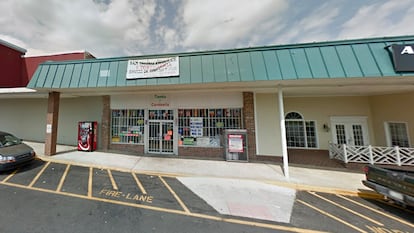
The Jalisco cartel also found an ally in Iván Noe Valerio, manager of a western‑wear shop called Yoli’s Western Wear in Dallas, Texas. Over time Valerio, then 23, helped move more than $10 million generated by the sale of heroin and methamphetamine in Dallas, one of the CJNG’s main distribution hubs in the United States.
José Valdovinos Jiménez, known as La Roca, was the CJNG operator responsible for transporting shipments to north Texas, processing them in clandestine labs, distributing them in multiple U.S. cities and wiring the proceeds to Mexico. More than 11,000 transfers were made from the business Valerio ran. The shipments, almost always under false identities, never exceeded $950.
In just six days, seven emissaries for La Roca delivered nearly $164,000 in cash at the store. According to investigators, Valerio charged only $20 for each transfer. Like the other store owners who moved money for the cartel, Valdovinos Jiménez ended up in prison and lost everything.
Sign up for our weekly newsletter to get more English-language news coverage from EL PAÍS USA Edition
