
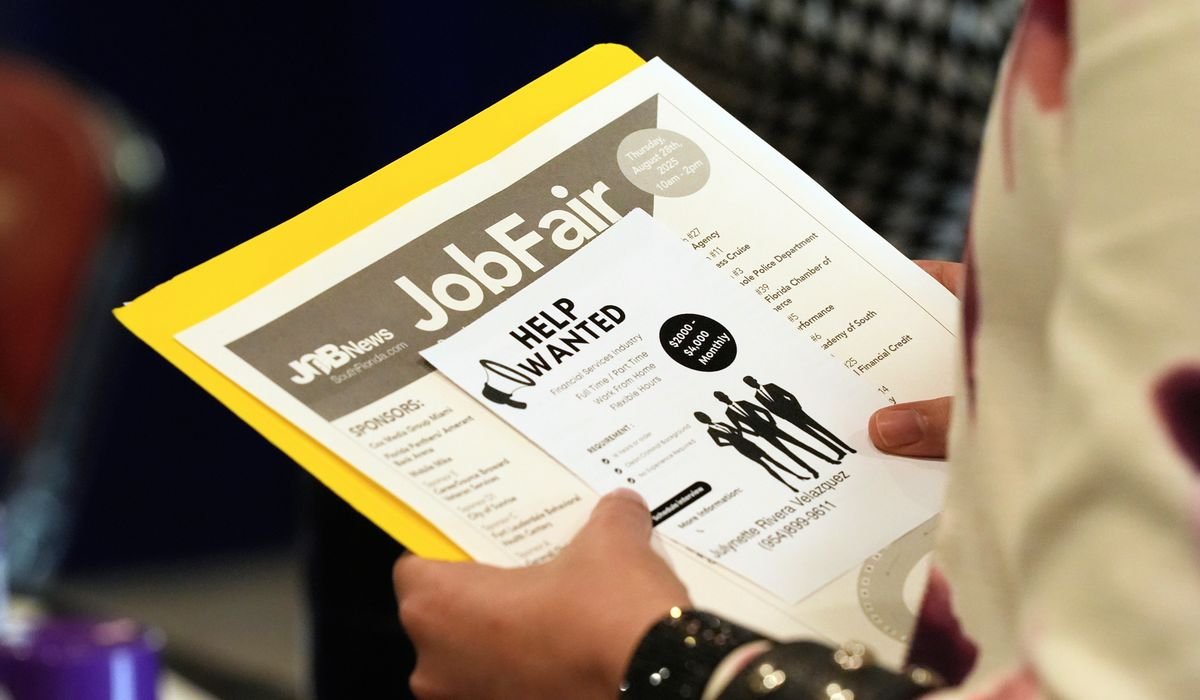
The U.S. added 57,000 jobs in June, the government said Thursday in a report showing slower hiring growth on the cusp of summer compared to red-hot reports earlier in 2026.
The Bureau of Labor Statistics said the unemployment rate changed little, dropping from 4.3% to 4.2%, as more people left the workforce rather than hunting for jobs.
Hiring growth was lower than expected, however, with Wall Street forecasting more than 100,000 new jobs.
“In June, employment continued to trend up in professional and business services, social assistance, and health care,” BLS said in its report summary. “Employment in leisure and hospitality declined.”
Other industries, such as construction and manufacturing, showed small gains.
The White House said the best was “yet to come” in key sectors, pointing to Magnitude 7 Metals’ decision to restart an aluminum smelter being built in Missouri.
The June jobs report reinforces that the American labor market remains solid thanks to President Trump’s economic agenda,” White House spokesman Kush Desai said. “Manufacturing and factory construction jobs continued to grow in June, especially for durable goods like steel, aluminum, and other metals.”
Others worried that wages are not keeping pace with inflation, and that some people simply are not looking for jobs anymore.
“The big picture: It’s a better job market than a year ago, but the opportunities are limited,” Heather Long, the chief economist at the Navy Federal Credit Union, said on social media.
Some experts interpreted the June report as a sign that consumers are getting cautious.
“The sharpest blow was in leisure and hospitality, which shed 61,000 jobs in June despite it being the summer hiring season. Americans are cutting back on their vacation and family spending, and the employers that rely on that are cutting back as well,” said Sean Higgins, a research fellow at the Competitive Enterprise Institute.
Job gains were lackluster in 2025, as employers eased off a post-pandemic hiring frenzy and worried about factors such as new tariffs. The situation prompted the Federal Reserve to cut interest rates despite lingering inflation concerns.
There have been signs of a rebound in activity in 2026.
After a surprise downturn in February, the U.S. added an average of 155,000 jobs per month over the last three reports.
While job gains are generally a positive sign, the trend could complicate decision-making at the Fed, where President Trump is banking on handpicked Chair Kevin Warsh to slash interest rates.
Strong hiring allows the Fed to focus on corralling inflation, and central bankers will be reluctant to cut rates.
Stocks were mixed Thursday as investors sized up disappointing numbers from chipmakers, though some investors bet the cooler-than-expected jobs report would allow central bankers to consider rate cuts again, or at least avoid a rate hike.
