
When biologist Richard Dawkins coined the term meme in 1976, he could hardly have imagined that half a century later the word would be incorporated into the daily vocabulary of almost the entire planet. The British scientist created this term to establish a comparison between genes and the transmission of cultural ideas. According to Dawkins, a concept, whether it was an idea, a tagline, a joke, or a melody, could be adapted for its cultural survival just like genetic material. The form changed but not the substance. But, as is the way, the arrival of the internet changed everything, in this case elevating the term’s reach to such an extent that one of those memes can even be used to X-ray the millennial generation. Ironically, the first generation to grow up with the internet.
The Millennial Falloff meme above alludes to the collapse of that generation, illustrated through relevant icons that emerged at the beginning of this century, when millennials were coming of age. Among them are the companies that defined social networks and communication at that time (MySpace, Facebook, Tumblr, Vice and Buzzfeed), music (M.I.A., Arcade Fire, LMFAO), technology (iTunes and the iPod mini) and style, especially the turn of the century’s hipster: bushy beards, lumberjack aesthetics, ukuleles, T-shirts emblazoned with slogans and Moleskin notebooks. They all have one thing in common: they have long since lost their ability to seduce.
That is far from an isolated meme. Jokes with references to millennial culture proliferate to the point that there are accounts such as Millennial Misery dedicated to compiling them – in this case attracting 1.7 million followers. “The previous generation already respects us a little more because we are getting older, but the next generation ridicules us because we are now the oldies. Millennials are the new boomers,” says Violeta Navas, better known as La Prados, a millennial illustrator, cartoonist and screenwriter. A few years ago, she published a book, The Millennial Crisis, a humorous examination of her contemporaries’ problems and their life circumstances which, to paraphrase Chuck Palahniuk’s satirical novel Fight Club, have made them the middle child of history. “We were educated within a fairly meritocratic and linear framework: study what you like, train yourself, work hard and you will succeed,” she says. “But reality doesn’t work like that. I think that has caused a major generational crisis.”
Added to this constant sense of precariousness and an absence of a promising future is the derision of younger generations who mock the references that marked a millennial’s passage to maturity. Why have all these brands, artists and trends ended up being a laughingstock and a meme? Is it simply the passage of time or are there other reasons why millennials are considered old-fashioned? The motives are diverse, but one prevails.
When the internet was everyone’s space
One of the fundamental reasons for the collapse of millennial icons could be the primitive online world they emerged from; an internet in which social networks were just beginning to be developed and in which a naïve innocence reigned. The 13 years between the birth of MySpace (in 2003) and TikTok (2016) might as well be centuries. In 2026, there is a whole generation that views Facebook as somewhat archaic and which has not encountered Tom Anderson, co-founder of MySpace who appeared as a default friend to all its users. “There was an enormous innocence regarding digital life,” says La Prados. “We had no awareness of what the internet or the digital footprint meant. There are fashions that I would never go back to, no matter how much the 2000s are idealized now, but there was something very beautiful about it too: the internet was a community. Everyone found their space. If you were different, you found people who looked like you. It was really a refuge for a lot of people.”
Now, that sense of community has been replaced by the pursuit of relentless idealization. “Even the language has changed,” says La Prados. “Everyone talks as if they were an influencer, have a thousand followers or a million. Anyone recommending a cream or reviewing a product is doing so as if they were creating professional content. And you think: at what point did we stop simply uploading photos of ourselves with our friends? Because that’s what we did before. There was no constant comparison. You uploaded something because you felt like it and that was that.”
La Prados flags up another network that has fallen into disuse: “For me, Tuenti was the best social network that has ever existed. Much better than Facebook and much better than Instagram,” she says. “You went out partying and the next day you uploaded two hundred photos without thinking twice. I’m not saying that was necessarily better. We are now more aware of privacy, but the difference is that now the exposure is completely curated; we show much more of our lives, but in a much more controlled and artificial way.”
The fall of the gods
Several media outlets that experienced their heyday in the early 2000s are now toast. The clearest example of this is perhaps Vice, the digital magazine that emerged in Canada in the mid-nineties and that was creating a small empire through a content approach based on provocation and the youth culture of the day. In 2017, the Vice Media group was valued at about $5.7 billion. In 2026, the company declared bankruptcy.
BuzzFeed, the website that adapted traditional information to developing online language, followed a similar narrative arc. Founded in 2006, it focused on content that sought to connect emotionally with young users. At the time, it was almost impossible to escape one of its tests, mostly linked to aspects of popular culture. The quest of social networks like Facebook and Twitter to Instagram and TikTok for anything viral spelled its end. In 2019, it closed its Spanish version, after only three years, and in 2023 it closed the BuzzFeed News division.
In the world of art and entertainment something similar happened. “The voice of my generation, or at least a voice of my generation”, as Lena Dunham’s character Hannah was presented as in her series Girls, has been losing validity over time, and it’s not alone.
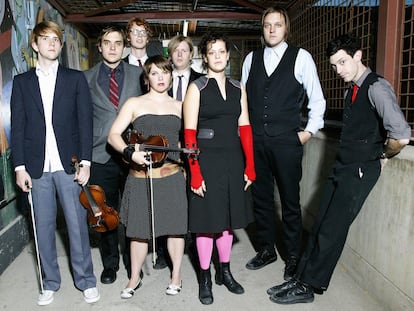
One of the most striking cases is that of Arcade Fire. The Montreal group burst onto the music scene in 2004 with their debut album, Funeral. Their epic sound and the rawness of their live performances which saw them mix with the audience, spoke to the millennial search for a community, elevating the band to stadium status. In 2010, they won the Grammy for album of the year, confirming their mainstream appeal. By the end of that decade, however, they began to run out of steam. Their album Everything Now (2017) was less successful, but the turning point came in 2022, when their singer Win Butler faced several accusations of sexual misconduct. The allegations damaged Butler’s relationship with his wife and bandmate, Régine Chassagne, from whom he separated in 2025.
The allegations against Butler were published on precisely the same website that had been crucial to his rise. Created in 1996 by Ryan Schreiber, Pitchfork became a point of reference in the independent music scene, capable of launching an unknown indie group to positive reviews. For a few years, it was an oracle to some, and an irritating source of hipsterism to others. In 2015, it was bought by Condé Nast, which seemed to confirm its passage to the mainstream pure and simple, but since then its influence has been in decline. Earlier this year, they introduced one of their most controversial policies: their review scores are now only visible to subscribers.
Another artist whose career was propelled by Pitchfork, but which is now in decline, is M.I.A. The British singer of Sri Lankan origin became huge in the early 2000s suggesting a new model of global star, risky and combative. But her stance against vaccines during the Covid pandemic and her unexpected support for Donald Trump have ended up disappointing fans if her increasingly uninspired albums had not. It could be said that the millennial music idol started out with firm ideological views and commitment in contrast to mainstream pop artists who wanted to please everyone. It was an inspired strategy, but her fanbase became disillusioned by her opinions in the longrun.
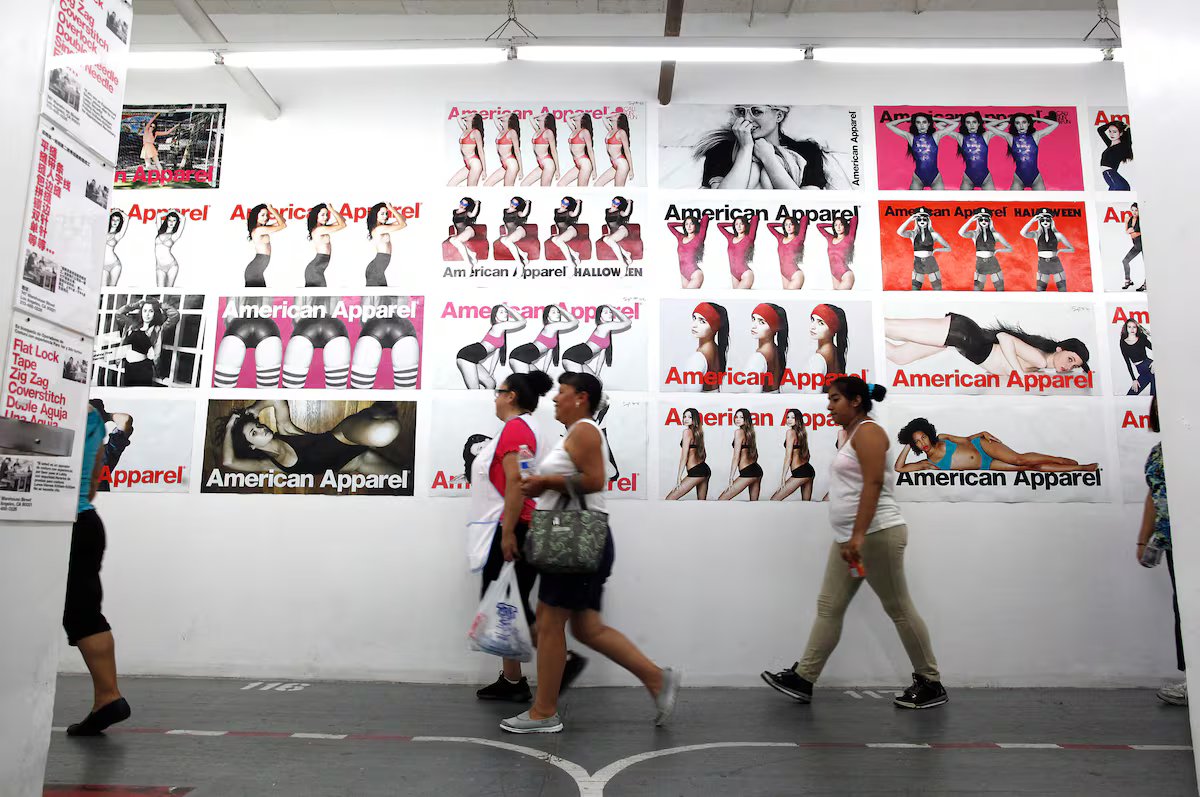
Millennial fashion has gone the same way as music and the media. How could it not? Perhaps the brand that best illustrates this generational shift is American Apparel. It became big on the back of basic garments in a multitude of colors promoted by aggressive campaigns. Some of these campaigns were the work of photographer Terry Richardson, who years later would be accused of sexual abuse. The allegations emerged just as the brand was losing popularity. It ended up going bankrupt in 2015.
The case of Supreme is somewhat different and is fundamental to the understanding of the streetwear fever we have today. Founded in 1994 by James Jebbia, Supreme was the epitome of authentic urban fashion for more than two decades, a status it reached with an almost anti-marketing strategy. It produced limited editions, which caused long lines on launch days and resales on the internet. It also harbored a disdain for traditional media. From collections and collaborations with cult musicians, the firm went on to stamp its white logo on a red background on an ever-growing range of objects until it was everywhere, thereby turning an underground icon into an omnipresent brand. In 2020, Jebbia sold the company to VF Corporation, which in turn sold it to EssilorLuxottica in 2024. It is a journey that seems to reflect the fate of an entire generation: what made it look different has ended up being assimilated by the system. And that might be the best that can be hoped for.
Sign up for our weekly newsletter to get more English-language news coverage from EL PAÍS USA Edition
