
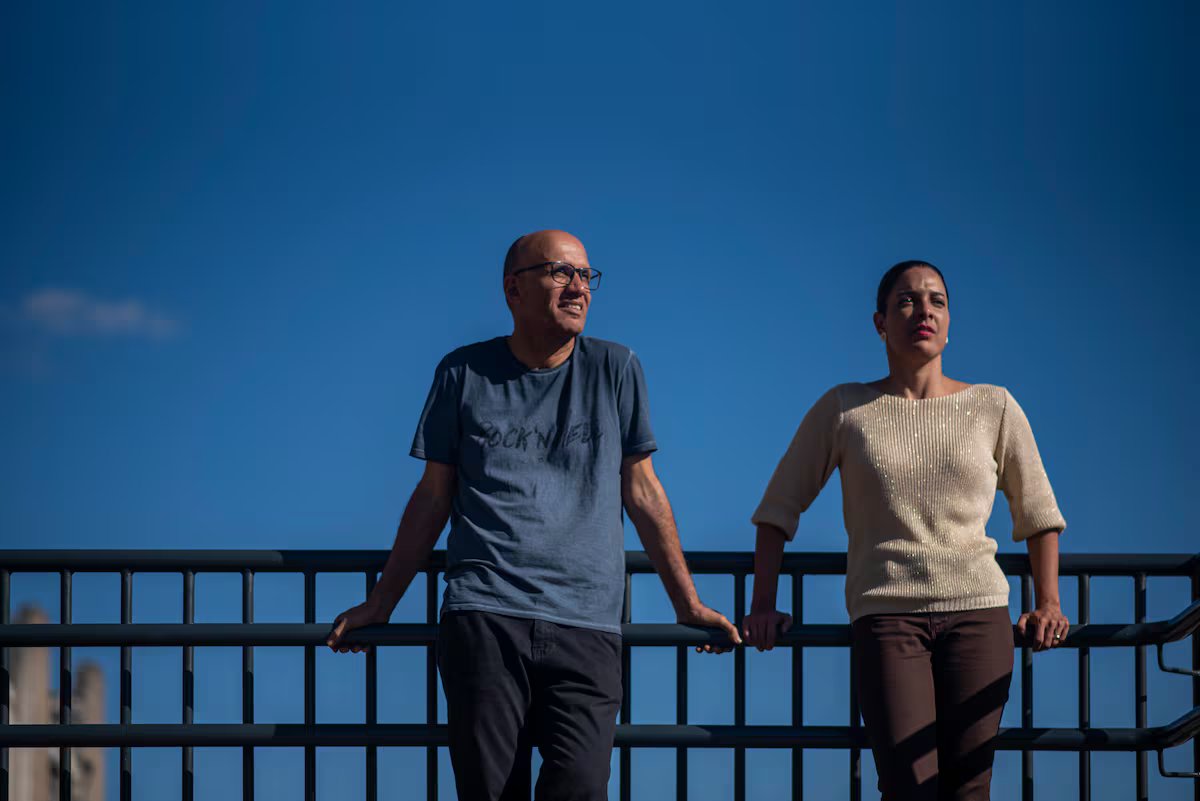
Débora Soares, 41, had an unusual childhood. She was born in Brazil’s largest psychiatric hospital, where her mother worked as a nursing assistant and her father as a doorman. It was a vast hospital complex with a daycare center she attended. For years, she frequented the place. When visiting with her parents, she saw the patients, sometimes chatted with them, and even knew some of them by name. But she also caught glimpses of the horror carried out in the name of medicine.
“I saw some scenes… naked patients, shouting, foul smells. But at the time I didn’t understand the scale of it because I was raised there, you know?” Débora said on Wednesday in her first interview with a foreign news outlet. Some hospital staff whispered behind her back because many of them knew the great secret she would only discover in her twenties.
The absence of photos of her mother’s pregnancy and her mother’s behavior fueled suspicions about her origins. One day, she asked one of the nannies who had cared for her as a child, and the woman did not beat around the bush. She told Débora what she knew: she was adopted, and her biological mother was one of the women who wandered aimlessly through the grounds of the psychiatric hospital in Barbacena, a city 173 miles from Rio de Janeiro in the state of Minas Gerais, a region known for its minerals, coffee, and mental health institutions.
Over time, she learned that her biological mother had been forcibly committed at the age of 16 after being abandoned at eight because of her epileptic seizures and transferred between other institutions. She never again lived outside institutional walls. She died at the age of 50.
Débora was handed over to her adoptive parents at birth, without any legal process — nothing unusual in that place. It is estimated that at least 30 babies born in the psychiatric hospital met the same fate. “They called it a ‘Brazilian-style’ adoption back then,” she recalls.
The Soares family registered her as their biological daughter. Armed with the first pieces of information about her real origins, she rushed to the hospital in search of the unknown woman who had brought her into the world. While waiting for a response from the administration, she questioned some of the residents.
One of them told her the truth bluntly. “A patient I knew from childhood told me: ‘The person you’re looking for is Sueli Resende because she had two daughters here. I think she’s dead now,’” Débora recalls in a café in Belo Horizonte. Débora — who holds a degree in literature and works as a supermarket cashier — recounts her family drama with remarkable composure. Only the constant rubbing of her hands betrays some nervousness. She has spent many years in therapy.
The Hospital-Colônia, as it is known in Barbacena, was for decades the epicenter of atrocities committed in the name of psychiatry in Brazil and elsewhere. Hunger, cold, torture, and diarrhea claimed the lives of around 60,000 patients, whether genuinely mentally ill or merely presumed to be so. There were so many deaths that the institution had its own cemetery. The hospital even profited from selling corpses to universities. Yet within those wards, which included punishment cells, babies were also born — among them Débora and João Bosco Siqueira, now 59 years old. No one knows how many; there may have been hundreds.
Now they, together with other survivors, have sued the Brazilian state in court. They demand that it acknowledge its responsibility and compensate them for the moral damages they suffered during “one of the darkest and most extensive episodes of human rights violations in Brazil, perpetrated with the complicity of the state, part of the medical community, and society,” according to the lawsuit, drafted by lawyer Gabriel Hess, Débora’s stepson. “Because it is such a sensitive matter that it requires someone I trust completely,” she says.
João Bosco’s mother, Geralda Siqueira, gave birth in the asylum after being forcibly committed at the age of 14. She was not mentally ill but was pregnant after being repeatedly sexually abused by the head of the influential family she worked for as a servant. She was put on a train bound for Barbacena, where the family had a relative who was a nun. After giving birth, she lived with her son for a couple of years, until, in the late 1960s, he was taken away without warning.
Desperate, she suffered a breakdown and was subjected to electroshock treatment. João Bosco explains that “the next day they threatened her: if she looked for me or brought up the subject again, things would be even worse.” He says that he was sent to the first of several orphanages where he grew up. Four decades passed before his coworkers managed to locate Mrs. Geralda and arrange a reunion as a birthday gift. A month later, he visited her at home: “For the first time, we sat down and talked. She told me the story; she explained everything she had been through.” She is also a plaintiff in the lawsuit.
The Barbacena institution finally closed in May, with its last 14 patients transferred to a property outside its walls. The claimants fear for the preservation of the medical records and the institution’s archives. If those records deteriorate or disappear, there is a risk that, once the last person involved dies, the cruel system that destroyed their mothers’ lives and profoundly affected their own will be buried in oblivion. They are determined to prevent that from happening.
Throughout the 20th century, Barbacena became something of a city-asylum thanks to its cool mountain climate and railway connections. The most important psychiatric hospital was founded in 1903 as a sanatorium for the wealthy, complete with luxuries such as telephones and silver cutlery. Later patients would lose their teeth after years of eating with their hands.
Psychiatric institutions became a pillar of the local economy and a dumping ground for thousands of people considered disposable by society. “It was not mere hospital negligence but a deliberate policy of extermination aimed at individuals deemed undesirable, which transformed an alleged place of care into a death camp,” continues the lawsuit, accusing public institutions of both omission and direct action.
An extensive railway network that converged on the city brought tens of thousands of people there. It is estimated that two-thirds were not mentally ill. Many went mad behind those walls. João Guimarães Rosa, one of Brazil’s great writers, dedicated a story to what he named “the train of the mad,” an expression that took hold in society. The carriages were packed with passengers who only made the one-way trip.
Prostitutes, alcoholics and vagrants shared the fate of gay people. And political dissidents. Single mothers were sent there along with wives confined by their husbands and daughters who lost their virginity before marriage. “Women who defied the patriarchal order,” the lawsuit notes.
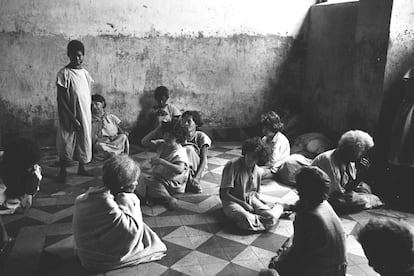
These children of the asylum of horrors came up with the idea of suing the state after learning that, in 2025, the Public Prosecutor’s Office — an institution in Brazil that combines the functions of an attorney general’s office and an ombudsman — opened an investigation into the Barbacena hospital as a step toward addressing the atrocities of the past. The inhumane treatment had not been a closely guarded secret. Many people worked at the hospital, from doctors to cleaners. Some even brought their daughters there to spend the afternoon.
Prosecutor Angelo Giardini de Oliveira, who is handling the case, stresses in his office that “something like this does not happen only because of the state’s actions but because part of society accepts and supports it.” Despite occasional investigative reports, such as that of photographer Luiz Alfredo, who in 1961 portrayed patients as zombie-like figures in stark black-and-white photographs (images now held in the Barbacena municipal archives), conditions improved only minimally for decades. There was little interest in those human beings who were being treated like animals.
The major turning point was O Holocausto Brasileiro (The Brazilian Holocaust), a book published in 2013 by journalist Daniela Arbex that became a bestseller. Brazilian society began to grasp the scale of the horror.
Prosecutor De Oliveira stresses that an investigation like this requires a mature society and considerable sensitivity. His team is proceeding step by step. Their goal is to uncover the truth and preserve the historical memory of what happened, but they are also listening to victims to determine what form collective reparations should take.
“We are in an initial phase of listening, raising awareness, collecting documents and understanding the scope of the rights violations that occurred there,” the prosecutor says.
Débora, João Bosco, and another victim have already given testimony. The Federal University of Belo Horizonte and the Federal University of Juiz de Fora — two of the 17 universities that purchased the bodies of patients — have recently issued apologies. Meanwhile, the public foundation that operated the hospital has announced plans to digitize its archives.
Vista aérea del complejo psiquiátrico de Barbacena, cedida por el abogado Hess.
After being reunited, João Bosco and Geralda, now 75, built a mother-son relationship. A firefighter with a degree in philosophy and an avid reader, he says they are seeking justice because the system, “instead of being fair, turned a blind eye. It abandoned a little girl in that place because she had been abused.”
Remembering the past pains him. “I demand justice because it is not right to separate a child from his mother — my mother has not had a moment of peace in her whole life; it has been all hardship.”
Illiterate, Geralda earned a living as a domestic worker and, although she raised a family, life has dealt her countless blows. Her expectations are modest. The plaintiffs speak highly of the prosecutor, but João Bosco notes that “unfortunately, in Brazil, criminal law is designed for the poor, while civil law is designed to protect the rich.”
The survivors who had no families — many of them suffering from severe, lifelong consequences — were gradually transferred to therapeutic residential homes in Barbacena, a city that has sought to learn from its past. The Italian psychiatrist Franco Basaglia, a leading advocate of psychiatric reform, visited Hospital-Colônia in 1979 and was deeply shocked: “Today I have been in a Nazi concentration camp. Nowhere did I see anything like this.”
From the 1980s, Brazil started to embrace a new therapeutic approach to mental health care. The city also took a step toward coming to terms with its past by opening the Museum of Madness on the hospital grounds.
Among those present at the museum’s inauguration in 1996 were Débora, then a 12-year-old girl, her adoptive parents, and … her biological mother. Débora has no memory of meeting her that day and cannot identify her among the many patients she interacted with. She called the ones she knew best uncle and aunt, the affectionate terms Brazilians commonly use for older people.
The day another patient told her that her mother was the late Sueli Resende, she also suggested that Débora visit the museum, where there was a portrait of her.
And there she was, in black and white. She looked calm, with a half-smile, full cheeks and a generous chin. In the portrait, she is wearing several necklaces. “She piled them on one atop another so she wouldn’t lose them, so they wouldn’t be taken,” her daughter says.
At Hospital-Colônia, scarcity was so extreme that any possession could become a source of conflict. It was the law of the strongest. Sueli was greatly feared by both the other patients and the caretakers.
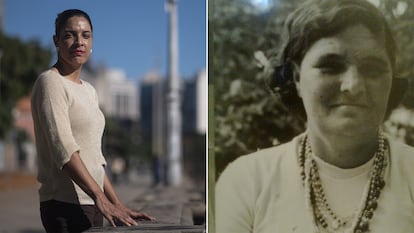
Débora learned about her mother by reading her medical record. It took her three years to obtain permission to consult it. She confirmed that her mother had died in 2006, just one year before she discovered the truth. They had come so close to meeting.
For two weeks, Débora went to the hospital every day to read and take notes from file no. 947, a detailed account of the 35 years her mother spent confined there. It documented the epileptic seizures — sometimes as many as five in a single day — the medication, the electroshock treatments, the terror and anguish she felt before the sessions, the vegetative state they left her in, the self-harm and aggression she displayed in an attempt to avoid such cruelty, and the many periods she spent in punishment cells.
What horrified Débora was discovering that the brutal treatment had become so routine it seemed almost banal. Her family prevented her from being lobotomized, but they never visited her.
And Sueli’s medical file also recorded her experience of motherhood — and the trauma of loss. She gave her daughters the names of two of her sisters. Because they were taken from her immediately after birth, all she knew about them were their names, birth dates, and skin color. Each child was the result of a relationship with another patient.
“I have two daughters. One dark-skinned, one white. The dark one is called Débora; her birthday is August 23, 1984. The fair one is called Luzia; she was born June 15, 1986,” she would repeat. And she prayed for them with a rosary that her daughter found and has kept.
Every year, as the girls’ birthdays approached, her mother’s crying spells became worse. Sueli died of a heart attack without ever hearing any news of her daughters.
Her medical records also reflect the changes brought about by the gradual humanization of treatment within those walls. “Electroshock ended. Patients began to be treated as individuals. They took part in workshops. Hygiene arrived — brushing teeth, manicures, meals that actually had some flavor,” says Débora.
Page by page, Débora saw “how her behaviour changed as the treatment changed.”
Débora stresses that the asylum’s own staff — including her adoptive parents, who have since died — were themselves unprepared and lacked the resources to manage a facility that at one point housed 5,000 patients at the same time. Anyone could dispense medication or administer electroshock treatment.
And what about the other girl? What became of the fair-skinned baby? Débora searched for her for 12 years without success. Then, suddenly, one day in 2019, she learned that Luzia had been looking for her too. The shock was compounded by the astonishing discovery that her sister did not speak Portuguese because she was French.
Her name is Marie Florin Gillot, and she resembles their mother. After first getting to know each other through a screen, the sisters spent an unforgettable Christmas together in France.
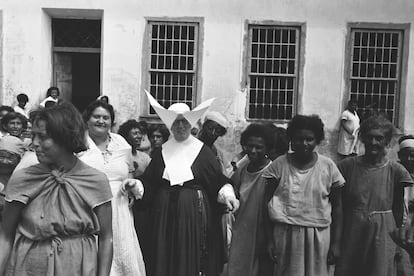
Thanks to the fact that her adoption had been legal, the name of the judge who approved it became the thread that Débora’s French sister followed to uncover her past and track down her Brazilian sibling.
Débora grows emotional recounting the details: “It was the greatest joy of my life, the greatest achievement after having cried so much for not having known my mother.”
With emotion, patience and the help of Google Translate, the sisters keep in touch.
“What my mother suffered was worse than imprisoning an innocent person,” Débora says. “A 35-year sentence, an entire life lost, a whole life of punishment.”
Nothing will bring their mother back or fully heal the scars left by the trauma. But, she says, compensation would allow the sisters to cross the Atlantic from time to time, see each other, and recover, as far as possible, the part of their lives that was taken from them.
At the law firm of attorney Hess — who is the son of Marie’s husband — testimonies from other Barbacena survivors continue to arrive. He says that some of them had never even heard of O Holocausto Brasileiro, yet they recount details that could only be known by someone who lived through that horror firsthand.
Sign up for our weekly newsletter to get more English-language news coverage from EL PAÍS USA Edition
