
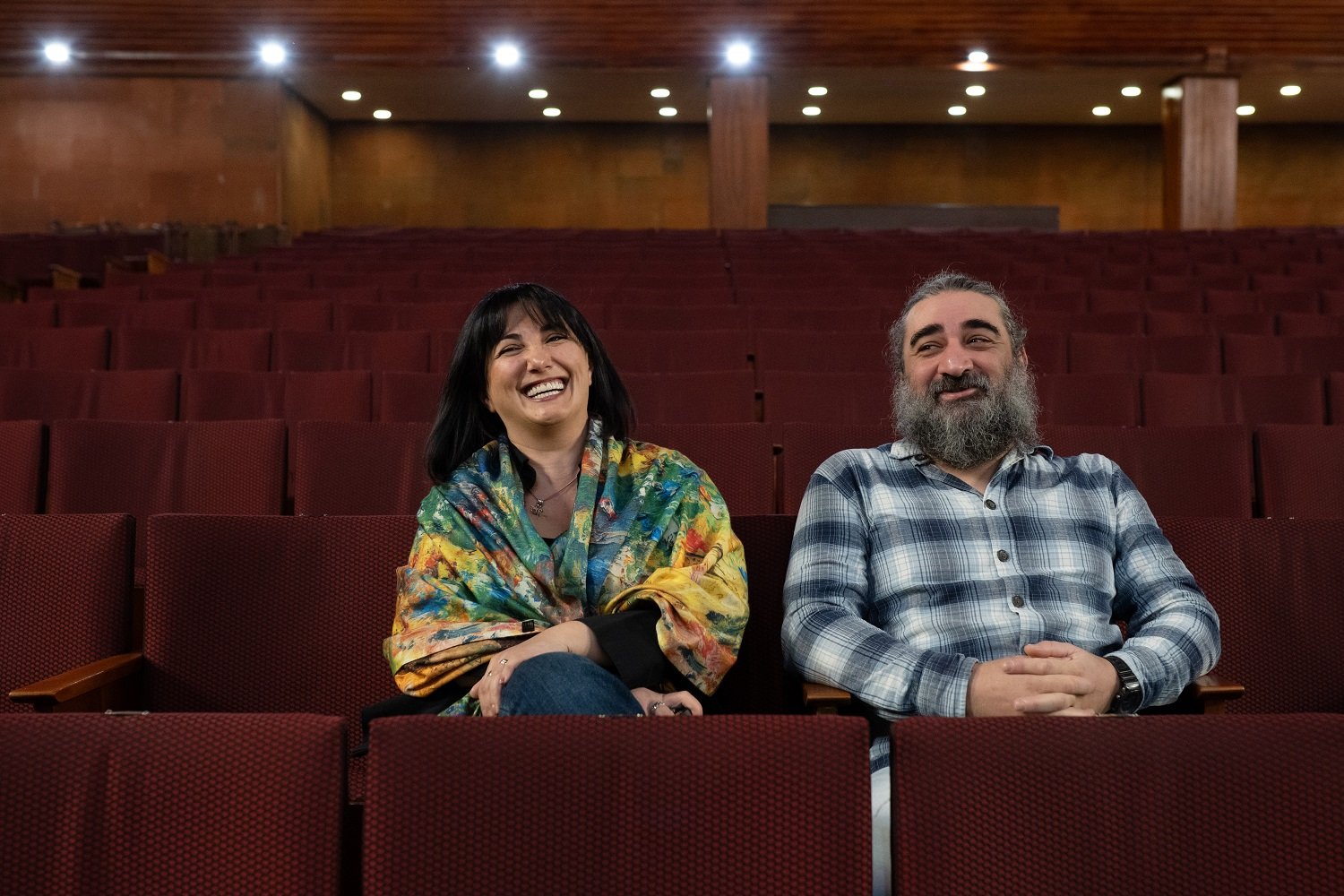
– The Armenian duo reveal details about the making of their heartfelt documentary, as well as their differing approaches to finding the right balance, both on set and in the editing room
After premiering at IDFA and touring other festivals, the tragicomic documentary Outliving Shakespeare is finally screening on home turf in the International Competition of the Golden Apricot International Film Festival, providing an opportunity to speak with co-directors Inna Sahakyan and Ruben Ghazaryan.
Cineuropa: What drew you to this retirement home and its residents?
Inna Sahakyan: It started almost by accident. I saw a morning TV programme about the theatre group in the home, and my first thought was that this could become an uplifting documentary about elderly people rediscovering life through theatre. When I visited for the first time, I immediately felt there was enormous cinematic potential. The place was full of contrasts, but also of humour and openness. People didn’t have the usual social filters anymore – they said exactly what they felt.
Ruben joined a bit later as a co-director on the ground, as I was living between two countries and travelling a lot with Aurora, but he already knew the material. It took about six months from that first visit to the start of production. The filming and editing process lasted more than three years and we never really stopped filming during the edit, ending up with around 400 hours of material.
The film ultimately becomes less about theatre than about love, loneliness and emotional desire in old age. Was that something you expected to discover?
IS: I knew these people would have emotional ups and downs, but I honestly imagined a more optimistic film, centred on the transformative power of theatre. What surprised me was how deeply personal and dramatic their lives became. Behind the rehearsals, there were stories that felt genuinely Shakespearean.
Ruben Ghazaryan: When I joined, Inna had already filmed a great deal. I actually tried to avoid the project at first because, personally, the subject of ageing frightened me. I was going through my own midlife crisis. But once I immersed myself in the material, it became impossible to stay away.
We were filming both worlds: the stage, which represented dreams and escape, and backstage, where the real drama unfolded. The editing process became the place where we decided how these two realities should coexist.
How did you shape the extensive footage into a feature?
RG: That was our biggest argument throughout the editing process. Inna is much more analytical, while I trust intuition. Finding the balance between those two approaches became the essence of the edit. Some sequences were carefully constructed, while others simply emerged as we watched the footage. Often it wasn’t individual scenes that were created in the editing room, but the transitions between them – moments that can’t really be calculated.
IS: We were also fortunate to work with editor Artur Sahakyan, who contributed many of the film’s lyrical passages. Some of his first edits remained almost unchanged in the final version because they captured the poetic atmosphere we were looking for.
The Artsakh tragedy is an inevitable background. Did you add it intentionally or did it naturally intertwine with the story?
RG: That was the “brain” part of the film. Intuitively it didn’t fit, but intellectually we felt we couldn’t ignore it.
IS: My original idea was to stay entirely inside the retirement home and let this microcosm speak for itself. But the blockade and the ethnic cleansing in Artsakh happened while we were filming. Gayane’s story became the bridge: we had filmed her before she returned to Stepanakert, and then she came back as a forcibly displaced person. Her eyes said more than any political statement could. We decided to let the outside world enter through the television, connecting the beginning and end of her story without losing the film’s intimacy.
Another captivating character is Anahit, who isn’t even part of the theatre group.
RG: She became the soul of the film. Unlike the others, who pursue dreams through theatre, Anahit embodies the reality of the place itself. During filming we watched her change profoundly, from an energetic, humorous woman into someone who gradually lost hope. Through her, you actually feel time passing.
IS: At first, she wasn’t even one of our main characters. She simply kept appearing in front of the camera, full of wit and energy. Later we understood that she represented the other side of the story. While everyone else tried to transform themselves through performance, Anahit accepted the reality of her circumstances. That made her the emotional centre of the film.
How did making the documentary change you personally?
RG: I discovered that older people are often the most open to life. They want to live every second they have left. During the making of the film, I realised that we are now closer to their generation than to our children’s. Accepting that was part of accepting my own ageing.
IS: Spending years with them made me reflect more deeply on how I live my own life. Their stories show how decisions made when they were young shaped the people they became, so I grew more thoughtful about the choices I make today.
