
A new poll finds that the majority of Canadians support both the Alberta-B.C. pipeline and the Alberta-Ontario pipeline, though one of the two was favoured by survey respondents.
The poll, conducted by the Angus Reid Institute , revealed that the proposal for a new pipeline from Alberta to B.C. received 63 per cent support, while the plan to bring oil to Sarnia, Ontario, received 55 per cent support.
Interestingly, 62 per cent of respondents in B.C. itself supported the pipeline proposal, despite, the research foundation notes, being a province where pipeline resistance has been a persistent story for two decades.
The arguments that proved most persuasive in the case to build the pipelines were economic, with 55 per cent of respondents saying they support the Alberta-B.C. pipeline because it helps Canada sell oil to markets outside the U.S.
Other compelling arguments that respondents pointed to included the general importance of oil to the economy (51 per cent) and the creation of jobs and economic growth (45 per cent).
On the other end of the scale, 41 per cent of respondents, including half of respondents in Quebec, felt the most persuasive argument against the Alberta-B.C. pipeline was that Canada should be investing in renewable energy instead.
Elsewhere, 34 per cent said the economic benefits may not be concentrated enough to justify the project, and 30 per cent pointed to environmental and oil spill risk.
After being presented with arguments for and against the project, support for the Alberta to B.C. pipeline rose slightly in every region, from 61 per cent to 63 per cent nationally.
Support was highest in Alberta, at 76 per cent, and lowest in Quebec, at 50 per cent.
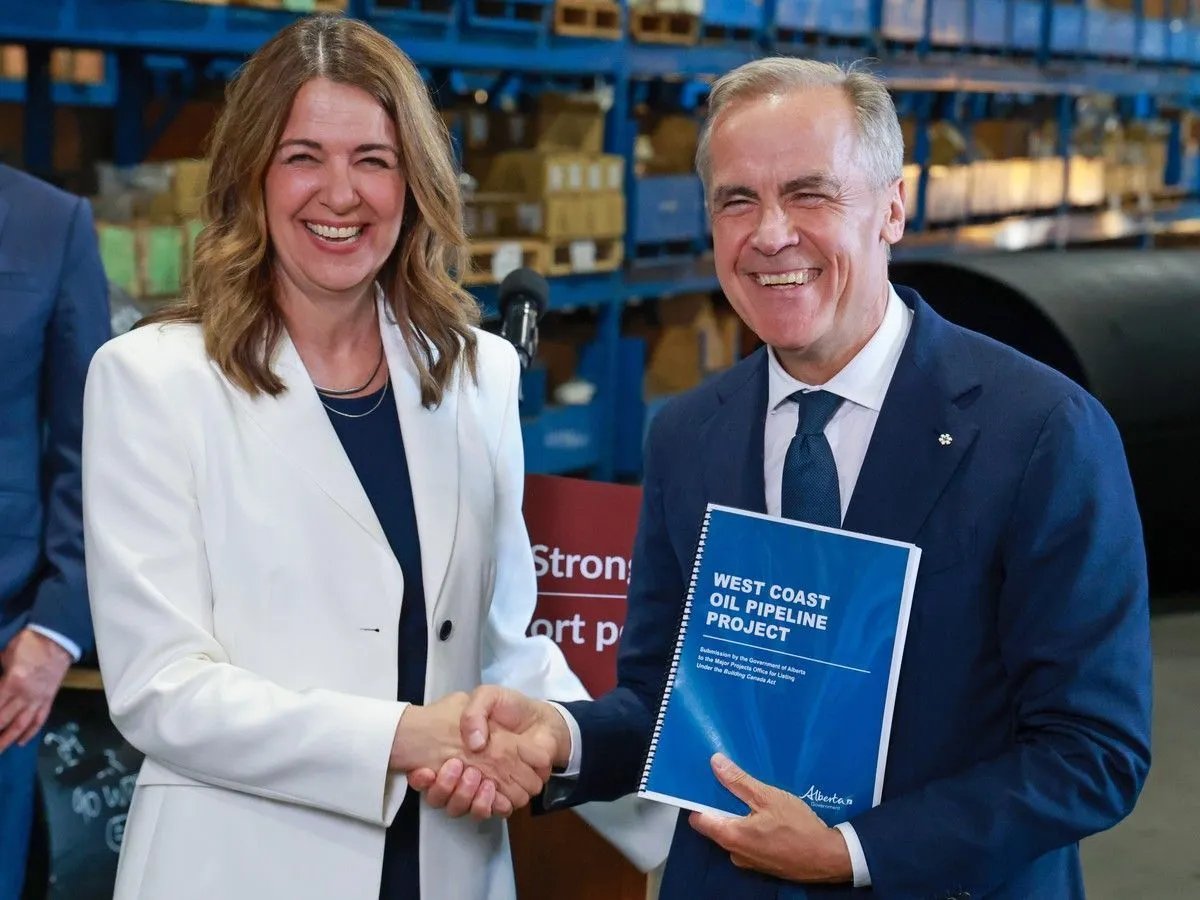
The Alberta government submitted its long-awaited oil pipeline project on July 2, proposing a route that would run along the existing Trans Mountain corridor, shipping one million barrels of oil per day.
Nearly nine-in-10 Canadians (88 per cent) said they’ve heard at least a little about the project, while awareness of the Alberta-Ontario pipeline was much lower, with 41 per cent of respondents saying they hadn’t heard of it at all.
That project was unveiled by Ontario Premier Doug Ford and Alberta Premier Danielle Smith on July 6, and involves a 3,300-kilometre crude oil pipeline running from Hardisty, Alberta, to refineries in Sarnia, Ontario.
The Angus Reid Institute notes that, in both cases, only about half of Canadians say they have truly made up their minds about the projects, suggesting the proposed pipelines sit on shifting ground.
On the Alberta to B.C. pipeline, for example, 47 per cent said they are fixed in their position on it, while 53 per cent say they could change their mind.
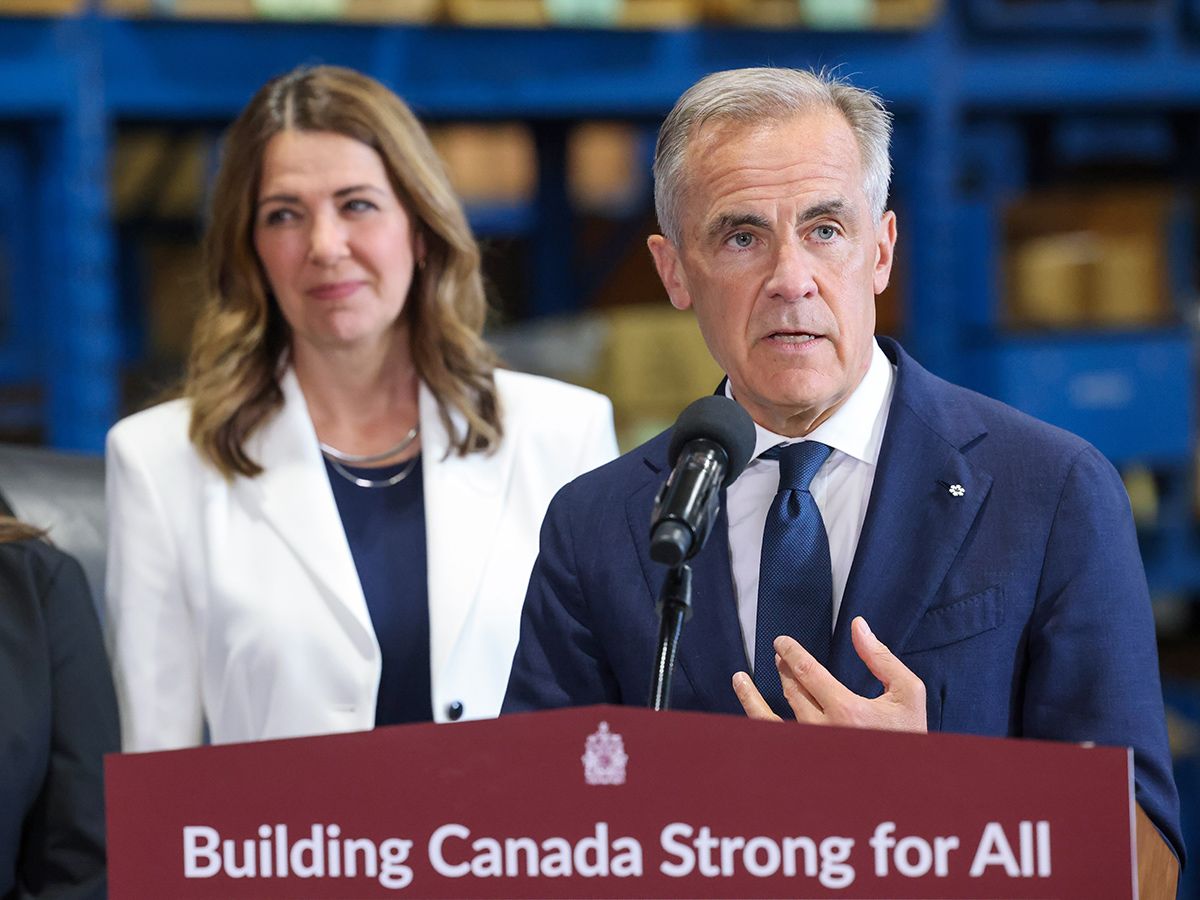
The new poll comes as Prime Minister Mark Carney defended his climate priorities to reporters on Thursday, following wildfires that led to Toronto recording the worst air quality in the world this week.
Asked what he would say to Canadians who believe the current wildfires are a sign Canada should “lean in” to its climate targets rather than dropping them, Carney said, “I absolutely agree.”
He added: “We relied too much on laws that weren’t driving the actual investment that’s necessary to reduce emissions. So, we’ve shifted our focus,” noting the emission-reduction conditions on the pipeline deal.
But Bloc Québécois Leader Yves-François Blanchet said Carney’s logic of reducing emissions while adding a new pipeline makes little sense.
“If the prime minister is serious in his preoccupation of doing something else than putting the blame on Justin Trudeau… he would stop this petroleum madness, and bring back his climate protection measures,” he said Thursday in St-Hyacinthe, Quebec.
The Angus Reid Institute poll was conducted online from July 10–14, 2026, among a randomized sample of 2,649 Canadian adults, with a margin of error of +/– 2 percentage points, 19 times out of 20.
Our website is the place for the latest breaking news, exclusive scoops, longreads and provocative commentary. Please bookmark nationalpost.com and sign up for our daily newsletter, Posted, here.
