
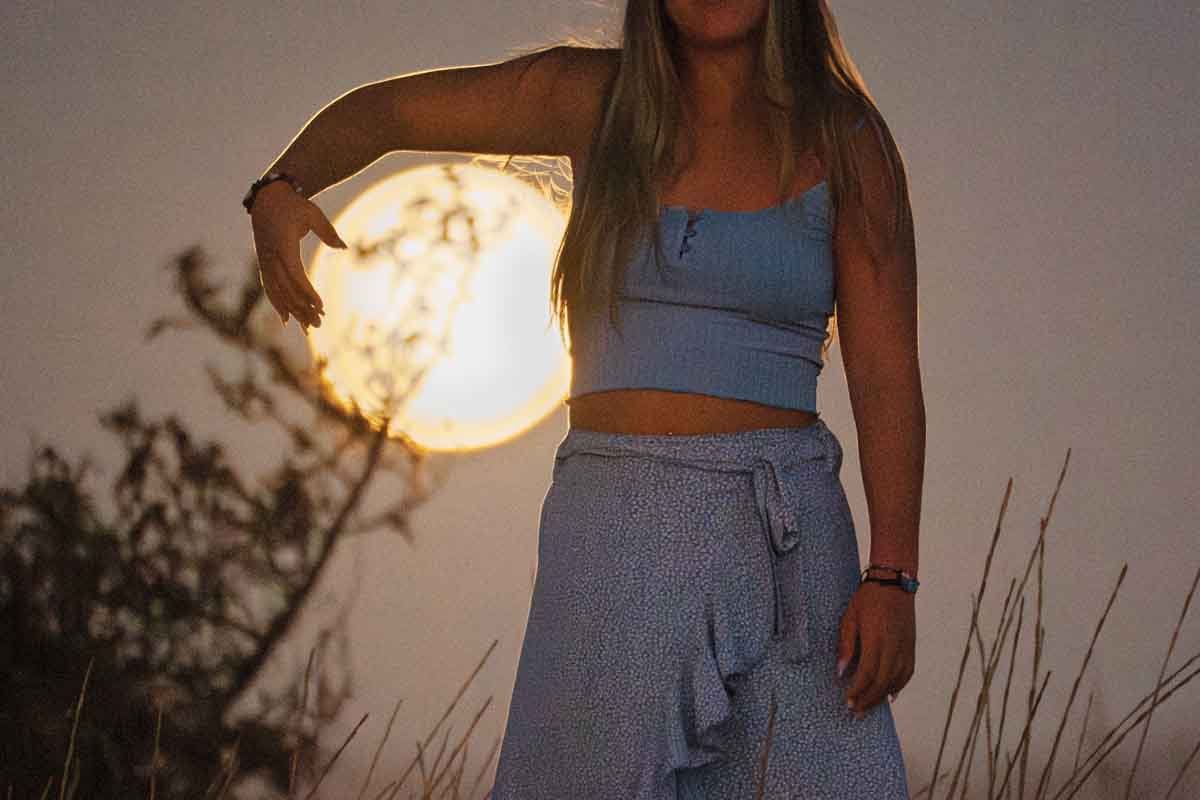
The lunar cycle has had a powerful relationship with life on Earth since time immemorial. In modern society, our relationship to the moon has faded as our environments have become more saturated in artificial light. But taking a hint from the moon and intentionally engaging in low-light practices—whether under moonlight or indoors—can help support your circadian rhythm and regulate your nervous system.
Mythology and medicine
Cultures around the world hold deep relationships with the moon, evidenced by unique stories told about its power and phases. For example, Inewiw (Cree) stories tell of a spirit, Oskapiwis, who sits on the Tipiskawi Pisim (moon) and reminds us of our responsibilities to help others.
In Ayurveda, a holistic medical system originating from South Asia, the moon is linked with human emotions, mental health, and intuition.
“Ayurveda associates the moon with coolness, nourishment, emotional balance, and fertility, which are considered opposite qualities to the heat and intensity of the sun,” says Nayna Trehan, director of Sri Sri Ayurveda Canada.
Guiding light
The moon guides the ocean’s tides and the behaviour of life living in it, and it has been thought to have an influence on humans, too. While studies have failed to find evidence of the “full moon” effect (an uptick in strange or negative events under the moon’s brightest light), research has begun to show that the lunar cycle can have a subtle impact on sleep.
A 2021 study found that humans tended to sleep less on the nights leading up to the full moon—even in urban environments rife with artificial light and limited awareness of the lunar calendar.
Not just a phase
Every 29.5 days, the moon moves through an eight-phase cycle: new moon, waxing crescent, first quarter, waxing gibbous, full moon, waning gibbous, third quarter, and waning crescent.
In Ayurveda, the new moon (amavasya) is considered a time for rest and introspection, while the full moon (purima) promotes peak energy and emotional sensitivity.
Out of sync
While we might experience some effects from the lunar cycle that are beyond our control, getting in touch with the light-dark cycle associated with the moon can be beneficial to our health.
For thousands of years, life unfolded in step with the rising and setting sun, with natural light fostering our daily rhythms and rest. This cycle guides our bodies’ circadian rhythm, an internal biological timing system that regulates various bodily functions on a 24-hour clock.
Exposure to artificial light beyond the sun’s natural cycle can disrupt this daily rhythm, leading to issues including metabolic syndromes, cardiovascular disease, hypertension, and neurological disorders.
Healing rhythms
A healthy circadian rhythm is important for maintaining skin health, allowing wounds to heal, and DNA damage to be repaired. It also helps regulate melanin production, allowing our skin to shield itself from sun damage (although you should always wear a high-quality, reef-safe sunscreen).
So, take a cue from the moon’s comings and goings. Exposure to sunlight, particularly in the morning, can help balance hormones, including sex hormones, thyroid hormones, and cortisol, reducing inflammation in our bodies. On the other hand, exposure to darkness at the correct times of day is linked to higher levels of melatonin, which in turn promotes sound sleep.
In Ayurveda, moon bathing—the practice of being immersed in moonlight—is considered to help us absorb the moon’s “cooling and calming” energy. Trehan also suggests trying full moon meditation to be done by moonlight, drinking “moon-charged” water that has been left under moonlight overnight, or chanting while gazing at the moon. Ayurvedic medicine also includes a practice of “moon fasting”, which takes place on the 11th lunar day in the Hindu calendar (Ekadashi). It is thought to balance the body, improve digestion, and promote mental clarity by fasting on simple food, juice, and water, Trehan notes.
Given the moon’s “cooling” properties, these practices are believed to reduce excess heat in the body, calming the pitta dosha, which is associated with heat, inflammation, irritability, and overwork.
Look up
No matter how regularly it appears, it’s hard not to be mesmerized by the light of a full moon. Taking a moment to fully be present with its light can remind us of the incredible power of the natural world and the privilege of being alive on Earth.
Low-light rituals
For nights when the moon isn’t visible or accessible, there are low-light indoor rituals that can regulate your circadian rhythm and help you relax:
- Dark showering: Proponents of this trend say showering in the dark, with low light, or by candlelight helps them unwind before bed, and science supports the idea that darkness prevents disruptions to our circadian rhythm.
- Meditating with a candle: Mindfulness meditation, focused on breathing and being present in the current moment, can fight insomnia and fatigue.
- Low-light yin yoga or stretching: A regular yin (slow-paced) yoga practice can help reduce anxiety and risk factors associated with non-communicable disease.
- Screen-free Sundays: Cutting down on screen time, particularly around bedtime, can improve mental health outcomes and sleep.
- Melatonin: Taking melatonin can help reset your body’s internal clock, making it easier to fall asleep and wake up on a regular schedule.
Yin and yang
The sun and moon are opposite forces that are interconnected and complementary in the natural world. Adequate exposure to both daylight and darkness can help keep us feeling balanced.
| Daylight | Darkness |
| boosts vitamin D levels | supports DNA repair and wound healing |
| improves energy levels | calms nervous system and induces sleep |
| increases risk of skin damage with long exposure | can induce feelings of depression with daytime exposure |
This article was originally published in the July 2026 issue of alive magazine.
