
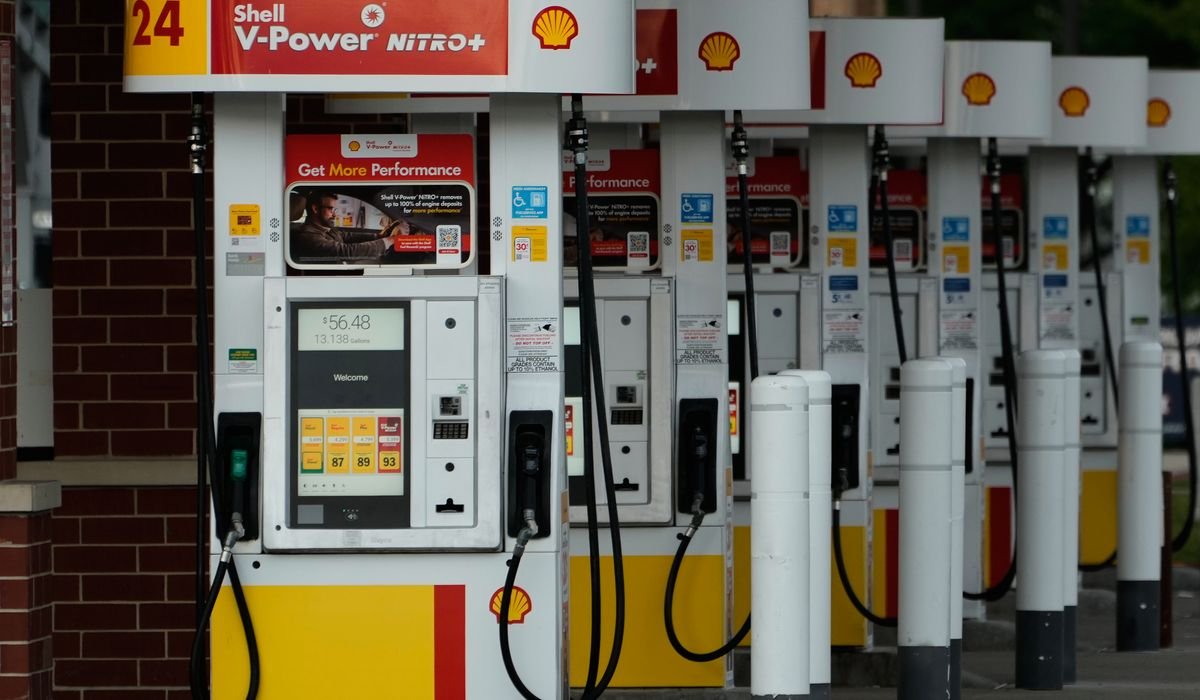
The average U.S. price of gas rose above $4 per gallon on Monday as fighting in the oil-rich Middle East flares up.
The threshold is symbolic but could add political pressure on President Trump ahead of November’s midterms.
Gas prices were around $3 per gallon at the start of the war with Iran and spiked to around $4.50 in May, according to the AAA motor club. Prices eased substantially after Mr. Trump and Iran’s top negotiators reached a first-stage deal to stop fighting and negotiate over Tehran’s nuclear program.
But that deal fell apart over the last two weeks. U.S. forces bombarded Iran for nine straight days, and Iranian strikes killed at least three Americans over the weekend.
Turmoil around the Strait of Hormuz is disrupting oil flows and causing price shocks. Brent crude was trading at over $80 per barrel, up from around $70 a few weeks ago.
Gasoline is refined from crude oil, so American drivers are feeling pain at the pump.
The average nationwide price exceeds $4 for the first time since June 17.
Some parts of the country, especially the South, are paying closer to $3.60 on average, while drivers on the West Coast are seeing prices above $5, according to AAA.
Besides the war, high demand during the summer driving season puts upward pressure on gas prices.
Democrats are pointing to higher costs in their push to rein in Trump’s war powers and wind down the conflict against Iran.
Mr. Trump says higher energy costs are transitory and will come down fast after the war. Both sides have shown a willingness in recent days to return to negotiations, though efforts to resolve the conflict have proven elusive for months.
Gas prices could have political implications for Mr. Trump and his GOP majorities in Congress.
Mr. Trump recently hailed a June inflation report that showed price pressures easing.
“Such great news in June’s Inflation Numbers! Prices FELL by the most in a single month in over six years,” he said on social media.
The decrease in energy prices alongside the ceasefire fueled the positive report, so the reprieve could be temporary if Middle East fighting persists.
Iranian Foreign Ministry spokesman Esmaeil Baqaei said Monday that negotiators are keeping the door open to diplomatic talks while its armed forces engage with the U.S.
“The proposals put forward through mediators have been conveyed to us, and we have received them,” he said in remarks reported by state-affiliated Iranian media. “However, I would rather not go into their details at this stage.”
Secretary of State Marco Rubio said the U.S. is willing to try diplomacy if Iran changes its behavior.
“We’ve tried multiple times with Iran, and we’ll continue to try,” he told reporters late Sunday. “If that door opens, we’ll be happy to see it open.”
