
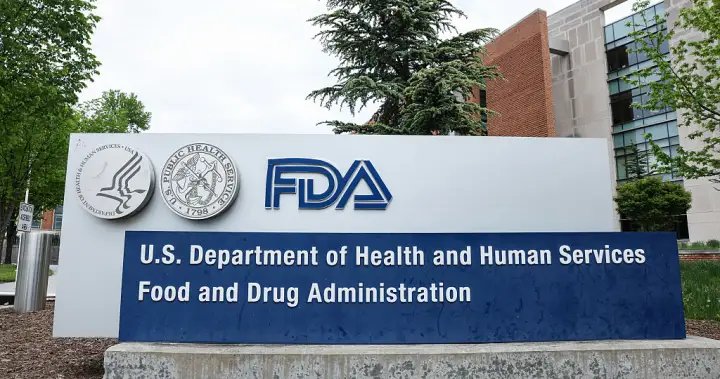
The U.S. Food and Drug Administration (FDA) said on Sunday that after reviewing the results of a test for the cyclospora parasite on lettuce from Mexico — which it previously said was the cause of an outbreak of diarrhea-causing cyclosporiasis in five states — the findings were deemed to be a false positive.
“Due to the complexity in the detection of Cyclospora, FDA laboratory experts reanalyzed the sample results and concluded that the finding does not represent true amplification and should be considered a false positive,” the federal agency said in an update.

Last week, the Centers for Disease Control and Prevention (CDC) linked the spread of the illness to Taco Bell restaurants in Indiana, Kentucky, Michigan, Ohio and West Virginia, and the U.S.-based supplier of lettuce, Taylor Farms, which also operates out of Mexico.
The CDC previously stated that 1,644 people who became sick reported eating at Taco Bell locations in those states.
“FDA has notified Taylor Farms and continues working with the firm to ensure product implicated in this outbreak has been removed from the market,” the FDA’s update continued.

Get daily National news
Get daily Canada news delivered to your inbox so you’ll never miss the day’s top stories.
“As of July 19, 2026, there are no confirmed positive sample results for product testing for Cyclospora,” it added.
A spokesperson for Taylor Farms told Reuters that the company was informed the FDA made a mistake.
“To be clear, at this moment, FDA has not identified a single positive product test result for cyclospora,” the company said, adding that it had completed a voluntary recall of iceberg lettuce from central Mexico out of an abundance of caution based on the initial information given.
The FDA said in its statement Sunday that the product implicated in the outbreak remains off the market.
Fast food chains Wendy’s and Chipotle said Friday they are not affected by the outbreak.
How does a false positive happen?
According to a 2024 study published in the Journal of Clinical Microbiology, cyclosporiasis has historically been underdiagnosed due to a lack of clinical recognition and challenges in laboratory detection; however, UV fluorescence microscopy has been found to be an effective tool to detect the parasite because it naturally glows under ultraviolet light.
Though the method is reliable, it also has a higher chance of false positives because UV fluorescence is more likely to confuse cyclospora with similar parasites than other methods, including one that uses a stain to detect it, the study says.
“Discrepant results regardless of methods were more frequently observed with technologists who have less experience in parasite morphology,” it added.
The stain method requires more preparation than using UV light, takes longer to complete, and is heavily reliant on microscopic visual interpretation, the study explained.
Cyclospora is a microscopic, spherical parasite that commonly causes watery diarrhea “with frequent and sometimes explosive bowel movements,” according to the CDC. Outbreaks tend to occur most often in the late spring and summer, it said.
The parasite thrives in heat, infects the bowels and spreads through feces. In the past, people have been infected by consuming fruits or vegetables irrigated with feces-contaminated water.
Cyclosporiasis is less common than foodborne illnesses such as salmonella and E. coli. Many cases are never linked to a specific food or other source. For years, few U.S. cyclospora outbreaks were reported. But the number started rising about a decade ago, with a particularly notable spike in 2018 and 2019.
There is currently no vaccine for cyclosporiasis, while the primary form of treatment is oral antibiotics.
— with files from Reuters
© 2026 Global News, a division of Corus Entertainment Inc.
