
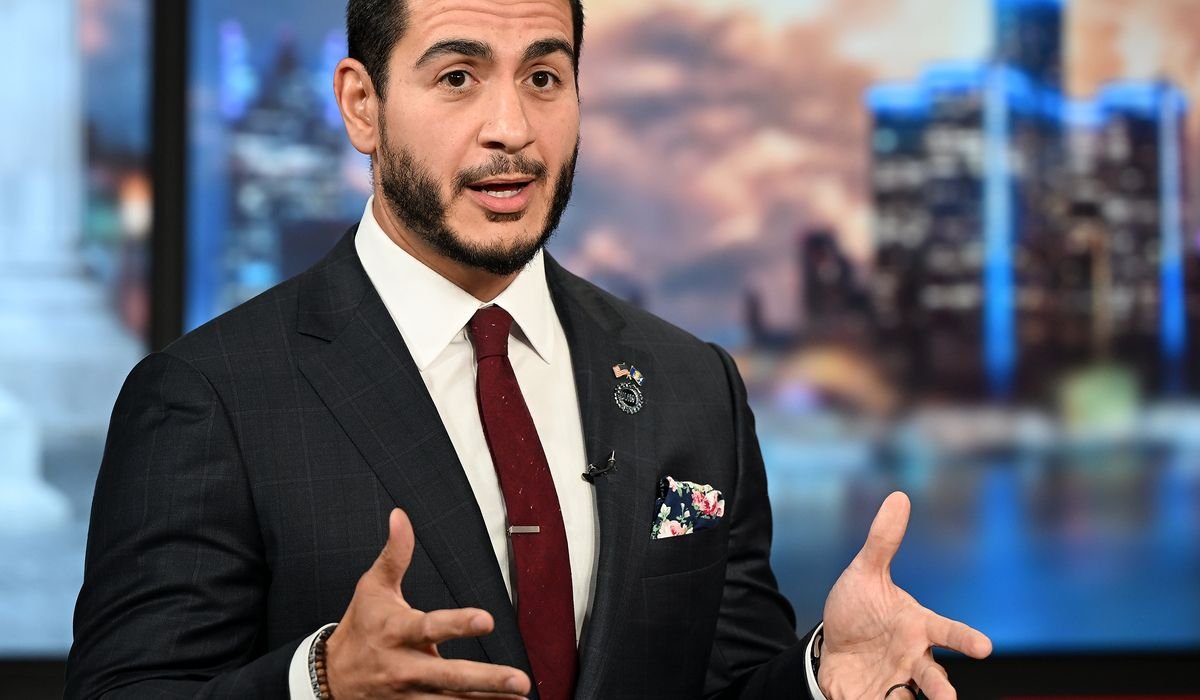
U.S. Senate candidate Abdul El-Sayed, who has pledged to “stand up to greedy landlords and corporate profiteers,” disclosed he, too, is a landlord.
Mr. El-Sayed’s financial disclosure form filed this week shows he owns three rental properties with his wife. The dwellings, in Dubai, India and Ann Arbor, Michigan, each produce rental incomes up to $15,000 annually.
The overseas properties are worth up to half a million dollars, according to the candidate’s financial disclosure form. The Dubai single-family home owned by the couple is located in a luxury development.
The disclosure comes after Mr. El-Sayed’s Democratic opponent in the Aug. 4 primary attacked him regarding his wealth.
Rep. Haley Stevens, who trails Mr. El-Sayed in the polls, has declared herself “the only nonmillionaire in this race.”
Mr. El-Sayed this week suggested he’s been targeted over the properties for racist reasons.
He told reporters that the overseas house and apartment were inherited by his wife from her parents, who put them in “all of their kids’ names.”
Mr. El-Sayed said the criticism of his foreign property portfolio “might fit within a well-worn trope,” due to his Muslim name.
Mr. El-Sayed is leading Ms. Stevens by double digits in the latest polls taken ahead of the primary.
He’s campaigned on creating more affordable housing with a federally funded “building boom” and pledged to “stand up to corporate landlords against unfair evictions.” He supports taxing as ordinary income capital gains over $1 million and raising the cap on income taxed for funding Social Security.
“You deserve a politics that’s not bought off by the same corporations picking your pocket at every single turn,” he said Monday.
The race between Mr. El-Sayed and Ms. Stevens is widely viewed as the biggest proxy fight left on the primary map between the party’s hard left and its regular liberal forces.
Mr. El-Sayed accused Ms. Stevens, who calls herself a moderate, of benefiting from $58 million in outside spending on behalf of her campaign, much of it from the American Israel Public Affairs Committee, the most powerful pro-Israel lobby in Washington.
His campaign has fueled a growing divide inside the Democratic Party over U.S. support for Israel that widened during the Israelis’ war against Palestinian terrorists in Gaza.
The primary winner will probably face the GOP’s Mike Rogers in November.
