
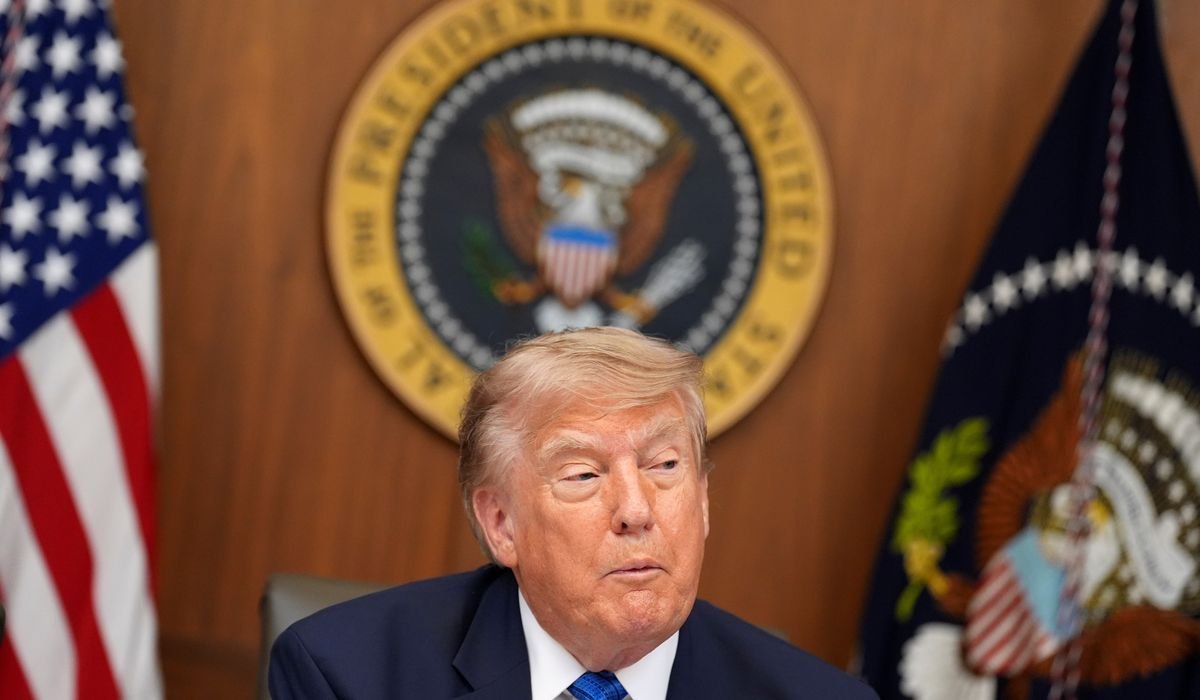
President Trump pinned the blame on Gov. Tim Walz for recent cyberattacks on Minnesota’s water systems, even as federal authorities are reportedly investigating Iran’s role in the incident.
Minnesota officials said the “coordinated cyberattack” targeted operational technology at more than 30 Minnesota community water systems on Sunday and Monday.
“We heard in Minnesota there was a cyberattack and they blame it on Iran. I don’t think so. I think I blame it on Minnesota because they’re grossly incompetent,” Mr. Trump said during Friday’s Cabinet meeting. “There was a cyberattack of 30 water plants, and I would blame it on Minnesota and the governor, the corrupt governor of Minnesota. They like to say, ’Oh, it was Iran.’ Iran should be so lucky. Iran’s got bigger problems than worrying about Minnesota.”
Officials reportedly suspect Iran-linked hackers may be responsible, but this is a preliminary assessment.
The state’s Democratic governor, a constant Trump critic, said the president “knows exactly who is responsible for this attack and knows that other states were hit too.”
“This is what modern warfare looks like, and it further illustrates there’s no plan to win a war with Iran,” Mr. Walz said in a social media post. “DOGE took an axe to [the Cybersecurity and Infrastructure Security Agency] and left the U.S. exposed to cyber attacks. Thankfully, our experts in Minnesota were able to identify the vulnerability quickly and work with local communities to stop it.”
At least seven states have been targeted in cyberattacks against municipal water systems this week, leading the FBI and the Environmental Protection Agency to issue a public service announcement warning of “malicious cyber actors” degrading water operations.
It’s unclear which other states have been targeted.
Officials said hackers remotely accessed internet-facing devices and changed the IP addresses and passwords, resulting in a loss of monitoring and control functionality. The FBI and EPA recommended removing programmable logic controllers from direct internet exposure via secure gateways and firewalls.
The Bureau of Criminal Apprehension’s Minnesota Fusion Center was working with municipalities, as well as state and federal partners, to address the issue, according to CBS News.
This week’s cyberattacks came on the heels of CISA warning of Iran-linked hackers targeting the nation’s critical infrastructure.
Federal officials cautioned on July 21 that defenses need to be strengthened due to bad actors’ attempts to breach automated online systems used to manage infrastructure.
CISA acting Director Nick Anderson said the agency “is currently observing a significant increase in cyber threat actors targeting programmable logic controllers at water utilities.”
The agency said Thursday that it’s “currently observing a significant increase in cyber threat actors” that are targeting “water entities of all sizes.”
Minnesota’s information technology services agency said there were no indications that any water supply has been contaminated. CISA said the cyberattacks have resulted in boil water notices and sustained manual operations.
This is not the first time Iran has been associated with cyber operations that targeted water systems. A similar incident occurred in 2023.
