
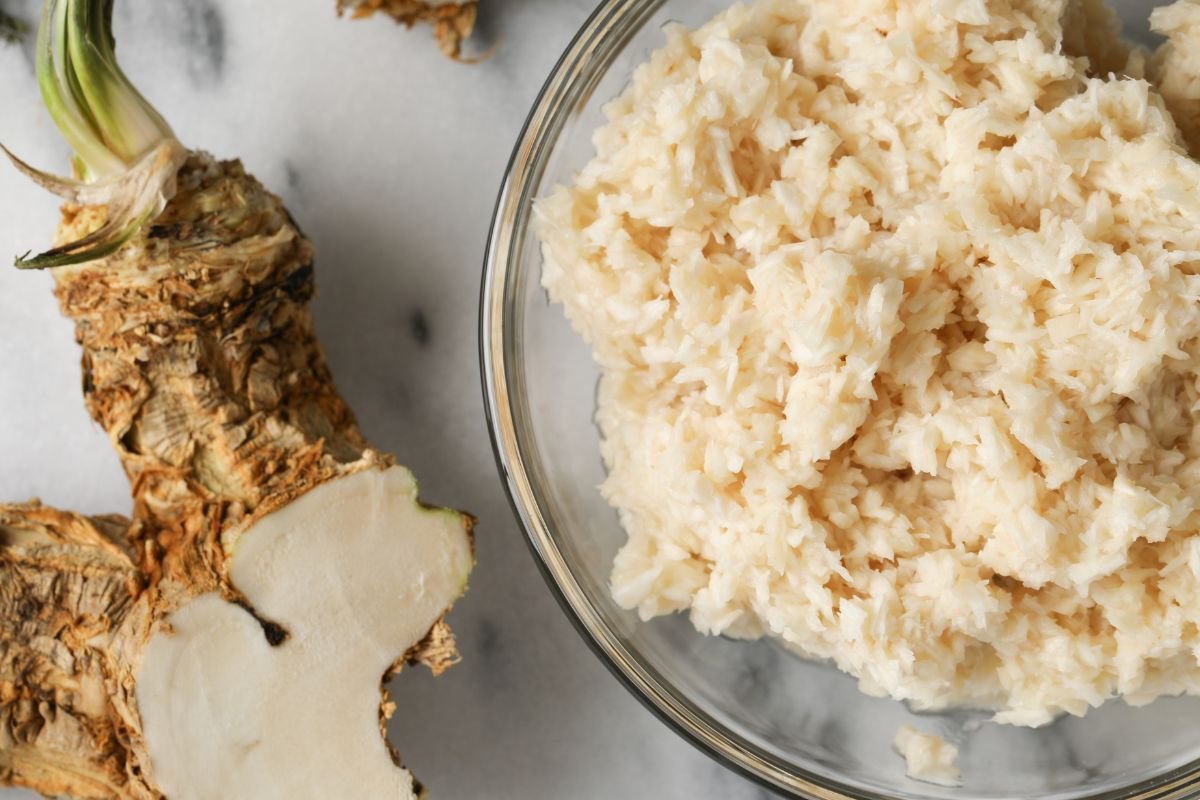
Horseradish has been used for thousands of years, and it belongs to the same family as mustard and wasabi, which is exactly why all three share that same nose-clearing bite. It shows up beside prime rib and seafood, but it also has a real, if often skipped, home-food-safety story: the thing most likely to go wrong with horseradish isn’t quite what most articles about it claim.
Does horseradish go bad?
The short answer: Yes, but the more common issue is losing its heat rather than becoming unsafe. Horseradish’s pungency comes from a volatile compound that forms the moment the root is cut or grated and fades on its own within weeks, even refrigerated, well before mold or spoilage typically sets in. Fresh grated horseradish and homemade relish are best used within 1 to 2 months refrigerated, whole roots keep for about 3 months properly stored, and commercially jarred prepared horseradish, which contains vinegar, lasts considerably longer. The genuine safety risk with horseradish has nothing to do with an old jar losing flavor: it involves homemade horseradish-in-oil preparations left unrefrigerated, the same low-acid, oxygen-free setup responsible for well-documented cases of botulism in garlic-in-oil.
For general guidance on storing pantry staples, see the food storage guide, and for more on how spices and condiments behave in general, see the guide to whether spices go bad. Because no separate refrigeration guide exists yet for horseradish specifically, this post covers both storage and the real safety risk in full below.
📋 Does Horseradish Go Bad: At a Glance
| Whole root, refrigerated | Around 3 months for best flavor |
| Freshly grated horseradish or homemade relish, refrigerated | 1 to 2 months before pungency fades |
| Grated root, frozen | Around 6 months |
| Commercial prepared (jarred) horseradish, refrigerated | Roughly 4 to 6 months, some brands longer |
| What actually happens over time | Loss of heat and aroma, not bacterial spoilage, in properly stored product |
| Signs of real spoilage | Mold, sliminess, discoloration, sour or off smell |
| Best storage method | Refrigerated, airtight, root wrapped and kept moist |
| Separate risk to know about | Homemade horseradish-in-oil left unrefrigerated: a real botulism risk |
Key Takeaways
- Horseradish’s heat comes from a compound that forms the instant the root is damaged, and that same compound is unstable and fades over weeks, even in the fridge.
- Losing pungency is the most common thing that happens to horseradish over time, and it is a quality issue, not a safety one.
- Vinegar does double duty in prepared horseradish: it stabilizes the final level of heat and helps preserve the product, which is why jarred horseradish outlasts anything made without it.
- The real, documented food safety risk with horseradish is specific: fresh horseradish covered in oil and left unrefrigerated creates the same low-acid, oxygen-free conditions responsible for known cases of botulism from garlic-in-oil.
- You genuinely cannot home-can horseradish sauce for shelf-stable pantry storage; the heat needed for canning destroys the volatile compounds that give it flavor, so it has to be kept refrigerated or frozen instead.
- Most “wasabi” served with sushi in the U.S. is actually dyed horseradish, since real wasabi is difficult to grow and extremely expensive by comparison.
Why Horseradish Loses Its Kick: The Chemistry of Fresh Heat
The Science: Heat That’s Made on Demand, Not Stored
Unlike capsaicin in chili peppers, which is a stable compound already present in the food, horseradish’s burn is manufactured on the spot. The intact root contains a compound called sinigrin and an enzyme called myrosinase, kept physically separate inside different plant cells. Grating, cutting, or chewing the root ruptures those cells and lets the two mix, and that reaction produces allyl isothiocyanate, or AITC, the volatile oil responsible for horseradish’s sinus-clearing sting and aroma. This is the same basic chemistry behind mustard and wasabi’s heat, since all three plants are in the same family. AITC is inherently unstable: it is volatile, meaning it evaporates into the air over time, and it also breaks down chemically even in sealed refrigerated storage. Because of this, freshly grated horseradish is always more intensely pungent than horseradish that has been sitting for even a few days, and the effect compounds over weeks. Vinegar plays a specific role here beyond flavor: adding it at a chosen moment during preparation halts the sinigrin-myrosinase reaction and locks in whatever level of heat has developed up to that point, which is why recipes specify grating first and adding vinegar only once the desired pungency is reached. It is also why horseradish sauce cannot be safely home-canned for shelf-stable storage: the high heat required for canning destroys the same volatile compounds that make horseradish worth eating in the first place, so any horseradish preparation has to stay refrigerated or frozen rather than shelf-stable.
Whole Root vs Prepared Horseradish: Two Very Different Timelines
A whole, unpeeled horseradish root is the most stable form, since its outer layer and intact cell structure protect the sinigrin and myrosinase from mixing until you actually cut into it. Stored properly in the refrigerator, ideally wrapped and kept slightly moist, a whole root holds its flavor for roughly 3 months according to Oregon State University Extension guidance on preserving horseradish. The moment you peel and grate it, the clock changes entirely. Freshly grated horseradish, whether eaten plain or mixed into a quick homemade relish, is at its most pungent within minutes of grating and then fades steadily; extension sources note it can lose meaningful pungency within just 1 to 2 months even under refrigeration, which is why the guidance is to make only small batches you will use up quickly rather than a large batch meant to last. Commercially prepared, vinegar-based horseradish behaves differently again, since the vinegar both stabilizes the flavor and acts as a preservative, giving jarred horseradish a meaningfully longer useful life than anything made fresh at home.
Tip: Check whether your jar needs refrigeration from the start
Unlike most condiments, prepared horseradish is inconsistently shelf-stable. Some commercial brands are formulated to sit safely in the pantry unopened, while others are sold directly from the refrigerated case at the grocery store and expect refrigeration from the moment you buy them. Check the label rather than assuming; a horseradish jar sitting unrefrigerated on a store shelf is not proof that every brand can be treated the same way once you get it home.
How to Store Horseradish to Keep Its Heat
Whole root
Wrap the root loosely in a damp paper towel or place it in a perforated plastic bag, and store it in the refrigerator crisper drawer. This keeps the root hydrated without introducing excess moisture that could encourage mold. Avoid storing it somewhere it will dry out or shrivel, since a dried-out root is harder to grate and has already started losing quality.
Freshly grated horseradish
Grate only what you plan to use within a month or two, mix in a splash of vinegar once you reach your preferred heat level, and refrigerate in an airtight container. Freezing grated horseradish, ideally portioned into small amounts in an ice cube tray or freezer bag, extends usable life to around 6 months, though the texture and heat will not be quite the same as freshly grated.
Prepared (jarred) horseradish
Once opened, prepared horseradish should always be refrigerated, tightly sealed, and used within roughly 4 to 6 months for the best flavor, based on industry guidance from horseradish producers, though it typically remains safe to eat somewhat longer than that as flavor gradually fades.
How to Tell If Horseradish Has Gone Bad
Signs of Real Spoilage
True spoilage in horseradish, as opposed to simply losing its punch, shows up as mold growth, a slimy texture, or a sour or otherwise off smell rather than horseradish’s normal sharp, sinus-clearing aroma. Any of these mean the batch should be discarded. A horseradish that has simply gone mild and lost its bite is not unsafe; it just will not deliver the same kick, and you may want to replace it for that reason alone rather than any food safety concern.
Discoloration is worth calling out separately, since it causes a lot of unnecessary tossing. Freshly grated horseradish naturally yellows or takes on a light tan tint within a day or so of being cut, simply from oxidation, the same harmless browning that happens to a cut apple. That kind of mild color shift on its own is not a spoilage sign. What actually signals a problem is discoloration paired with sliminess, mold, or an off smell, or a shift toward gray or greenish tones rather than a light yellow-tan. If the color change shows up alone and the horseradish still smells sharp and clean, it is still fine to eat, just possibly milder than when it was first grated.
The Real Risk With Horseradish: Homemade Preparations in Oil
Correcting a Common Myth: It Isn’t “Old Horseradish Bacteria”
A frequent claim floating around online is that letting horseradish sit too long lets “bacteria” build up and cause botulism. That framing gets the mechanism backward. Properly refrigerated horseradish, whether whole root, fresh grated, or vinegar-based prepared sauce, is not a meaningful botulism risk on its own; vinegar-based prepared horseradish in particular is acidic enough to inhibit the bacteria responsible. The real, well-documented risk applies specifically to homemade horseradish covered in oil and left unrefrigerated. Horseradish is a low-acid root vegetable grown in soil, the same general category as garlic and other herbs, which Penn State Extension food safety guidance on infused oils identifies as a source of Clostridium botulinum spores capable of germinating in the low-acid, oxygen-free environment that oil creates when the mixture sits at room temperature. When a low-acid vegetable is submerged in oil, the oil creates an anaerobic, oxygen-free environment, and if the mixture sits at room temperature rather than being properly acidified and refrigerated, those spores can germinate and produce a potent toxin, the same well-documented mechanism behind garlic-in-oil botulism cases. This is not a reason to avoid horseradish; commercially prepared horseradish is formulated to be safe, and even homemade grated horseradish mixed with vinegar and refrigerated is standard practice. It is specifically a reason to never leave a homemade horseradish-in-oil mixture unrefrigerated, and to treat any oil-based horseradish preparation with the same caution recommended for garlic-in-oil.
Did you know: most “wasabi” is actually horseradish
The bright green paste served at the vast majority of sushi restaurants outside Japan, and even much of it within Japan, is not true wasabi at all. Because real wasabi is notoriously difficult to grow and can cost well over $70 a pound wholesale, most “wasabi” sold commercially is a mix of horseradish, mustard powder, and green food coloring, chosen because horseradish produces a similar sinus-clearing heat through the same underlying chemistry. If you want to know whether you have ever tasted the real thing, check the ingredient label; genuine wasabi products list wasabi as the primary ingredient rather than horseradish.
| Form | Refrigerator | Freezer |
|---|---|---|
| Whole root | Around 3 months for best flavor | Not typically recommended; texture suffers |
| Freshly grated or homemade relish | 1 to 2 months before pungency fades | Around 6 months |
| Commercial prepared (jarred), opened | Roughly 4 to 6 months, some brands longer | Generally not recommended |
| Commercial prepared, unopened | Check label; some brands require refrigeration from purchase | Not recommended |
Frequently Asked Questions
Does horseradish go bad?
Yes, but the more common issue by far is losing its heat and aroma rather than becoming unsafe to eat. The volatile compound responsible for horseradish’s pungency breaks down over weeks even under refrigeration, so most horseradish goes mild well before it shows any real signs of spoilage.
How long does horseradish last in the fridge?
A whole root keeps its flavor for around 3 months refrigerated. Freshly grated horseradish or homemade relish is best used within 1 to 2 months, since that is roughly when its pungency starts to fade noticeably. Commercial prepared horseradish, thanks to its vinegar content, generally lasts about 4 to 6 months once opened and refrigerated.
Can consuming old horseradish lead to food poisoning?
Properly refrigerated horseradish that has simply lost its pungency is not a food poisoning risk; it is a quality issue, not a safety one. The genuine safety concern is specific: fresh horseradish mixed with oil and left unrefrigerated can create the low-acid, oxygen-free conditions that allow Clostridium botulinum to grow, the same well-documented risk associated with homemade garlic-in-oil. Standard refrigerated horseradish, whole root, fresh grated with vinegar, or jarred prepared, does not carry this risk when stored properly.
Why does horseradish lose its potency over time?
Horseradish’s heat comes from allyl isothiocyanate, a volatile compound formed only when the root is cut or grated, releasing an enzyme that reacts with a naturally occurring compound in the root. That compound is chemically unstable and evaporates and breaks down over time, even in the refrigerator, which is why fresh-grated horseradish is always hotter than horseradish that has been stored for a few weeks.
What are the signs that horseradish has actually gone bad?
Look for mold, a slimy texture, noticeable discoloration, or a sour or off smell rather than horseradish’s usual sharp aroma. Any of these mean it should be thrown out. Simply tasting mild or weak is not a spoilage sign on its own; it just means the pungency has faded with time.
Does horseradish need to be refrigerated?
Whole roots, fresh grated horseradish, and homemade preparations should always be refrigerated. Commercial jarred horseradish varies by brand: some are shelf-stable unopened and only need refrigeration after opening, while others are sold from the refrigerated case and expect refrigeration from the start. Check the label rather than assuming.
Can you freeze horseradish?
Yes. Grated horseradish freezes reasonably well for around 6 months, especially if mixed with a small amount of vinegar first to help stabilize flavor. Whole roots are generally better kept refrigerated than frozen, since freezing can affect their texture more noticeably.
Why can’t you can horseradish sauce for pantry storage?
The heat required for safe home canning destroys allyl isothiocyanate, the volatile compound that gives horseradish its flavor and aroma, leaving you with a shelf-stable but essentially flavorless product. Because of this, horseradish preparations are made for refrigerator or freezer storage rather than canned for the pantry.
Is it safe to eat horseradish past its best-by date?
Generally yes, as long as it shows none of the mold, sliminess, or off-smell signs of real spoilage. Horseradish’s best-by date mostly reflects how much pungency it is expected to retain, not a hard safety cutoff, so older horseradish is typically fine to eat, just milder.
Why does vinegar matter so much in horseradish preparation?
Vinegar serves two purposes at once. Added at the right moment during grating, it stops the chemical reaction that produces heat, which is how home cooks control whether their horseradish ends up mild or intense. It also acidifies the mixture, which helps preserve it and is part of why vinegar-based prepared horseradish keeps significantly longer than horseradish made without it.
Is the wasabi at sushi restaurants actually horseradish?
In most cases outside Japan, and often within Japan too, yes. Real wasabi is expensive and difficult to grow, so the majority of “wasabi” served commercially is a blend of horseradish, mustard powder, and green food coloring, which produces a similar heat through the same underlying chemistry as true wasabi.
Further Reading
Horseradish earns its place at the table well beyond the classic pairing with prime rib. Freshly made cocktail sauce leans on it for that sinus-clearing edge, it belts out a proper Bloody Mary, and a spoonful stirred into mayonnaise or sour cream makes a quick sauce for roast beef sandwiches or grilled fish. Since its heat fades on its own schedule regardless of how it is stored, the most reliable way to always have a properly hot jar on hand is to buy or make it in amounts you will actually use within a couple of months, rather than treating a single jar as a years-long pantry investment the way you might with ketchup or other shelf-stable condiments.
Better Living may earn commissions through affiliate links and may occasionally feature sponsored or partner content. If you make a purchase through our links, we may receive a small commission at no cost to you.
