
Poppi’s culture team is not to be confused with HR. “It’s pop culture,” Sophia Sesto, VP of Culture, tells Fast Company—and they’re hiring.
The buzzy prebiotic soda brand is looking to fill five social media roles, ranging from entry-level to leadership positions. But rather than just posting listings on LinkedIn, Poppi is playing to its strengths and fashioning its latest recruitment push like a brand campaign. It’s a playbook that has helped turn Poppi into a $500 million-a-year business in roughly five years, while generating more than 3 billion views on TikTok alone.
“As a community- and creator-first brand, we’ve had such an influx over the years of people wanting to join the team,” says Sesto.
And increasingly, those people aren’t looking for jobs on traditional career sites. YouTube and Instagram are now the top platforms where Gen Z workers seek career advice, according to a new survey from Zety, a résumé builder. As Instagram becomes the new LinkedIn, brands are paying attention and meeting prospective applicants where they are.
These days, more of the inner workings of companies have become part of the content machine, from executives to employees on the shop floor. Fast Company first reported on employee-generated content back in 2024. Now, 40% of consumers and 62% of Gen Z discover new products through employee-generated content at least once a month, as companies from Starbucks to Staples leverage employees as creators as part of their brand strategies. The result is increasingly blurry lines between consumer marketing, employer branding, and creator content. For Poppi’s latest campaign, that blurring is the point.
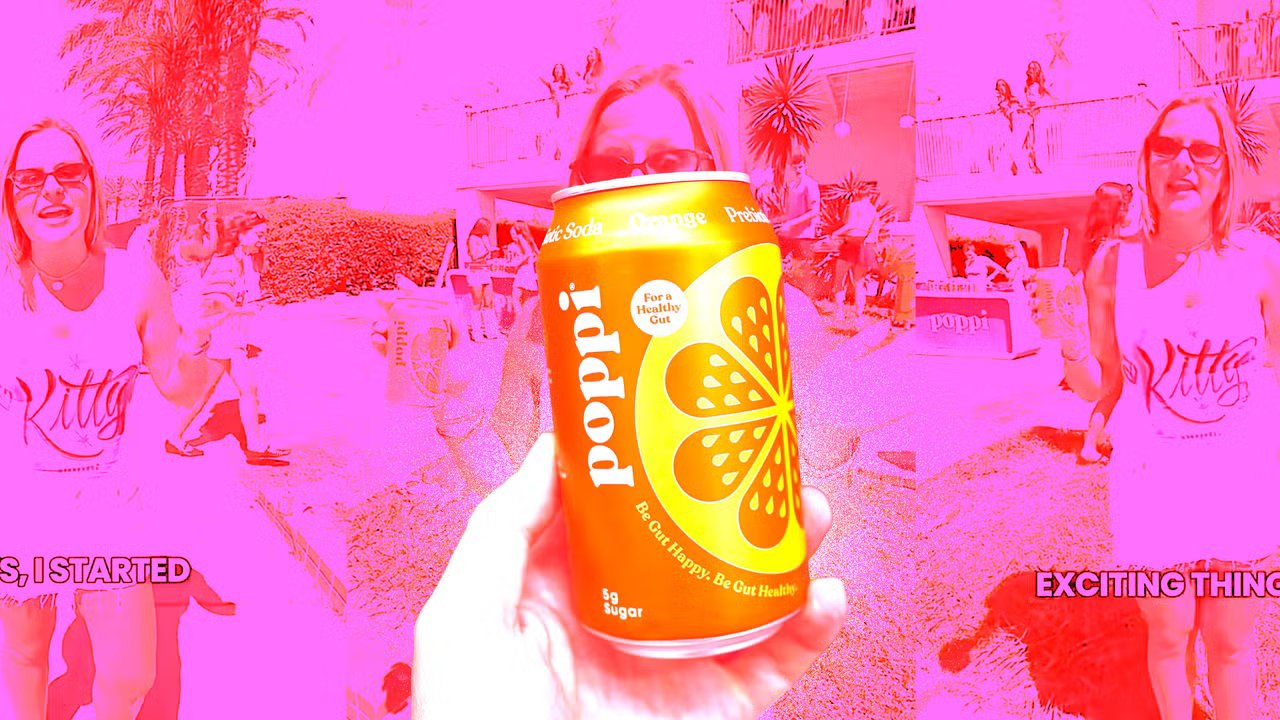
Poppi hired creator Kitty Murphy to promote its recruitment drive on TikTok, casting her as a Poppi employee for the campaign. “I heard that employee of the month gets to go to HQ,” she said in a recent post, as she works the Poppi stand at San Diego State University’s (SDSU) sorority recruitment. “I’ve been on my best behavior, I’ve really been working as hard as I possibly can and I just hope it doesn’t go unnoticed.” The top comment reads, “promote her to CEO immediately.”
Murphy has been working with Poppi since earlier this year. “Her personality is like Poppi in human form,” Sesto says. Her combined audience of more than 311,000 is mostly Gen Z women, the same demographic Poppi is targeting with the new roles.
“We know that they’re all searching for their dream jobs,” Sesto adds, “because they’re telling us in our DMs and in our comments.”
The latest campaign builds on real Poppi employees and team responsibilities. This week, Murphy is at SDSU for RushTok, the TikTok-fueled spectacle around sorority recruitment. Next week, she will lift the curtain on Poppi headquarters. Next month, she will attend Poppi’s annual national sales meeting, documenting it for her followers.
Young consumers have shown increased interest in the behind-the-scenes workings of the brands they consume, particularly content that breaks down barriers between brand and consumer. Employee-generated content can make companies feel more approachable and build brand loyalty, while influencer partnerships still play an important role in expanding reach. Poppi’s strategy combines both, driving awareness and affinity while simultaneously attracting talent.
Poppi has already cultivated a loyal fan base that’s ready and willing to promote the brand in exchange for participation and cocreation. Its collegiate ambassador program has seen its largest-ever number of applicants this year, according to Sesto, topping 11,000. “We’ve been joking that it’s harder to get into the Poppi Ambassador program than an Ivy League with the acceptance rate,” she says. Poppi has even hired former ambassadors for full-time positions.
Sesto would “rather hire someone who knows the consumer because they are the consumer than someone with years of experience on their résumé but without brand fit.”
For the next generation of workers, the roles of consumer, creator, and now employee are no longer distinct. The dream job? A combination of all three.
