
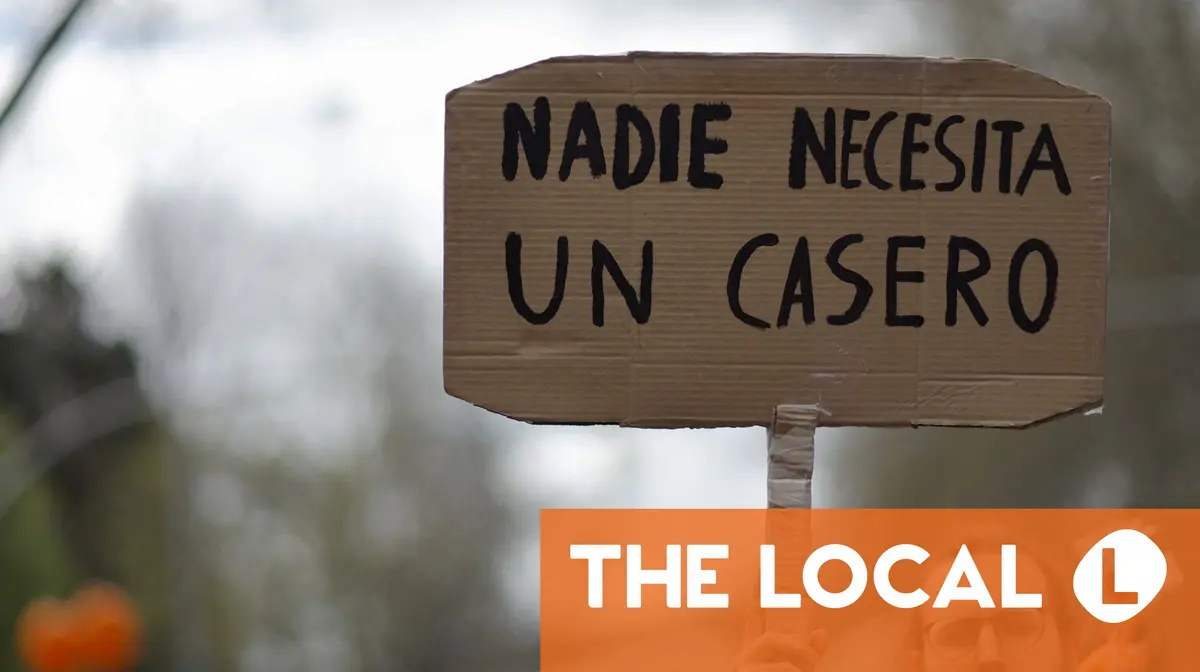
Following our previous survey results on Spain’s rental crisis, we share the views of readers who are tenants and landlords to try to assess who’s more at fault for the dire situation, and if they think anyone else is to blame.
Tenants are often quick to blame landlords for Spain’s ongoing housing crisis, but what are the two sides of the story?
What’s it really like to rent and to rent out in Spain?
On the one hand we have millions of tenants in the country currently facing insane prices, a severe deficit of homes on the market and plenty of scams.
On the other hand we have the landlords, who many believe are profiting from the situation.
It’s common for those who rent to blame the dire rental situation on said “greedy landlords”, seeing them as hugely wealthy people living in large mansions and profiting from the poor average workers.
But it’s not all black and white.
Yes, there are certain landlords and big companies who own multiple properties and try and squeeze everything out of their tenants.
But then there are those who are simply renting out their homes until they’re ready to move over to Spain themselves, those who are trying to make a living by renting out property and those who are scraping by not making much extra at all by being caseros (landlords).
We asked you about the problems you’ve found renting in Spain and what’s interested is that we had a deluge of comments from both the tenants and the landlords on the rental situation here.
READ HERE: ‘Spain is outpricing itself’ – Your views on the ‘impossible’ rental market
Some of the landlords who contacted us are those who have been ‘burned’ and are now are scared to rent their properties out.
Therefore, they would prefer to leave them empty or charge multiple months of deposit in case their tenants don’t pay the rent or trash the property.
It would appear that these are not the people sitting on millions of euros or living in mansions themselves.
First, we have the stories from the tenants in Spain.
Other reader on Facebook expressed her frustrations saying: “On one side there are housing shortages and many areas distressed and on the other there are greedy landlords”.
Another agreed: “Yes, I’ve been having problems renting because apartments are overpriced and landlords are greedy”.
“The flagrant breaking of laws landlords can do because the of housing crisis is stunning. They tell you that you need a year of rent of rent paid up front or only rent to certain professions like doctors or civil service employees,” another complained.
One commenter explained their views and experience of the situation: “All landlords and agents here are doing illegal things. Like 90 percent from what I have seen. I know the law, and know it supersedes the illegal contract terms, so I will fight my landlord if it ever comes to that…. I’ve never seen so many scams and blatant disregard for rental laws.”
One reader in Santander told The Local that her rental included a dishwasher that gave electric shocks, water damage causing structural problems “and the landlord absconded with my €4,000 deposit”. She also explained endless issues with the water heater and heating.
Another wrote about her issues of dealing with “humidity, mould, and rain from our ceiling for years”. She explained that it has lead to respiratory problems.
There are indeed terrible landlords, but there are also terrible tenants.
Here’s what property owners who rent out their homes in Spain had to say about nightmare situations with renters.
One landlord recalled the issue they had with a tenant who refused to pay the rent: “I used to rent out an apartment long-term, but I had a tenant who refused to pay rent. It was nearly impossible to evict her; she trashed the entire apartment and would magically disappear whenever the police arrived… After I finally managed to get her out, I spent a whole week cleaning up after four dogs that had chewed everything to pieces and left a layer of faeces and urine over 10 cm deep throughout the apartment”.
“Now, Spain is further strengthening tenant protections while showing no mercy to landlords. Consequently, I only rent out my apartment for short-term periods of 2 to 6 months to people with disabilities from Scandinavia,” she explained.
READ ALSO: 11 key housing laws Spain wants to pass in September
Another reader told The Local that squatters moved into his property and that he couldn’t get them out, even when he reported them with the given time limit.
Yet another complained: “We rented our future retirement home at a price just to cover our mortgage. Eighteen months later and the tenant hasn’t paid a cent. If I ever get my home back, would I rent it again long term? No, why would I with the way rules are set up?”
READ ALSO: Inquiokupas – The type of squatter homeowners in Spain fear most
Other landlord posted a photo of how she got her apartment back from a tenant, with rubbish filling almost the entire room.
A real estate agent in Alicante who has 20 years experience in the region told The Local who he thought was to blame for Spain’s rental crisis.
“The government have caused a shortage by bringing in measures disguised as improving tenants rights. They put the income tax up to 24 percent so a €1,000 per month property the tenant is now paying €240 to the tax man,” he argued.
For context there is a 24 percent income tax rate , but it was not brought in as part of recent tenant protection laws. It is the Non-Resident Income Tax (IRNR) rate applied strictly to non-EU/EEA property owners (such as UK residents post-Brexit, or US citizens). These non-EU owners pay 24 percent on gross rental income without deducting expenses, meaning €240 on a €1,000 rent goes to tax. By contrast, EU-resident landlords pay 19 percent on net income. So the estate comment is not fully right.
He added that: “This naturally increased rents together with the renters rights bill giving the right to stay five years, which puts most landlords off as they may be able to commit to two or three years but not always five. The price to purchase a property has also increased significantly even doubled in some areas over the last 5 years so to fork out €300,000 plus another €30,000 in tax to achieve €600 per month in rent (typical example after paying income tax, IBI tax, community fees etc)”.
The realtor claimed that most landlords in Spain are not greedy because “It’s a very poor return on investment providing a low rental yield and is not attractive to new landlords or foreign investment”.
