
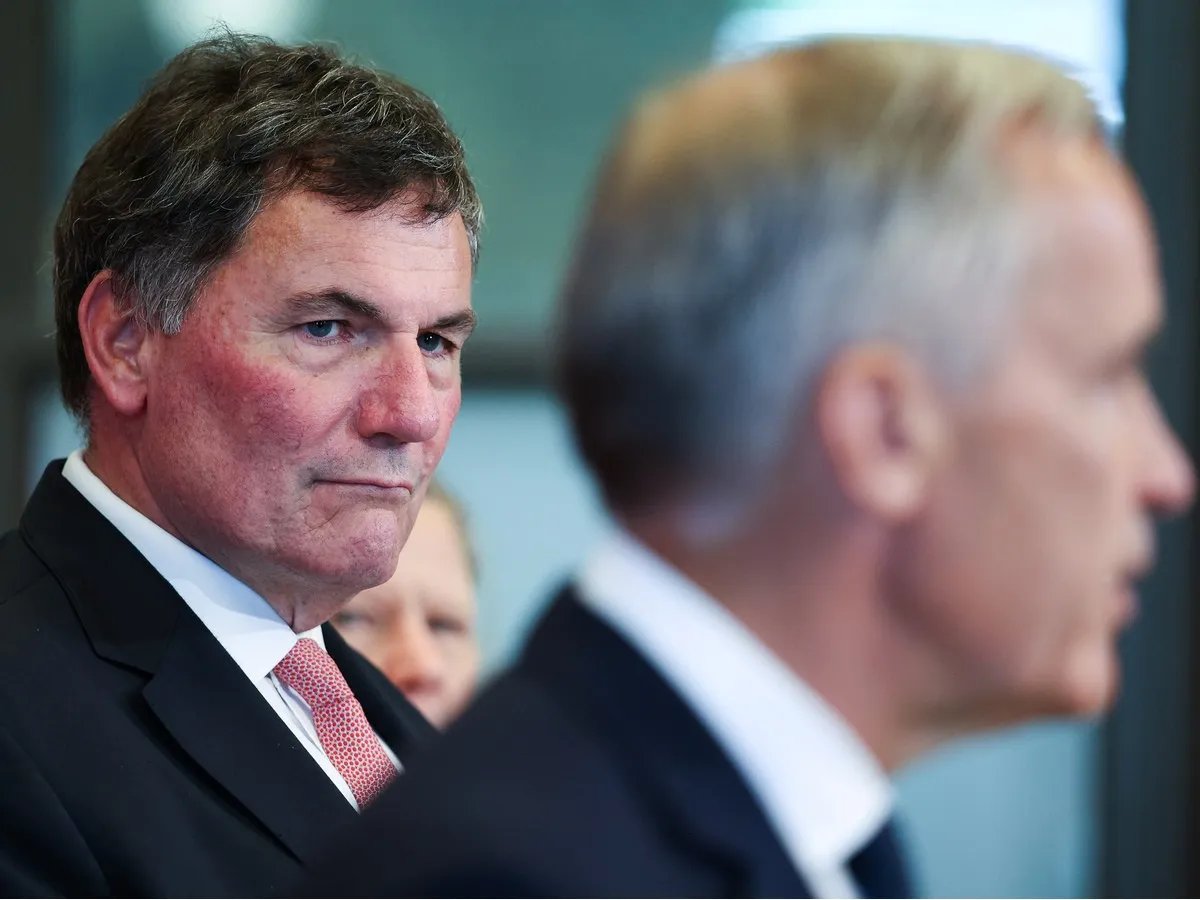
OTTAWA — Canada-U.S. Trade Minister Dominic LeBlanc said Thursday there is a possibility of reaching a “mutually beneficial” agreement with the U.S., after the country’s top trade negotiator said discoverability of French content on U.S. streaming platforms was never a “red line” for American negotiators.
“Canada welcomes that the U.S. is now withdrawing its positions on discoverability and labelling and is confirming that measures to promote French language and Canadian culture will not be subject to future U.S. trade actions,” he said, in a post on X Thursday morning .
“We look forward to further constructive U.S. clarifications on their other positions which would create the possibility of a mutually beneficial trade agreement that respects Canadian sovereignty,” he added.
In an interview with CBC News on Wednesday , United States Trade Representative Jamieson Greer said issues surrounding French language discoverability on U.S. streaming platforms was “the farthest thing from a red line” for the American side of negotiations.
A government source suggested that Greer was not entirely truthful in his interview.
LeBlanc said in a radio interview on Thursday that while Quebec labelling laws have been a trade irritant for the U.S. for years, it was rather the issue of discoverability of French content on large streaming platforms that was non-negotiable for the Canadian team.
Speaking on the Quebec radio show Lagacé le matin, LeBlanc said the last draft deal on Friday evening still contained demands from the U.S. to limit Canada’s capacity to force large streamers to promote Canadian cultural content, in particular French-language shows and music.
“We told them that, for us, that was non-negotiable. And it kept coming back in the text, including the final draft,” he said in French.
Trade talks between the U.S. and Canada for an interim agreement on tariffs collapsed late Friday evening, after Prime Minister Mark Carney paused negotiations.
In a press conference on Saturday, Carney cited efforts from the U.S. “to restrict our protections of our language, our culture, and in effect, our sovereignty” as one of the reasons why negotiations failed.
More specifically, the prime minister said American negotiators took issue with subsidies for Canadian culture and the French language, and labelling on Canadian products.
Quebec’s Bill 96 requires packaging on products sold in the province to be translated into French. The bill has been sited as a trade irritant in the USTR’s report on trade barriers.
The contradictions from both sides prompted reaction from Bloc Québécois Leader Yves-François Blanchet on Thursday.
Blanchet called it “interesting” in a post on X, noting that French protections may not have been as significant in negotiations as what Carney and LeBlanc had characterized.
Greer previously told CNBC on Monday that Carney’s claims that the U.S. was trying to curtail French protections was a “funny fake story.”
In that interview, Greer said Canada came back after a tentative deal was announced on Tuesday, wanting more than what the U.S. was prepared to give.
“I don’t know if it was political for them,” he said. “It certainly doesn’t make economic sense, but perhaps for political reasons, they have some byelections coming up.”
Carney’s Liberals are hoping to win a byelection on Aug. 31 in the riding of Chicoutimi–Le Fjord.
Quebecers will also be headed to the polls on Oct. 5, after Quebec Premier Christine Fréchette kicked off her campaign in Quebec City on Thursday.
More to come.
With files from Christopher Nardi
National Post
Our website is the place for the latest breaking news, exclusive scoops, longreads and provocative commentary. Please bookmark nationalpost.com and sign up for our newsletters here.
