
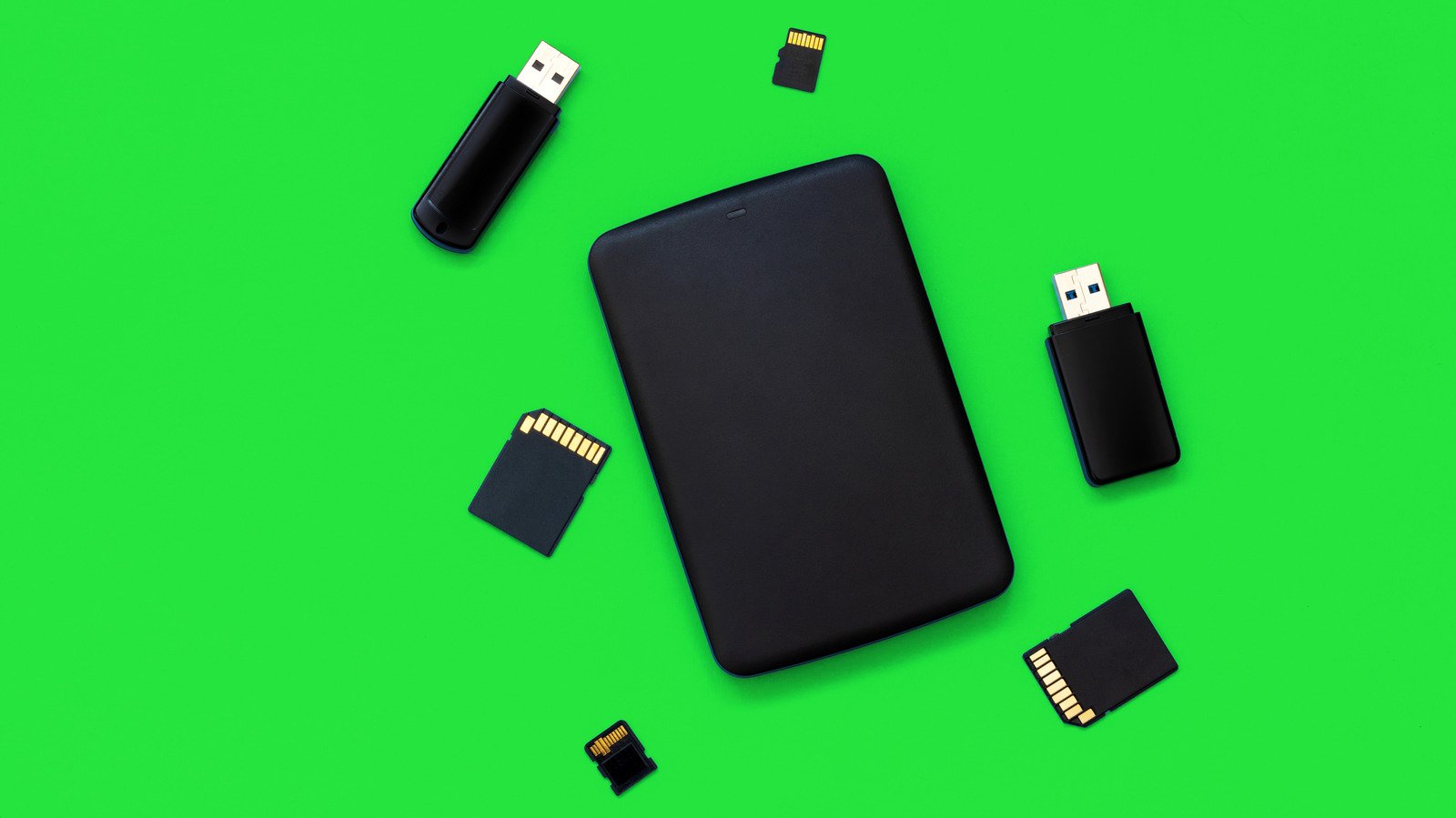
Flash memory is fast, compact and everywhere, but its biggest drawbacks have never completely disappeared.
Though “flash memory” still brings to mind a USB stick swinging from a keychain, it’s had quite a promotional push since. NAND flash is used to store data in SSDs, smartphones, memory cards and many other gadgets because it retains data without power while packing a lot of storage into a small package.
It does have some baggage, though. Flash costs more per gigabyte than a hard drive, wears down as data is repeatedly written and erased and is nowhere near as fast as system RAM. Most of us don’t notice it too much, as modern storage does a lot of work behind the scenes to clean up after the technology that it’s built on.
Why flash memory became so popular
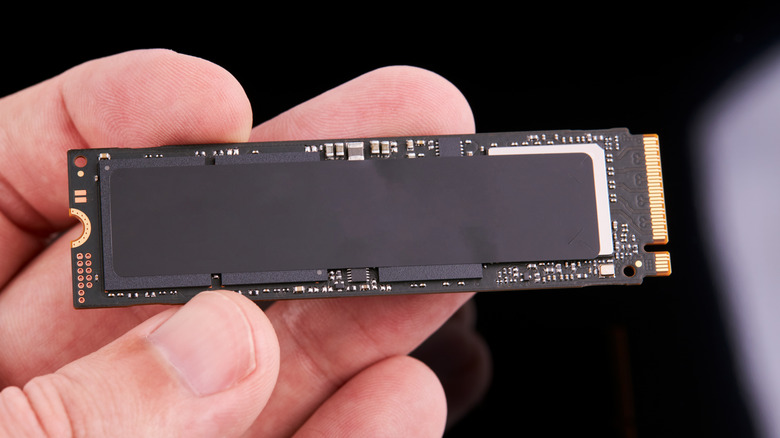
Most high-capacity flash storage is NAND, in which memory cells store electrical charge in an insulated storage layer, and the various voltage states are interpreted as data.
Modern NAND squeezes considerably more out of that basic idea. 3D NAND stacks cells vertically rather than arranging them only across a flat plane, and TLC and QLC designs store three or four bits per cell. Both pack more storage into roughly the same space and reduce the cost per gigabyte.
Those gains made flash particularly well suited to portable electronics. Unlike a hard drive, an SSD doesn’t have a spinning platter or mechanical read head, so it offers lower access latency, handles bumps better and fits ever-thinner devices. If you’ve upgraded an old PC to an SSD, you may remember the first boot afterward. All of a sudden, the computer doesn’t require a motivational speech before opening Chrome.
That still doesn’t make flash a replacement for RAM. System RAM is much faster and handles temporary working data, while NAND provides persistent storage. The term flash ROM is also misleading, as flash can be erased and rewritten.
The greatest drawback is that flash wears out
Each NAND cell supports a limited number of program-and-erase cycles. Storing more bits per cell increases density and lowers cost, but it also narrows the electrical margin between data states. That’s one reason QLC NAND typically offers lower endurance and performance than simpler designs.
Modern SSDs get around much of this with some clever housekeeping. Controllers distribute writes across available cells by wear leveling, correct errors, retire unreliable blocks and maintain spare capacity. TRIM and garbage collection also manage another NAND oddity: Data can be written in relatively small pages, but much larger blocks must be erased before they can be reused. This is a lot of housekeeping for “solid-state” storage.
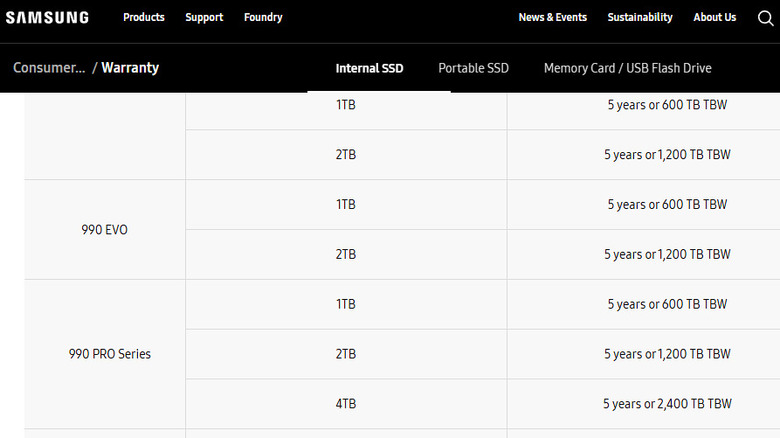
All that work pushes the endurance problem largely into the background for most consumers. Samsung warrants its 1TB 990 Pro for five years or 600TB of writes. That doesn’t mean the drive stops working at 600TB, and Samsung doesn’t say when a particular SSD will die, but important files still need backups.
And while endurance can be managed, price is less cooperative. Hard drives still offer cheaper bulk storage for backups, large media libraries and other tasks where speed matters less. TrendForce forecast NAND contract prices to rise 70 to 75 percent quarter over quarter in Q2 2026 and expects another 10 to 15 percent increase in Q3, citing tight supply and AI and data-center demand.
What could replace flash memory?
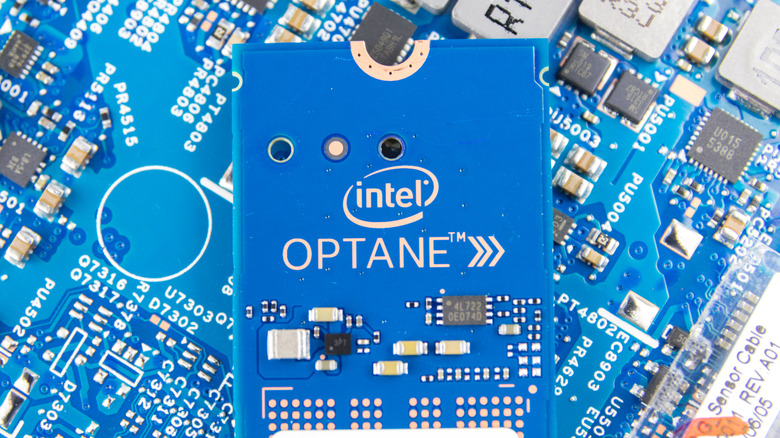
Flash’s shortcomings have naturally inspired plenty of would-be replacements. Phase-change memory was being touted as a possible flash replacement as far back as 2006, while Intel later positioned Optane between DRAM and NAND as faster and more durable than flash. Intel began winding down Optane in 2022.
Research continues into MRAM, ferroelectric memory and other alternatives, but no clear candidate has emerged to oust NAND from mainstream storage. NAND itself is still getting denser through taller 3D structures and more complex cell designs.
With commercial 3D NAND already exceeding 300 layers, the technology clearly isn’t done evolving.
