
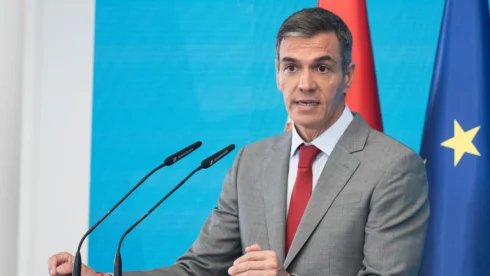
PEDRO Sanchez’s government may have hoped the summer break would bring the government some rest.
Instead, it returned with political sunburn after the Ceuta migration crisis blew up in early August.
While Sanchez continued his three-week holiday in Lanzarote, he needed to chair two meetings on the crisis by videoconference before returning to Madrid for the first official post-summer Council of Ministers meeting on August 25.
Although the fraught situation (that saw an estimated 80.000 migrants enter Ceuta from Morocco) has been managed to some extent, it has created another row between the government and its main opposition, particularly the Partido Popular (PP).
The right-wing party has demanded that all illegal migrants leave Ceuta as soon as possible, including minors where the law allows.
Another point of contention between the government and the PP is healthcare in the north African enclave.
PP leader Alberto Nuñez Feijoo has asked the government to consider isolating people with infectious diseases in Ceuta to prevent their spread, something the government has labelled a ‘grave irresponsibility’.
Another issue is to deal with around 5,000 mostly illegal arrivals who still remain in Ceuta.
The current priority is transferring around 500 minors, mostly girls, to the mainland, which is meant to take place this weekend or early next week.
To help settle the issue, the Council of Ministers passed two draft bills in the final days of August to overhaul the country’s 2009 migration legislation and adapt it to the new EU Pact on migration and asylum.
This introduces a 72-hour window for illegal migrants to be processed when they enter Spain, while those denied international protection will face a fast-track return procedure.
The budget: more spending despite high debts
Ceuta is not the government’s only concern these days.
The government is still operating under the budget plan enacted in 2022 for 2023.
This is because proposed budgets since then have not been approved by parliament.
Now, Sanchez is pushing for a new budget.
The draft must be handed to parliament by October 1 so that MPs have enough time, until January 1, 2027, to review, amend and vote on it.
For the budget to be approved, Sanchez will need to find enough parliamentary support, with parties including the PP, Vox, Junts and UPN playing an important role.
The most controversial issue is the high level of spending proposed by the government: €226 billion to be spent on housing, pensions, healthcare, education, dependency care and other public services.
The question is: can Spain really increase spending substantially while also reducing the deficit and debt?

General elections: can Sanchez really complete his term?
The way parliament treats the budget could also have an impact on next year’s general election.
A date has not yet been set, but it must be in 2027.
The last general election took place on July 23, 2023, and the government began its work on August 17 of the same year.
So it is widely anticipated that the next general election will take place before the summer.
Sanchez, however, is facing plenty of calls from the PP, as well as from some within his own party, to quit and call an early election.
But he has rejected those calls and has repeatedly stated his intention to complete the full term.
All in all, the handling of Ceuta and migration policy, the proposed level of public spending and the controversial handling of corruption allegations surrounding the government, his family and senior PSOE figures will help determine what comes out of the ballot boxes next year.
For now, the summer holidays are over and there is plenty of work waiting for Spain’s government.
But first things first: a little after-sun cream to soothe the political sunburn.
Click here to read more Explainer News from The Olive Press.
