
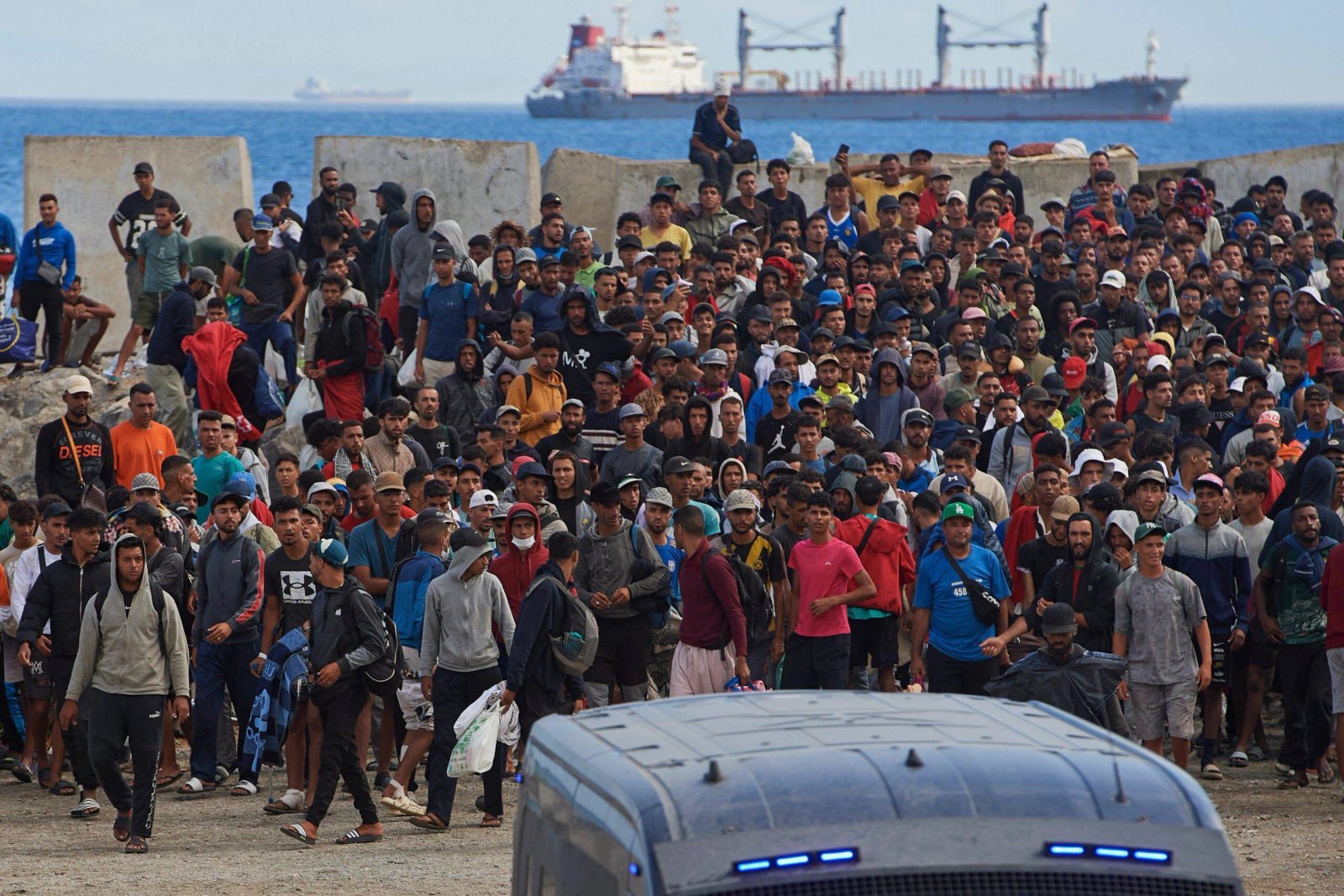
A MONTH has now passed since more than 80,000 migrants poured into Ceuta from neighbouring Morocco, triggering a crisis that has grown from a border emergency into a full-blown political and social flashpoint.
Thousands of migrants are still sleeping rough on the beaches, pavements and doorways of the tiny north African enclave following the extraordinary scenes across July 30 and 31 – the largest single day of irregular arrivals in European Union history.
The government estimates that around 5,000 migrants remain in the city, while Ceuta’s own regional administration puts the figure above 9,000.
Whatever the number, the continued presence of so many migrants has fuelled nightly protests, violent clashes and growing fears that tensions are beginning to spill over into a feud between Ceuta’s Christian and Muslim communities.
Here is the latest you need to know about the biggest story to hit Spain this summer:
€165m emergency package
The Spanish government is preparing a €165 million emergency package for Ceuta as it races to tackle the fallout from the mass arrival of tens of thousands of migrants.
Around €80 million is expected to be injected into the local economy over the next four months, with extra funding already earmarked for tourism, education, healthcare and the justice system.
The package comes on top of a separate €180 million medium-term recovery plan already promised for the enclave, which normally has a population of around 85,000 people.
Thousands to be moved off streets
Madrid has agreed a series of temporary accommodation sites after weeks of wrangling with authorities in Ceuta over where the thousands of migrants still sleeping rough should be housed.
Workers are now installing beds, roofs, bathrooms and dining facilities at chosen sites, with the government aiming to get all migrants off the streets within the next two weeks.
READ MORE: Political round-up: Spain’s government returns from summer feeling the heat after Ceuta crisis
Security minister Aina Calvo has relocated to Ceuta to oversee the operation, with a new single command structure chaired by prime minister Pedro Sanchez.
The migrants will not be detained and will remain free to come and go, but concentrating them in designated facilities is expected to make it easier for authorities to register them and process their immigration cases.
Returns accelerated
The government is also ramping up its efforts to return illegal arrivals to Morocco – particularly adults who are unlikely to qualify for asylum.
Additional specialist police officers have been drafted into the city, while a dedicated processing centre is due to be up and running within days.
To deal with a shortage of staff and facilities, asylum interviews will also be carried out remotely, with officials and interpreters able to work from mainland Spain.
However, authorities cannot simply remove people without due process, with every migrant entitled by law to have their individual circumstances considered.
Brussels asked for help
Interior minister Fernando Grande-Marlaska has formally asked the European Commission for additional support from Europol, the EU asylum agency and Frontex, the bloc’s border force.
Spain is seeking ten extra Frontex officers and wants Operation Minerva, which covers Ceuta, Algeciras and Tarifa, extended until September 2.
READ MORE: WATCH: Protesters hoist Spanish flag after storming beach and torching migrant camps in Ceuta
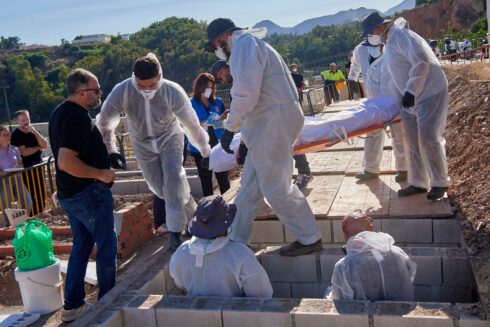
Madrid is separately seeking more than €32 million in emergency EU funding and has asked for the Guardia Civil and Frontex-shared vessel Duque de Ahumada to remain in the Strait of Gibraltar over the coming months.
Protests continue to rage
Despite the government’s efforts to lower the temperature, anger on the streets of Ceuta remains intense.
Nightly demonstrations have continued, with protesters waving Spanish flags and demanding the expulsion of all the migrants who crossed over last month – many of them minors.
The tension boiled over last week when a group of locals stormed a temporary migrant camp on Benitez beach, destroying makeshift shelters and setting fire to blankets, backpacks and other belongings.
There have also been reports of migrants breaking into garages and private properties, while residents have described assaults and thefts.
All of Ceuta’s political parties have since signed a joint declaration insisting that ‘the violence does not represent us’ and warning against angry residents taking the law into their own hands.
Fears of a Christian-Muslim divide
One of the most worrying recent developments is that anger directed towards migrants is increasingly being felt by Ceuta’s own Muslim population.
Around 45 per cent of the city’s usual residents are Muslim, compared with around 55 per cent Christian, and the two communities have long prided themselves on peaceful coexistence.
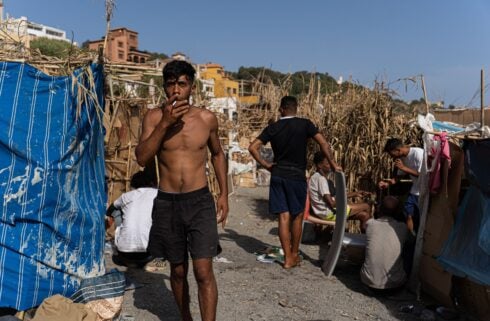
But there have now been reports of Muslim residents being insulted and targeted by protesters because they helped migrants.
Community leaders fear the dispute could develop into a much wider confrontation between locals.
Sanchez under growing pressure
The crisis has become a major political headache for Sanchez’s government as Spain begins to wake up from the summer recess.
The leader of the Partido Popular (PP), Alberto Nuñez Feijoo, has accused Madrid of losing control of the situation.
The opposition is planning nationwide demonstrations outside town halls on September 2, ahead of Sanchez’s appearance in Congress the following day.
He is expected to argue that Spain’s close relationship with Morocco helped ensure more than 90 per cent of those who initially crossed returned within hours.
Foreign minister Jose Manuel Albares has also rejected rumours that authorities in Rabat deliberately orchestrated the mass influx, instead pointing the blame at people-smuggling gangs and AI-generated videos which convinced some migrants that the border between Morocco and Ceuta was open.
