
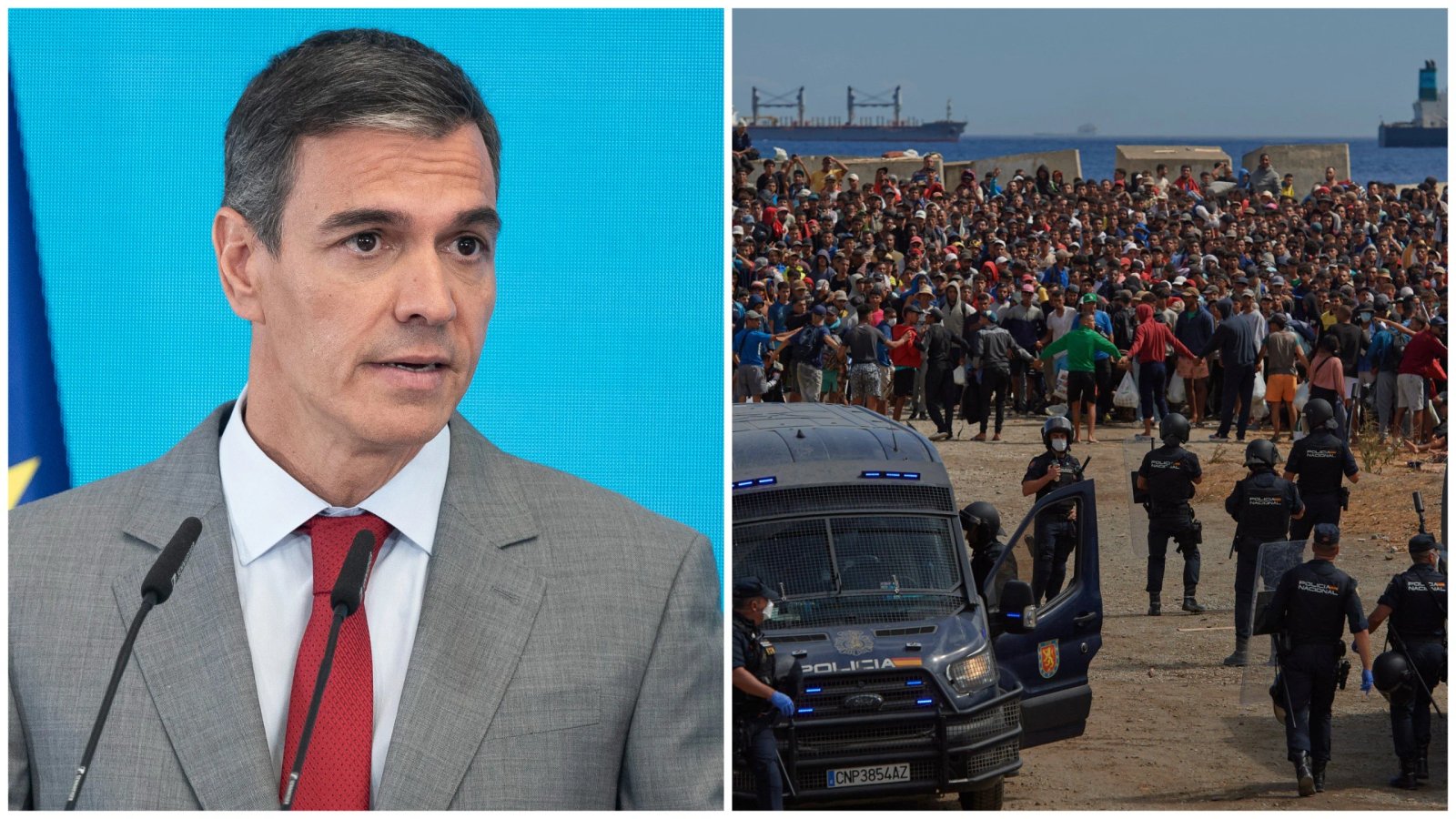
SPANISH prime minister Pedro Sanchez has accused Russia and Israel of spreading disinformation online following a massive migrant surge into Ceuta in late July.
The socialist PSOE leader said the campaign was aimed at ‘dividing’ Europe and ‘attacking Spain’ after around 70,000 migrants illegally entered the Spanish North African enclave from Morocco on July 30 and 31.
Sanchez said the unprecedented influx was partly prompted by migrant smugglers spreading ‘fake news’ online to encourage people to make the crossing.
He added that social media accounts linked to Russia, Israel and ‘the international far right’ then ‘amplified the disinformation’ in the aftermath of the crisis.
READ MORE: Spain’s PM Pedro Sanchez says ‘no evidence’ of Morocco being involved in Ceuta migrant crisis
“From July 30 and 31 onwards, this disinformation was amplified by social media accounts linked to Russia, Israel and an international far-right movement that routinely exploits migration to attack not only Spain, but Europe as a whole, and to drive divisions,” Sanchez told broadcaster Cadena SER on Monday.
Sanchez said more than 90% of the migrants who entered Ceuta in July have since voluntarily crossed back into Morocco.
He added that only around 5,000 remain in Ceuta, including some 1,000 children – though the opposition disputes the figure, putting the total number still in the enclave at around 10,000.
Just days after the July influx, Spanish intelligence reports warned that social media accounts were encouraging migrants to attempt another crossing on August 15.
Morocco and Spain then stepped up security along the border, with Moroccan authorities making dozens of arrests as hundreds of people again tried to enter Ceuta that day.
It remains unclear whether the social media accounts involved in those efforts are the same ones the Spanish government has since linked to Russia, Israel and the ‘international far right.’
READ MORE: Ceuta crisis latest: Spain pledges €165m emergency package as migrant tensions continue to boil over
Though the causes of the July incident officially remain under investigation, Sanchez said the mass crossing was partly sparked by a misleading interpretation of a Spanish Supreme Court ruling circulating online before the surge.
A raft of social media accounts wrongly suggested that, under the court’s July 8 ruling, migrants who swam into Ceuta could not be returned to their countries of origin.
However, the ruling actually confirmed that Spanish authorities cannot carry out so-called ‘hot returns’ of migrants intercepted while attempting to enter Ceuta or Melilla by sea without first following the legally required procedures.
It did not give migrants an automatic right to enter or remain in Spanish territory.
The crisis has stirred tensions across the EU, with European officials pressing Spain to speed up the processing and return of migrants still in Ceuta.
Italy’s prime minister Giorgia Meloni even went as far as to suspend Schengen arrangements with Spain, temporarily reintroducing border checks on travellers arriving from the country.
Madrid responded in kind, imposing its own checks on travellers arriving from Italy.
Sanchez also told Cadena SER on Monday that intelligence information showed ‘without doubt’ that Morocco played no part in the July surge.
The PM praised Moroccan authorities for their responsiveness, describing the collaboration between the countries as ‘frankly positive’.
Sanchez’s interview came only one day after he returned from his month-long holiday in the Canary Islands and Andorra.
He briefly interrupted his stay in Lanzarote on July 31 amid the Ceuta crisis, but returned there the same day.
Sanchez then flew to Madrid on August 25 before heading to Andorra with his wife, Begoña Gomez, two days later – with the PM coming under fire over his decision not to call off his holiday despite the Ceuta crisis.
READ MORE: Political round-up: Spain’s government returns from summer feeling the heat after Ceuta crisis
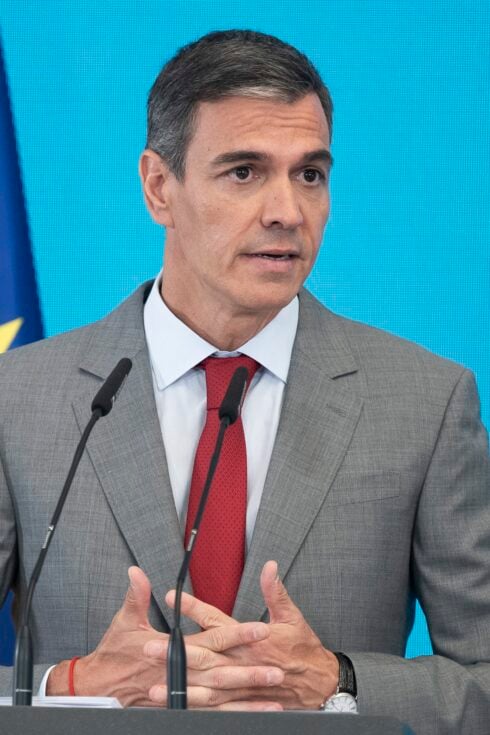
Alberto Nuñez Feijoo, the leader of right-wing Partido Popular (PP), said Sanchez left Ceuta without adequate political leadership while the crisis was unfolding, and that the government was effectively ‘closed for holidays’ when the enclave needed Madrid most.
He added Ceuta residents had been ‘abandoned’ and blasted the government for taking too long to put stronger measures in place.
PP spokesman Borja Semper went even further, accusing Sanchez of using his ministers as a ‘human shield’ while he hid in Lanzarote, and arguing that he failed to defend Spain’s interests in dealing with Morocco.
Sanchez has defended his decision to remain on holiday during the crisis, insisting that he continued working while also exercising his right to rest.
He told Cadena SER on Monday: “I have worked and I have rested; those are my rights.”
Click here to read more Politics News from The Olive Press.
