
Hannibal ad portas. “Hannibal is at the door.”
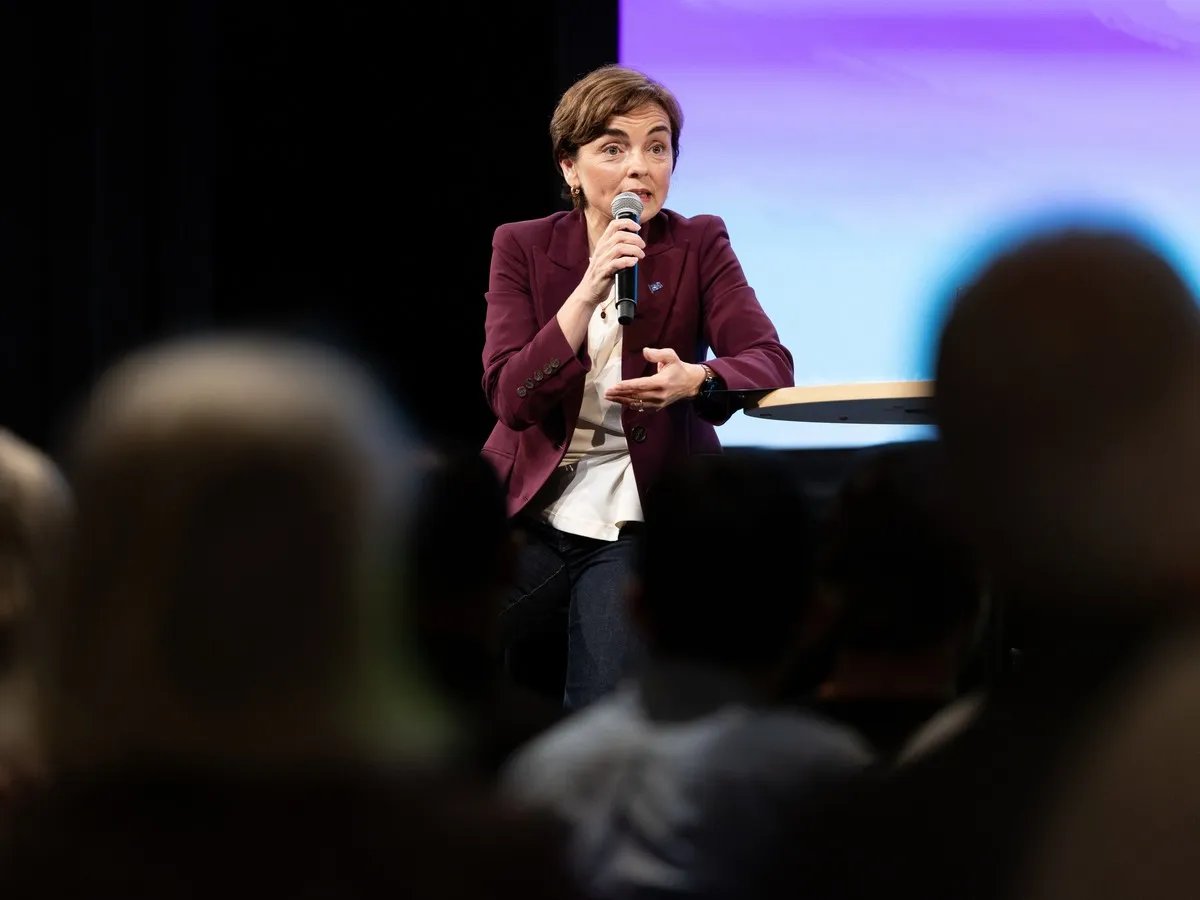
Trump is the imminent danger “at the door” that Christine Fréchette, CAQ leader and Quebec premier, is using to rally-round-the-flag against, in an attempt to rescue her government from what had seemed certain defeat in October’s election.
Sounds familiar? It is a very similar to the strategy that Mark Carney used for his own election against Pierre Poilievre.
A key figure from former premier François Legault’s government, Fréchette was handpicked by party apparatchiks and won a leadership race after Legault resigned this past winter. In power since 2018, Legault was at one time the most popular, and later the least popular, premier of the province this century .
Trump might not be about to sack Quebec City, but Fréchette is behaving as if he is. In her first campaign news conference on Thursday, she declared with all seriousness, yet could not help but crack a little smirk: “My opponent is named Donald Trump. He’s the real adversary.” The similarity with the Carney campaign is almost uncanny.
It is not a secret though that her campaign manager, Brigitte Legault, a former federal Liberal, is very close to Carney’s entourage. This association is even more remarkable considering the Liberal Party of Quebec still exists. The Coalition Avenir Québec is using the same playbook in an egregious way, considering Fréchette isn’t even leading trade talks. At least Carney could claim direct responsiblity for dealing with Trump.
The premier is not an outsider, and her resume is far from being in the same weight class as Carney’s. But, as we say in politics, the first rule is to choose your adversary, and chose she did. A recent Abacus Data poll showed that Donald Trump and his administration is the main issue of concern for Quebec voters at 63 per cent.
Fréchette is moving away from “how well the CAQ has governed” to “who do you trust to protect Quebec from Trump?” Only one of these questions requires the government to defend its record.
Fortunately, not everybody is falling for this dog and pony show. Two polls released in the first week of the campaign still show the CAQ in fifth place among 18-34 years old and fourth place among 35 to 54 years old. Most of the party’s support, comes from voters 55 and older, where we find most of the “elbows-up” crowd. Fréchette is leadeing this group by a wide margin.
Overall, poll aggregator Qc125 on Aug. 30th has the PQ at 29 per cent and the CAQ at 25 per cent, with the Quebec Liberals at 21 per cent. The latter were once at 32 per cent back in April. The Conservative Party of Quebec sits at 15 per cent and the progressive Quebec Solidaire at 10 per cent
In this current election, younger voters tend to support political parties that support change, nationalism, address the economy, the cost of living, housing, health care, immigration, the more bread-and-butter issues younger generations are facing. To these voters, though the tariffs’ impact is real and Trump poses a significal challenge to Canadian exports, Quebec needs to control what it can control and get its own house in order. Unfortunately, this does not describe a large part of the electorate, particularly among older voters.
An age divide along such drastic lines has rarely been seen in Quebec. It is not only a difference of opinion, but also a divergence of where these two different electorates get their political information from. Older generations still rely mostly on traditional media such as television. The Académie de la transformation numérique published a survey earlier this year that showed older voters use traditional media at a rate of 87 per cent, compared to 59 per cent with for voters aged 18 to 34, an almost 30-points difference.
An Influence Communication analysis showed that the media coverage of Donald Trump in Quebec was five times more important than the coverage of our Prime Minister Mark Carney. When we take a look at voters aged 18 to 34, they get their information through social media at 74 per cent compared to only 28 per cent with older voters. Not only that, but their trust towards the traditional fourth estate is declining. The aspirations of two different generations are now being amplified by their own echo chambers.
It’s not too much to pretend that the resulting dissonance is now epistemic. When these groups debate each other, they’re no longer arguing over the same set of facts. They often can’t even agree on which reality they’re talking about.
And Fréchette and the CAQ know exactly what they are doing by playing the Trump card. The “elbows-up” crowd is a larger voice that shows up to vote. Quebec’s domestic agenda is side tracked because political leaders can’t seem to see the bigger picture. It is easier to blame everything on a boogeyman in America than looking in the mirror and taking bold decisions to tackle a low level of productivity, a poor level of investments, and the need for energy diversification.
Only 22 per cent of entrepreneurs in Quebec would recommend people to start a business in the province. Where are the discussions about red tape and badly needed tax reform? Fréchette is throwing a smoke screen to the electorate to hide her government’s record while people deserve a premier who addresses key issues. Debates will be interesting as the Trump question will only last for so long.
The election campaign is still early, and plenty can happen. But the parallel between the CAQ and Carney strategies cannot be ignored. In the middle of this obvious fear campaign, let’s remind ourselves, that Hannibal never reached the gates and Rome survived. The fear, however, did more damage than the enemy.
Marc-Olivier Fortin is the former national Vice-President of the Conservative of Canada (2016-2018) and campaign manager for the CPC in Quebec (2021). He is now a regular commentator at RDI and on COGECO radio and works for Transfert, a firm specialized in social acceptability in mining, energy and heavy industry sectors.
