
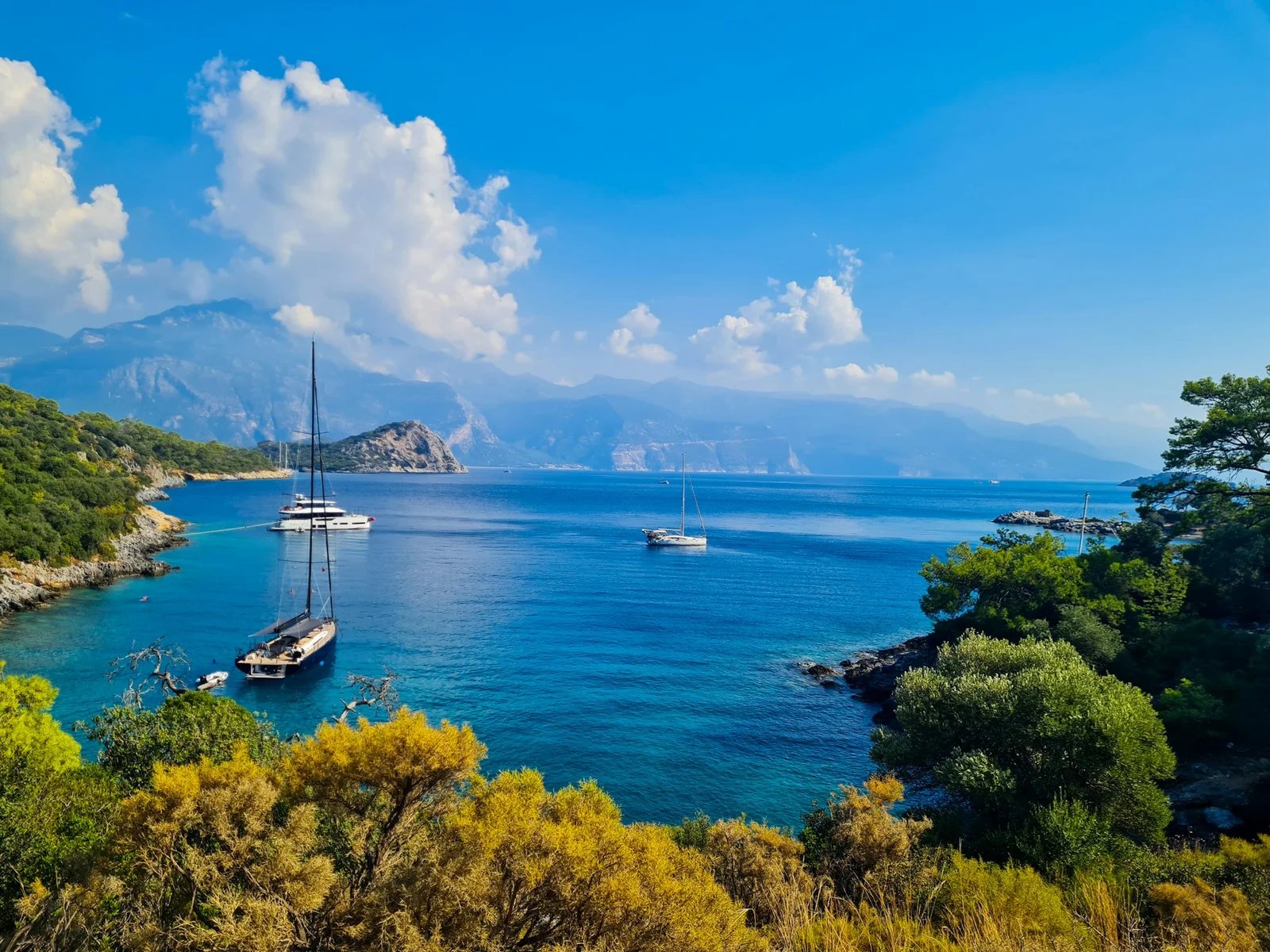
There is a stretch of coastline in southwestern Turkey that most American travelers have never heard of, yet it rivals anything the Greek Islands or the Italian coast can offer — with far fewer crowds and a character entirely its own. The Turkish Riviera, also known as the Turquoise Coast, runs from Bodrum in the north to Antalya in the east, passing through some of the most beautiful sailing waters in the Mediterranean.
I first heard about gulet sailing from a friend who had spent a week cruising from Fethiye to Ölüdeniz and back. She described mornings waking up in empty bays, swimming off the stern before breakfast, and eating meals prepared by an onboard chef who shopped at local markets every morning. It sounded almost too good to be true. After doing my own research and booking a trip, I can confirm: it is every bit as good as it sounds, and then some.
What Exactly Is a Gulet?
A gulet is a traditional Turkish wooden sailing vessel, originally built by fishermen and sponge divers along the Bodrum coast. Over the decades, these vessels have been transformed into floating boutique hotels. Modern gulets range from intimate 4-cabin yachts to expansive 12-cabin vessels, all with private bathrooms, air conditioning, spacious decks, and a professional crew.
The concept of a gulet holiday — often called a Blue Cruise or Blue Voyage — was popularized in the 1940s by the Turkish writer and intellectual Cevat Şakir Kabaaaçlı, known as the Fisherman of Halicarnassus. He organized the first recreational sailing trips along the coast, inviting friends and fellow writers to experience the coastline from the water. That tradition of slow, thoughtful travel is very much alive today.
What makes the experience special is the crew. On a typical gulet, you will have a captain who knows every bay and anchorage along the coast, a chef who prepares three meals a day plus afternoon tea, and at least one deckhand who handles everything from anchoring to setting up water sports equipment. You do not need any sailing experience. You simply show up, settle in, and let the coastline unfold.
Starting in Fethiye: The Heart of the Blue Voyage
Fethiye is where most Blue Voyage itineraries begin, and for good reason. This laid-back harbor town sits at the foot of pine-covered mountains, with Lycian rock tombs carved directly into the cliffs above the town center. The weekly market is one of the best in Turkey, overflowing with fresh produce, spices, handmade textiles, and local honey.
From Fethiye, the most classic route heads south toward Ölüdeniz — home to the famous Blue Lagoon — and then east into Butterfly Valley, a dramatic gorge accessible only by sea. The sailing continues through the Gulf of Fethiye, stopping at islands like Tersane (with its ruined Ottoman shipyard) and Yassıca, a cluster of tiny islands with gin-clear water perfect for swimming and snorkeling.
For travelers who want to experience this firsthand, a gulet charter from Fethiye is the most authentic way to explore the region. Operators like Blue More Yachting specialize in matching travelers with the right vessel and crew for their group size and interests, ensuring that even first-time charterers feel at ease from the moment they step on board.
Extending the Journey: Göcek, Bodrum, and Marmaris
While Fethiye is the traditional starting point, many travelers opt for routes that include neighboring ports. Göcek, just 30 minutes west of Fethiye by car, is a quieter alternative favored by experienced yachters. Its twelve islands create a network of sheltered bays that feel worlds away from civilization, even though the town itself has excellent restaurants and a modern marina.
Bodrum offers a completely different atmosphere. Known as the Saint-Tropez of Turkey, it combines ancient history — the Mausoleum at Halicarnassus was one of the Seven Wonders of the Ancient World — with a vibrant nightlife and dining scene. A one-way charter from Bodrum to Fethiye covers the entire western stretch of the Turquoise Coast and is considered one of the premier sailing routes in the Mediterranean.
Marmaris, located at the junction of the Aegean and Mediterranean seas, rounds out the quartet of major departure points. Its location makes it ideal for cross-border charters to the Greek island of Rhodes, adding an international dimension to the voyage. A yacht charter from Marmaris typically includes stops at Selçimiye Bay, Bozburun, and the dramatic Dalyan Delta, where Caretta Caretta sea turtles nest along the river.
Practical Tips for American Travelers
Getting to the Turkish Riviera is easier than you might think. Direct flights from major U.S. hubs connect through Istanbul, with onward flights to Dalaman (serving Fethiye, Göcek, and Marmaris) or Bodrum’s Milas Airport taking about an hour. Turkish Airlines operates most of these routes and offers competitive business-class fares.
The best time to sail is between May and October, with June and September offering the sweet spot of warm weather, calm seas, and fewer vessels in the bays. July and August are peak season, ideal for families with school-aged children but busier at popular anchorages.
What sets a Turkish gulet charter apart is the all-inclusive nature of the experience. A week-long voyage typically covers crew, all meals prepared by the onboard chef, fuel, and use of water sports equipment. When shared among a group, this format offers an exceptionally comprehensive holiday where every detail is handled, allowing guests to focus entirely on the experience rather than logistics.
One final tip: do not try to see everything in one trip. The Turquoise Coast is vast, and its beauty lies in the pace. Choose one region, give yourself a week, and let the sea set the rhythm. You will almost certainly come back for more.
Why This Belongs on Your Travel List
For American travelers accustomed to the well-trodden paths of Western Europe, the Turkish Riviera represents something refreshingly different. It is a place where ancient civilizations left their mark on cliffs that now serve as backdrops for morning swims. Where the food is exceptional and the hospitality is genuine. Where a week on the water can recalibrate your sense of time and leave you planning your return before you have even disembarked.
The gulet tradition has been perfected over decades, and today’s charter experience reflects that heritage — updated with modern comforts but rooted in the same spirit of slow, purposeful travel that Cevat Şakir envisioned nearly a century ago. If the Mediterranean is on your horizon, Turkey’s Turquoise Coast deserves a place at the very top of the list.
