
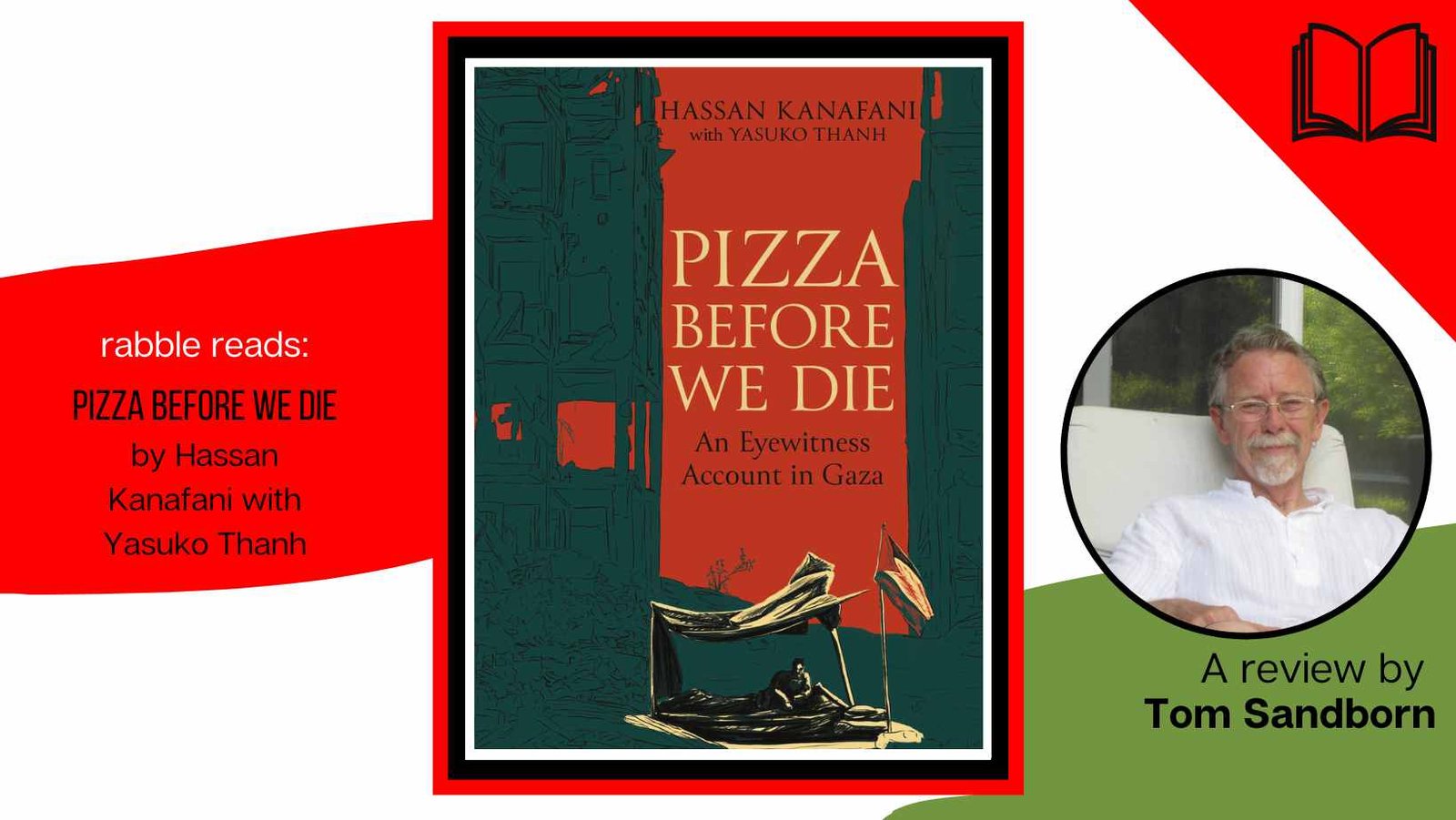
Hassan Kanafani is the pseudonym of a Gazan engineer who was, as the Reddit posts that form the basis for this remarkable book reveal, living under the bombs of the IDF in Gaza in 2024 and 2025, during the current genocidal attack on his home and his people.
Shaped and edited by Victoria based novelist Yasuko Thanh, Kanafani’s text offers a heart scalding, intimate and beautifully written account of the life of suffering and endurance he and his family experience there, while well fed men in suits count the profits of war and promote the rationalizations of colonialism and genocide. Think of this book as a set of dispatches from Hell.
This is not an easy book to read. The author spells out the quotidian horrors of life under occupation and genocidal attack, the hunger, the cold, the bodies rotting beneath the rubble, the mud, the illness, the grinding uncertainty and fear. His unsparing account of day-to-day struggles to find food, fuel and energy to feed his family, the battle to boil water with scavenged scraps of wood and garbage as fuel, the glimpses of dead and mutilated children and elders make for an excruciating experience for the reader.
But we, lucky and safe, can close the book and think about other, happier matters. We can turn away, but this book is a demand we listen to the voices of the innocent victims in Gaza and reminds us that if we refuse to do so, we become complicit in their suffering. Western governments, the US in particular, but Canada as well, provide moral cover and material aid to the project of Zionist murder that continues as this review is written.
According to the United Nations, since the October 7, 2023 Hamas attacks on Israel, the Israeli “Defense” Forces have killed over 71,000 in Gaza and injured over 171,000. (It is important to understand the October 7 attacks in the context of a long history of displacement, ethnic cleansing and racism inflicted on Palestinians by Zionists, a history that goes back before the creation of the Israeli state in 1948. Palestinians refer to this as the Nakba (Catastrophe) and it has been an ongoing bloody reality for them for generations.
They see the current genocide, which has been condemned by many human rights organizations, as a continuation of the Nakba. Human Rights Watch, for example has recently said: “In 2025, Israeli forces escalated their atrocities, including war crimes, crimes against humanity and acts of genocide, and ethnic cleansing against Palestinians in Gaza, killing, maiming, starving and forcibly displacing Palestinians and destroying their homes, schools, and infrastructure at a scale unprecedented in the recent history of Israel and Palestine.”
Another source, Relief Web said in a report dated February 13, 2026: “Airstrikes, shelling and gunfire continue across Gaza, causing casualties and exposing civilians, including aid workers and medical teams, to deadly risks……. Shelter conditions remain dire for most displaced people, pushing some to stay in unsafe locations or search rubble for essentials, while children remain exposed to explosive ordnance and older people face heightened health risks and challenges accessing care and assistance.”
The numbers and claims can have a numbing effect, as the eyes of the Western observer glaze over. One of the many virtues of Kanafani’s book is that it gives human scale and human faces to the horrors, and invites us into the painful, but imperative, moral task we face- to know our own complicity and act to stand in solidarity to those suffering in Gaza, and in the many other places around the world where genocide is being conducted and the non-white, non-Western Other is being dehumanized and attacked.
In a chapter called “The Language of Ash,” Kanafani cautions the reader that his book is not merely a literary exercise, an important caveat, given how powerful his prose is. He writes: “These sentences aren’t crafted for beauty- they are pulled from exhaustion, from pain, from the weight of days that never seem to end.” And yet there is a compelling beauty here, and that beauty makes his witness and challenge even more powerful.
In the face of this terrible beauty, what can we as readers in the West do? We can listen to the voices of Palestinians in books like the one under review here and, for context, the magisterial history The Hundred Years’ War on Palestine: A History of Settler Colonialism and Resistance, 1917-2017, by Rashid Khalidi.
We can, like Kanafani, donate to Doctors Without Borders, the valiant NGO that continues to deliver lifesaving medical assistance in Gaza. Proceeds from his book will go to the NGO. (Currently, the Israeli government is threatening to cut off the NGO’s access to Gaza, but they will be able to continue delivering help until March and may yet find a way to continue their work.) Another group that sustains contact with Palestinian families and gets donations to them on the killing ground of Gaza is Connecting Gaza, which, full disclosure, is a project involving my son Jesse and his many friends. They have raised over a million dollars and got it into the hands of families in Gaza, and would put any donation you send to good use.
We must not look away. I implore you to read this important book and take action.
