
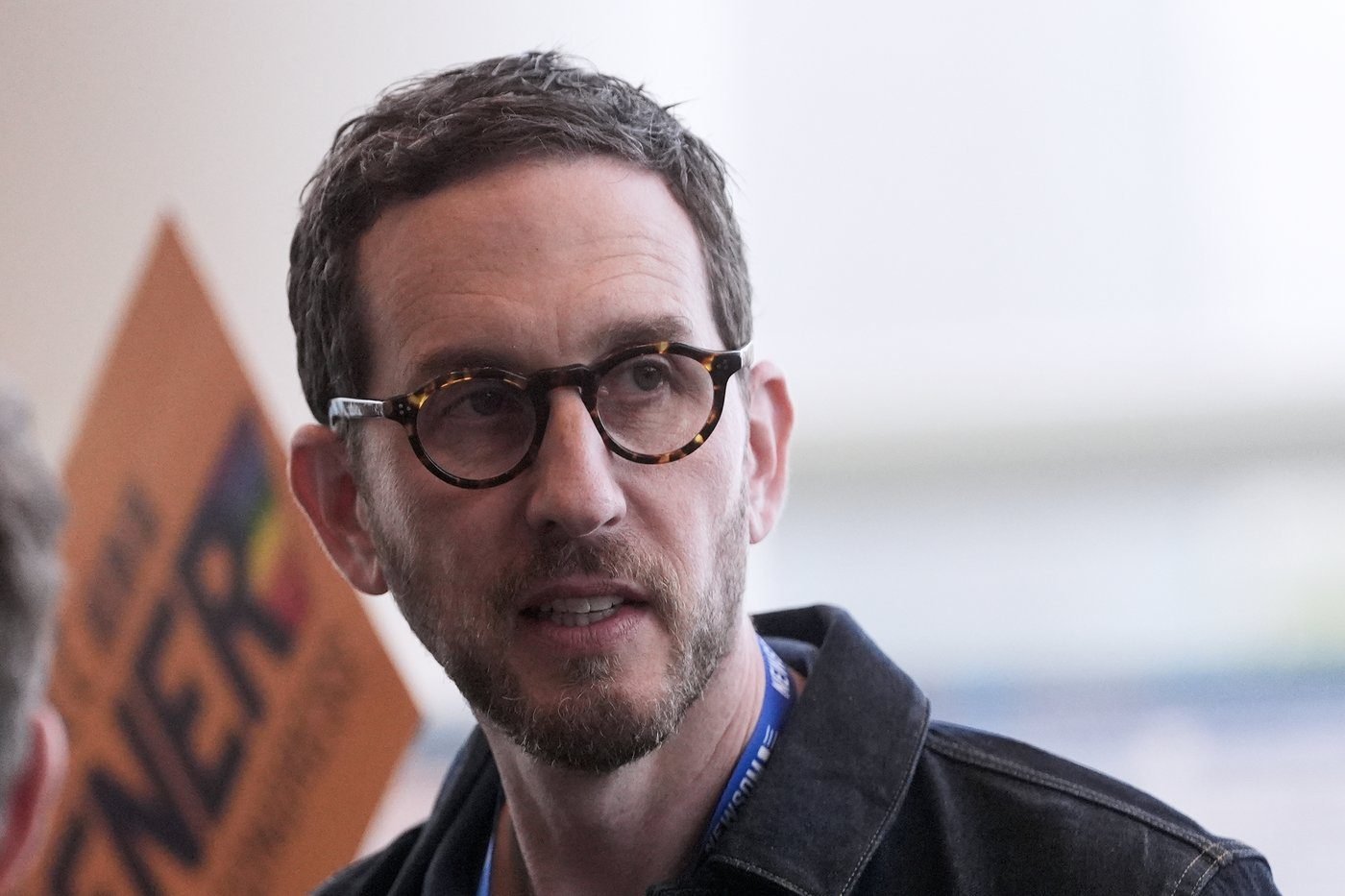
SAN FRANCISCO (AP) — The California state lawmaker favored to succeed Nancy Pelosi in the U.S. House has already been thrust into the national spotlight as the force behind headline-grabbing policies like a ban on masks for federal agents and protections for transgender youth.
Now, Scott Wiener has won the California Democratic Party’s endorsement on Sunday, giving his candidacy an extra boost in a competitive primary. Once in Washington, he could swiftly become a fresh symbol of San Francisco politics, derided by conservatives as an example of extreme liberalism while occasionally clashing with progressives.
Wiener has practice with that balancing act after 15 years in city and state politics.
“Sen. Wiener only does the tough bills,” longtime Sacramento lobbyist Chris Micheli said. “He never shies away from a significant political battle.”
Wiener’s challenge of navigating modern Democratic politics was on display in January, when he changed his language on the war in Gaza. Days after declining to align with his progressive opponents in describing Israel’s actions as genocide, he said he agreed with that term. The shift angered some Jewish groups and led Wiener to step down as co-chair of the state Legislative Jewish Caucus.
“For a period of time I chose not to use the word ‘genocide’ because it is so sensitive within the Jewish community,” he said in an interview with The Associated Press. “But ultimately I decided I had been effectively saying ‘genocide’ for quite some time.”
Leading high-profile legislation
Wiener, known for his calm demeanor, is often at the center of California’s most divisive issues, from housing to drug use. His backers and critics alike describe him as someone who advocates relentlessly for his bills.
“If you’re willing to risk people being mad at you, you can get things done and make people’s lives better,” Wiener said.
He wrote laws requiring large companies to disclose their direct and indirect climate emissions and ramp up apartment construction near public transit stops.
But he doesn’t always win.
Wiener authored a first-in-the-nation law banning local and federal law enforcement agents from wearing face coverings after a wave of immigration raids across Southern California last summer. A judge blocked it from taking effect this month — a rare loss in the state’s legal battles with the Trump administration that had Democratic Gov. Gavin Newsom’s office blaming Wiener.
He also failed to pass high-profile bills to decriminalize psychedelic mushrooms and hold oil and gas companies liable for damage from climate-caused natural disasters.
His critics come from both parties.
Republicans have blasted many of his policies aimed at defending LGBTQ+ people, sometimes calling Wiener, who is gay, offensive names.
Aaron Peskin, a former San Francisco supervisor and outspoken progressive, said a law Wiener wrote inadvertently stifled local housing and affordability efforts.
“It was screwing my government’s ability to deliver goods and services to the people that we represent,” he said.
Shifting language on Israel
Wiener said he supports Israel’s right to defend itself but grew horrified by the scale of its attacks on Gaza and its blocking of humanitarian aid. More than 70,000 Palestinians have been killed since the war began in late 2023, according to Gaza’s Health Ministry. He had harshly criticized Israel’s actions but avoided using the word “ genocide.”
At a candidate forum in January, he refused to say “yes” or “no” after the Democratic hopefuls were asked whether Israel was committing genocide, which angered pro-Palestinian advocates. His opponents, San Francisco Supervisor Connie Chan and former tech executive Saikat Chakrabarti, said “yes.”
Days later he released a video saying Israel had committed genocide, triggering backlash from Jewish and pro-Israel groups who said his words lacked “moral clarity.”
It was a representation of the difficult political terrain many Democrats are navigating as polls show views have shifted on Israel. American sympathy for Israel dropped to an all-time low in 2025, particularly among Democrats and independents, while sympathy for Palestinians has risen.
“Do I think he wins or loses based on this issue? Not necessarily, but it could become a problem for him,” San Francisco Bay Area political consultant Jim Ross said, adding that some voters might fear he will equivocate on issues important to them.
Just two Jewish members of Congress — Independent Sen. Bernie Sanders and Democratic Rep. Becca Balint, both of Vermont — have publicly used the word “genocide” to describe Israel’s actions. Only a small percentage of congressional Democrats have used the term, according to the Jewish Democratic Council of America.
Wiener grew up in New Jersey in a family that was Conservative Jewish, a sect of Judaism that is moderately traditional, and his only friends until high school were from his synagogue, he said. He later joined a Jewish fraternity at Duke University and was surprised by how supportive his brothers were when he told them he was gay.
“A lot of Jews just intuitively understand what it means to be part of a marginalized community,” he said.
Competing for Pelosi’s seat
Pelosi, a former House speaker, has not made an endorsement in the race.
If elected, Wiener said, he will work to bring down San Francisco’s notoriously high cost of living. His opponents are running on a similar promise and say he has failed to prioritize affordable housing.
Chan and Chakrabarti, a former aide to U.S. Rep. Alexandria Ocasio-Cortez, D-N.Y., say they are fresher faces better positioned to bring sweeping change after Pelosi. Wiener, they say, is a moderate with establishment ties. Chan has been elected twice by voters in the city’s Richmond District, while Chakrabarti has never been on the ballot.
Ross, the political consultant, said it’s impossible to compare anyone to Pelosi given the sheer size of her political influence. But like her, Wiener has proved to be a strong networker who can raise money and pass ambitious bills.
“They’re both about the politics of what they can get done,” Ross said.
___
Associated Press writer Janie Har contributed.
Sophie Austin, The Associated Press
