
Jeffrey Caron was 28 on that October day in 2012 when he went to work at a trench excavation site in the Vancouver suburb of Burnaby. He never got to see 29. Like too many other Canadian workers, he died that day on the job, a victim of employer negligence.
Caron died of blunt force trauma when a retaining wall above the trench collapsed into the trench. According to the record of a trial that finally followed up on this death in 2025, Dr. Carol Lee, an expert in forensic pathology, testified regarding the post-mortem examination of Jeffrey Caron.
“She found that Mr. Caron was healthy at the time of his death, with no significant disease or pre-existing conditions. Dr. Lee found that he died as a result of multiple blunt force injuries, consistent with trauma from a heavy object, specifically, the wall that fell on him. The injuries included a fatal transection of the aorta, severe brain trauma, including bleeding around the brainstem, multiple rib fractures, and significant internal bleeding,.” Dr. Lee’s testimony reads.
Another worker with Caron in the trench was injured. Evidence heard in the long-deferred trial resulting from this incident showed that the trench was not shored properly and ran too close to the retaining wall that fell on the two workers. Many legally required safety measures were not observed or documented properly.
In a Vancouver courtroom at the end of 2025, Caron finally got some too-long-delayed justice, as Justice Michael Brundrett of the BC Supreme Court ruled: “I find the Crown has proven the guilt of J. Cote and Son Excavating Ltd. on counts 1 and 2 beyond a reasonable doubt. Convictions will be entered against the company on those counts… I find, beyond a reasonable doubt, based on the party provisions in s. 22.1(a) of the Code, that J. Cote was a party to the offence by virtue of the collective actions and omissions of its representatives… Under s. 22.1(b), J. Cote bears responsibility for the collective failure of its senior officers to foresee and prevent the collapse of the retaining wall,”.
A sentencing hearing is slated for January 7, 2026 and an appeal by the company is likely, if past practice is any guide.
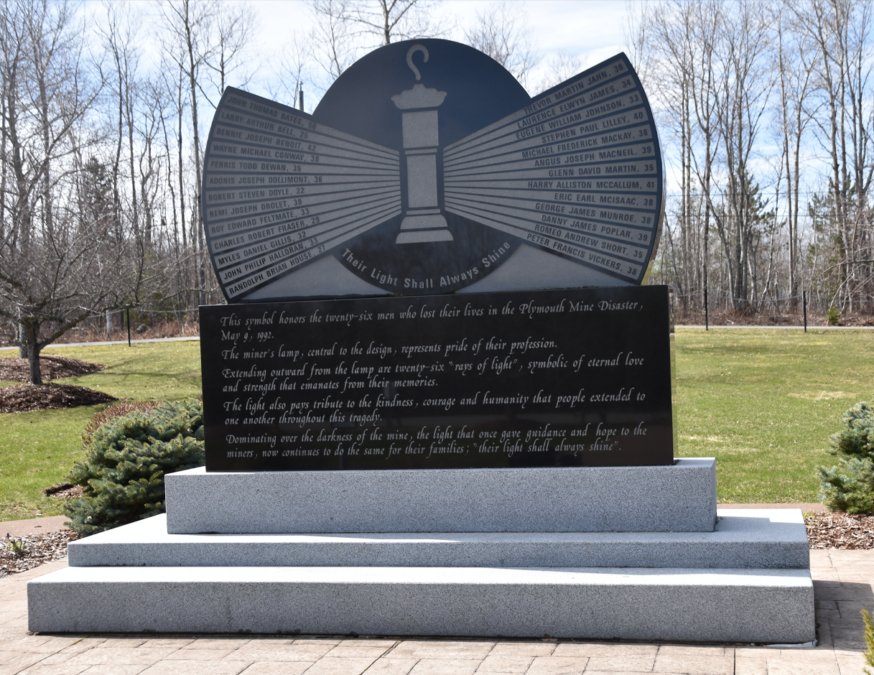
The law that the judge invoked in his decision against Caron’s employer, known as the Westray Act when it was considered by Parliament, makes it a crime under the criminal code for an employer to cut corners and neglect safety protocols in a way that leads to an employee’s death or injury. It was passed in 2004 after years of labour movement lobbying led by the United Steelworkers, (and named in honor of the miners who died in an unnecessary explosion at the Westray Mine in 1992) but it is still rarely enforced.
As of early May 2025, the United Steelworkers noted: “The USW is aware of 27 charges under the Westray amendments, with only 12 successful prosecutions, of which only one includes criminal negligence causing bodily harm.”
Steve Bittle, one of Canada’s premier experts on worker deaths, told rabble in 2024 his opinion of the way the law has been neglected by enforcers.
“I don’t think it’s hyperbole to say that it’s useless and that it’s not worth the paper it’s written on—it’s been woefully under enforced. There’s been no market change in the number of annual workplace fatalities in the country,… We’ve seen many instances in which you would on the surface think that there was evidence to proceed with criminal cases, yet prosecutors don’t,” he said.
So, the conviction in the Caron case is both a tribute to the years of lobbying by unions and a reminder that employer impunity still largely prevails in Canada. For the employer class, “making a killing in business” is still a grim reality, not just a metaphor.
Jeffrey Caron died, the judge ruled, because of negligence on the part of his employer. This long-delayed justice is denied to many Canadian workers who die or are injured by job related injuries and poisoning.
Every year around a thousand Canadian worker deaths are reported, and it is highly likely that many of the deaths and associated injuries are caused by heedless bottom-line decisions by employers. And yet, few charges are laid and fewer still lead to convictions.
And while the “justice system” turns a blind eye, the carnage continues on Canadian worksites. According to the University of Regina’s 2025 “Report on Work Fatality and Injury Rates in Canada,” 1,056 workers died from work-related causes in 2023, (the last year for which numbers were available to the researchers), and the number is not declining.
And in BC, where I live, the somewhat ironically named Work Safe BC just issued a list of injuries and deaths reported to it in late December. It included two more fatalities to add to the ongoing butcher’s bill of casualties in the class war waged against workers.
Reader, if by now you are thinking that something ought to be done about all this industrial murder, you might want to take a look at the Stop the Killing website maintained by the USW at. It includes steps you can take as an individual or through your union or municipality to support the campaign. Please put it on your new year’s resolution list this year. We will only get the justice we fight for.
