
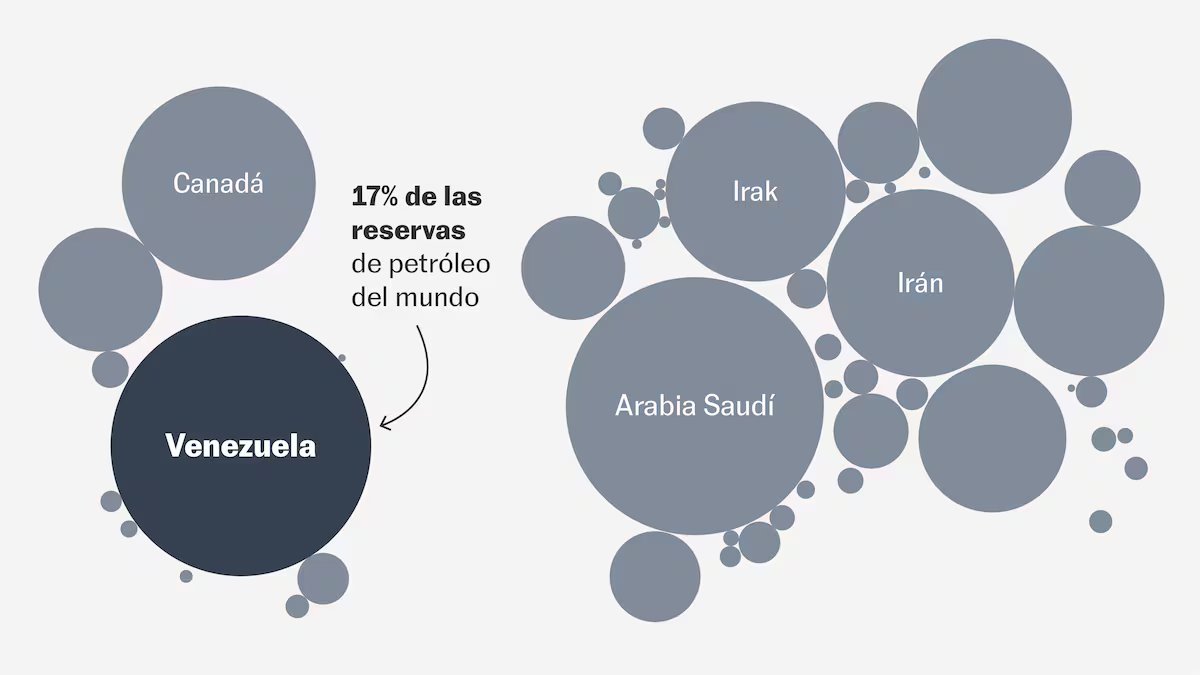
The largest oil reserves in the world in 1980 were concentrated in the Middle East, principally in Saudi Arabia. Venezuela had been found to have considerable deposits — which were essential to the country’s economy in previous decades — but they represented only 3% of the world total.
Thirty years later, between 2008 and 2010, Venezuela became the first country to surpass Saudi Arabia in known oil reserves. As announced by the local government and certified by the Organization of the Petroleum Exporting Countries (OPEC), beneath the country’s soil lay one of the largest deposits of technically recoverable crude oil in the world.
According to the latest available data from 2020, Venezuela accounts for 17% of all the world’s crude oil.
The sudden growth of Venezuela’s reserves — which quadrupled in just five years, reaching 40 billion tons — is a unique case. The explanation lies in the Orinoco Belt, a vast area located in the north of the country.
Just 20 years ago, when Venezuela was one of the world’s leading oil exporters, not a single barrel came from the Orinoco. Today, 80% of its 300 million barrels of production come from that region.
But Orinoco crude is unusual: it is heavy and extra-heavy oil. As highlighted by the U.S. Energy Information Administration (EIA), it is complex and costly to process and, due to its composition, is not directly suitable for fuel production. It requires a high level of technical expertise, investment, and technology — resources that many international companies possess. The United States even built refineries in the Gulf of Mexico specifically adapted to this type of oil when Venezuela was one of its main sources of imports. Canada and Mexico also have large reserves of heavy crude, which the United States continues to import today.
In Venezuela, the oil company PDVSA — which has been owned by the state since 1976 — has seen its resources dwindle and investment and maintenance falter, especially after Hugo Chávez came to power in 1999. The participation of foreign capital and technology was further restricted by international sanctions against the country’s oil sector in 2019. Added to this have been repeated cases of corruption over the past decade in nationalized companies and the emigration of skilled personnel — a combination of factors that has ultimately brought the country’s oil production to its knees.
Venezuela currently extracts about 1% of global oil, less than half of its contribution in the mid-1990s (2.5%), despite now having reserves four times larger.
The following chart shows how Venezuela’s reserves and production have gradually decoupled, in contrast to what has occurred in three of the world’s largest producers.
The most up-to-date picture of this trend is reflected by comparing the 2020 reserve data and the 2024 production (expressed here in barrels per day).
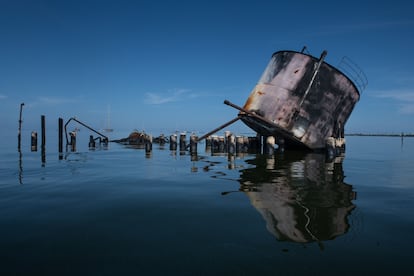
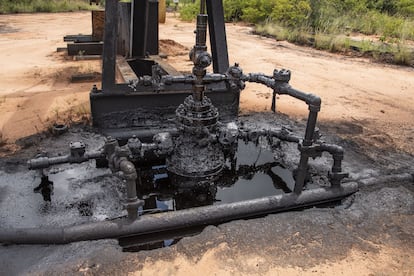
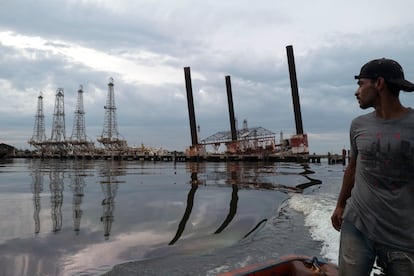
Venezuela’s oil infrastructure — now obsolete — is one of the country’s great unknowns. U.S. President Donald Trump referred to this issue just hours after the capture of Nicolás Maduro and his wife on January 3: “We’re going to have our very large United States oil companies — the biggest anywhere in the world — go in, spend billions of dollars, fix the badly broken infrastructure, the oil infrastructure, and start making money for the country.”
From major exporter to relying on ghost ships
For decades, Venezuela was a major exporter of crude oil, primarily to the United States, until relations between the two countries deteriorated with Hugo Chávez’s rise to power. Today, it exports approximately half of what it did 10 years ago.
Meanwhile, the United States has become the world’s third-largest oil exporter, behind Saudi Arabia and Russia. Fueled by fracking (with its environmental drawbacks) and a legislative change that opened up exports of light crude, the United States has increased its foreign sales thirtyfold in just a decade. Only 10 years ago, it exported 10 times less oil than Venezuela.
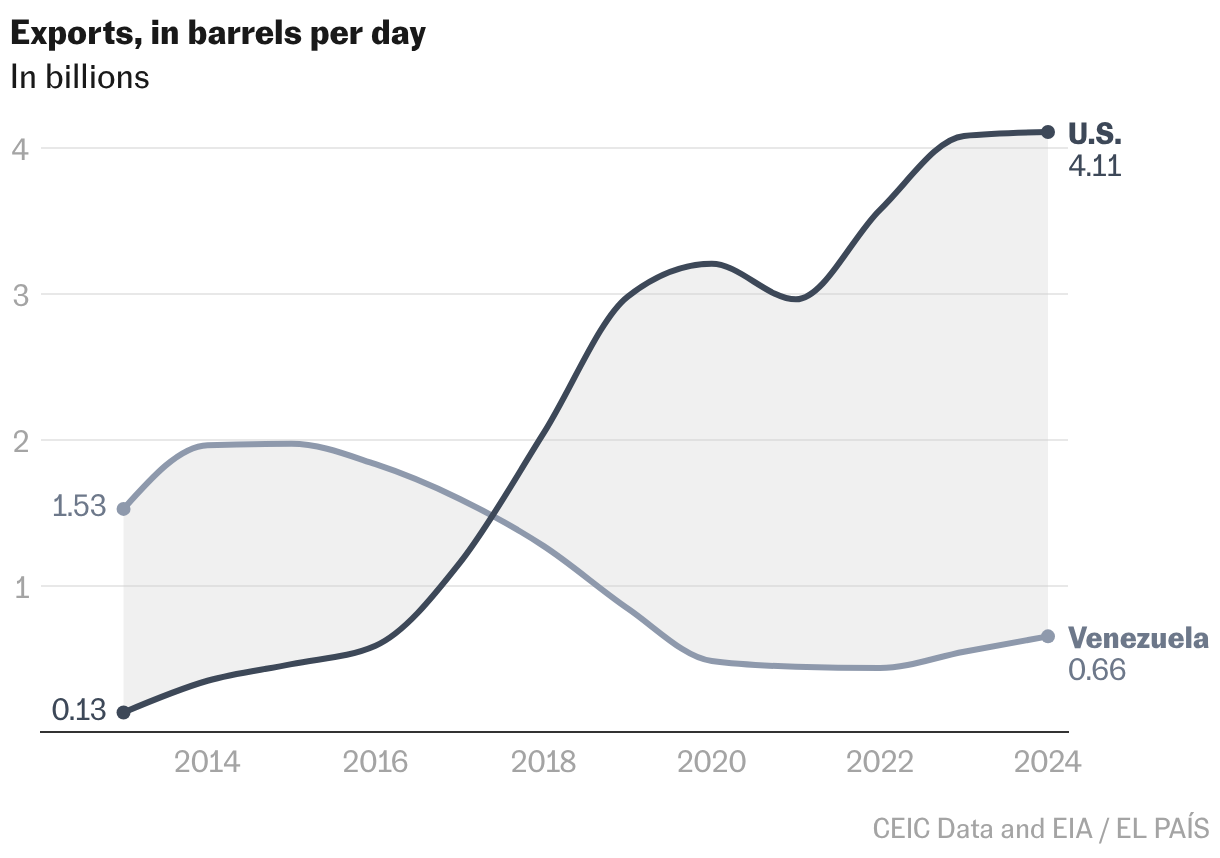
The main recipients of the Latin American country’s crude oil have also changed. Following the trade embargo imposed on Venezuelan oil in 2019, China has become Venezuela’s primary trading partner, with Venezuela resorting to so-called ghost ships to circumvent the blockade. By 2025, 36% of exports were destined for the Asian country, more than double the amount going to the United States, according to data from Kpler, a global provider of real-time analytics and tracking.
Exports rebounded in 2023, when the embargo was eased. However, Trump revoked all licenses to operate in Venezuela in the first half of 2025, before granting an exception to Chevron. The company directly produces and exports between 150,000 and 200,000 barrels per day, a figure that represents less than 3% of the oil imported by the United States.
Given this scenario, ghost ships have become increasingly common. This term refers to oil tankers that turn off their Automatic Identification System (AIS) — which transmits data about the route, position, and identity of each vessel — when they want to avoid detection. This is a common practice for, for example, smuggling oil out of sanctioned countries like Venezuela. While the signal is off, the ships change course and load or unload crude oil, either in port or by transferring it to other vessels. According to the maritime trade publication Lloyd’s List, last December alone, 17 tankers sanctioned by the United States and hidden from radar later reappeared flying the Russian flag.
The United States recently boarded at least two of these ships, the Bella I (or Marinera) and the M Sophia. Both had departed from Venezuela and, during the voyage, had changed their course, name, and flag.
The oil that moves the world
Despite the rise of renewables in the last decade, oil remains the most consumed primary energy source in the world, ahead of coal and gas, and continues to rise.
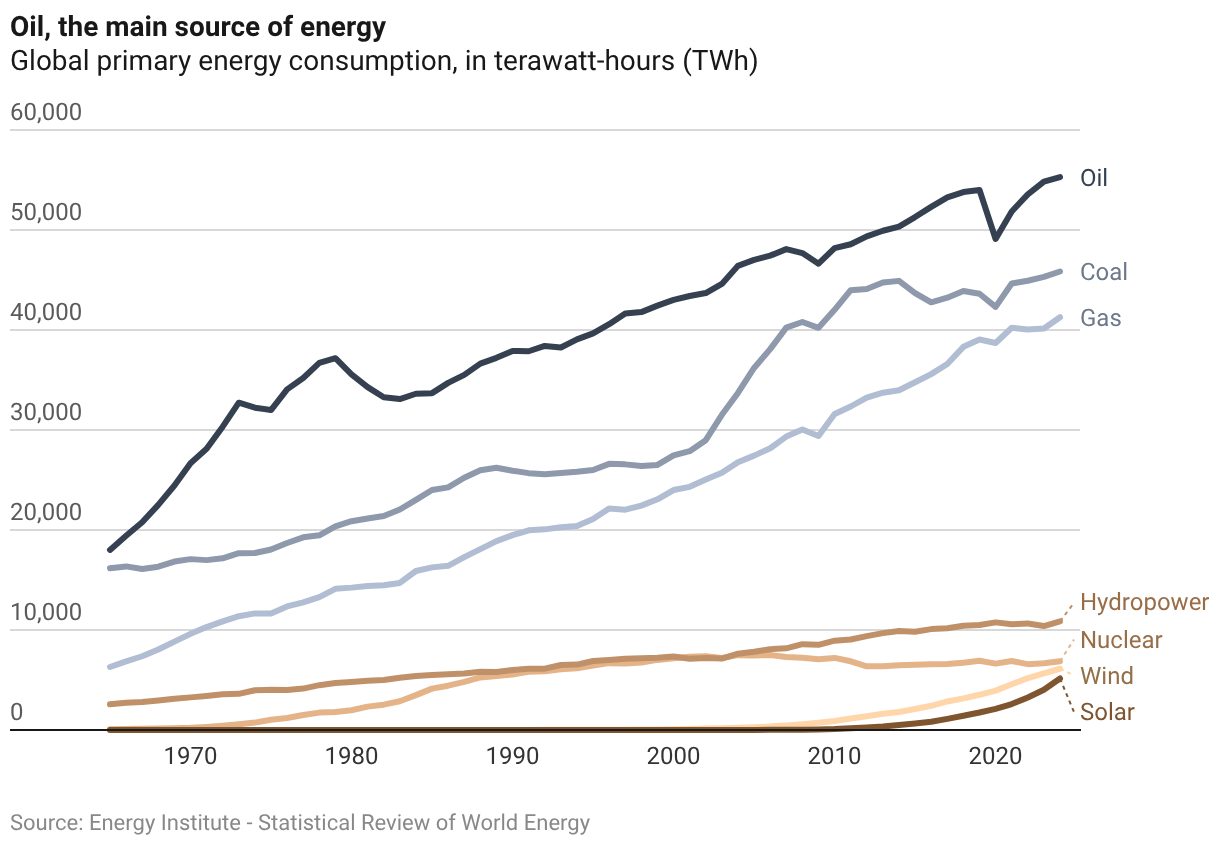
Crude oil remains the primary energy source for the United States, followed by natural gas. In China, although coal accounts for more than a third of the country’s primary energy consumption, oil ranks second. It is a similar situation in India, another major importer of Venezuelan crude.
In Venezuela, despite having the world’s largest oil reserves, production is very low; as a result, oil now accounts for a smaller share of the country’s total energy consumption than natural gas, and only slightly more than hydroelectric power.
The oil industry also has a significant presence in the United States. Refineries directly employ approximately 80,000 people and support around three million indirect jobs. According to a study by Oxford Economics, this sector has the greatest multiplier effect (creating more indirect jobs) on employment in the country, with a particularly significant economic impact in states historically linked to oil.
