
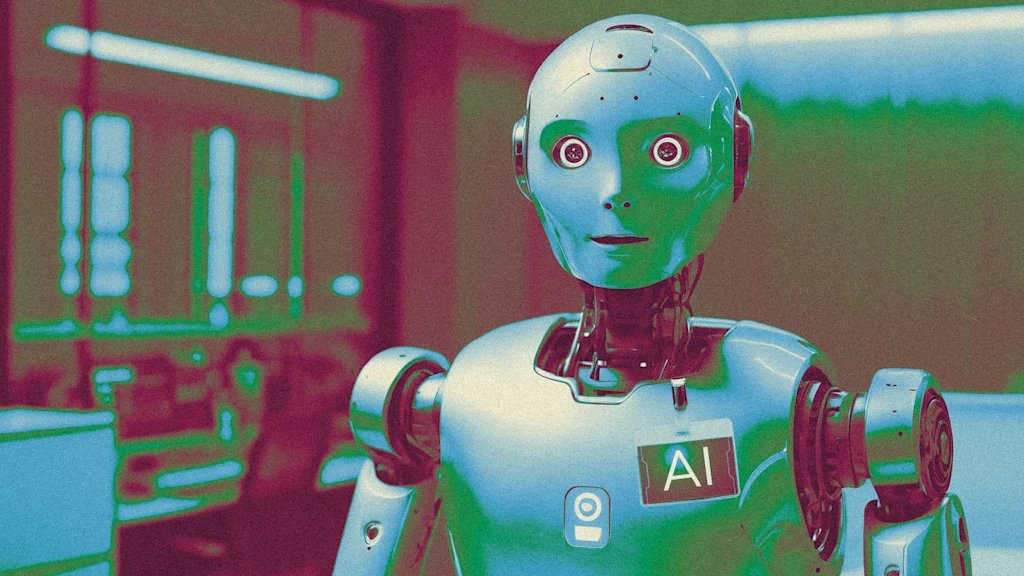
If you work in an office, your next coworker might not be human at all.
Workers are already well-acquainted with artificial intelligence in the office, using AI tools to take notes, automate tasks, and assist with workflow. Now, Microsoft is working on a new kind of AI agent that doesn’t just assist, but acts as an employee.
These “Agentic Users” will soon have their own email, Teams account, and company ID, just like a regular coworker. “Each embodied agent has its own identity, dedicated access to organizational systems and applications, and the ability to collaborate with humans and other agents,” states a Microsoft product roadmap document. “These agents can attend meetings, edit documents, communicate via email and chat, and perform tasks autonomously.
The rise of AI has already spelled death for middle management, and is having a “significant and disproportionate impact on entry-level workers in the American labor market,” according to economists at Stanford’s Digital Economy Lab.
Gartner projects that by 2028, 33% of enterprise software applications will incorporate agentic AI, and at least 15% of daily business decisions will be made autonomously by AI agents. If AI employees can soon take over the grunt work no one wants to do, like scheduling and reporting, leaving people to handle the big picture tasks, that’s a win, right?
Yet it also raises questions like: whose job is it to supervise AI employees? How much can AI really be entrusted with? And what happens if, or when, something goes wrong?
Last year Deloitte surveyed organizations on the cutting edge of AI, and found just 23% of these organizations reported feeling highly prepared to manage AI-related risks. According to one study, 40% of agentic AI projects could be canceled by the end of 2027 due to inadequate risk controls, unclear business value and escalating costs.
As AI rapidly establishes itself as a workplace norm, 2025 will be remembered as the moment when companies pushed past simply experimenting with AI and started building around it, Microsoft said in a blog post accompanying its annual Work Trend Index report.
The rollout of “Agentic users” could start later this November, according to internal documents first reported by The Register. With Microsoft Ignite this week, stay tuned.
The early-rate deadline for Fast Company’s World Changing Ideas Awards is Friday, November 14, at 11:59 p.m. PT. Apply today.
