
Listen to this article
Estimated 3 minutes
The audio version of this article is generated by AI-based technology. Mispronunciations can occur. We are working with our partners to continually review and improve the results.
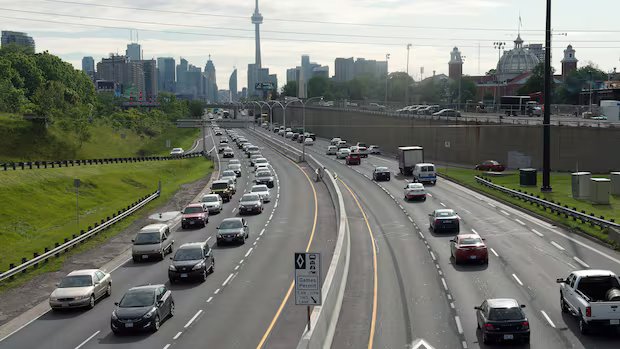
Highway lanes designated for carpoolers will soon be opened up to solo drivers at certain times of the day, Ontario’s transportation minister said Tuesday.
The Ford government’s latest attempt to reduce gridlock — which has included an ongoing effort to remove bike lanes in downtown Toronto and a $9-million study on the feasibility of digging a subterranean highway under the 401 — will allow anyone to use high-occupancy vehicle (HOV) lanes during off-peak hours, Minister Prabmeet Sarkaria said in a news release.
Sarkaria said ministry of transportation modelling shows travel times would improve for drivers in HOV and regular lanes on major highways during off-peak hours. How much time would be saved, and how models were used to come to that conclusion, was not made available.
“Gridlock is costing our economy billions of dollars every year and robbing Ontario drivers of valuable time and quality of life,” Sarkaria said in a statement.
He added the changes would “help keep drivers moving across the province.”
The provincial release did not define during what hours HOV lanes would be designated regular traffic lanes, only saying the busiest weekday morning and evening hours would be excluded. The hours will be determined based on traffic data and “consultations with stakeholders,” it said.
Once off-peak hours are defined, the Ford government would look to amend regulations to the Highway Traffic Act later this year after public consultation.
The changes would apply to all existing and future HOV lanes. Ontario has 237 kilometres of HOV lanes, with plans already in place to add another 146 kilometres, according to the provincial release Tuesday.
Premier Doug Ford told reporters at Queen’s Park Tuesday that the proposal is “pretty common sense.”
“After rush hour, those lanes are sitting empty, and if there’s a traffic jam … people should be able to use the HOV lanes,” he said.
HOV lanes already open to some solo drivers
HOV lanes, as described on the province’s website, are already intended to help manage congestion. They are also designed to encourage carpooling and reduce “transportation-related” emissions by getting more cars off the road.
Single-occupant vehicles made up 72 per cent of traffic on provincial highways as of 2022, according to government data shared in the release Tuesday.
HOV lanes are already available to some solo drivers, depending on what they’re driving. If you’re on a motorcycle or in a low-carbon vehicle like a plug-in hybrid or electric car, you don’t need a passenger.
Commercial vehicles longer than 6.5 metres would still be restricted from using HOV lanes under the proposed changes.
Drivers with the means can also enter a draw to buy a permit that allows them to ride solo in high occupancy toll lanes on parts of the Queen Elizabeth Way, Highway 403 and Highway 410.
Drivers caught using HOV lanes improperly are subject to a fine of $110 and three demerit points, according to the province’s website. The province’s plans come as Toronto prepares to co-host the 2026 FIFA World Cup, which the city estimates could increase the number of cars downtown by 15 per cent.
