
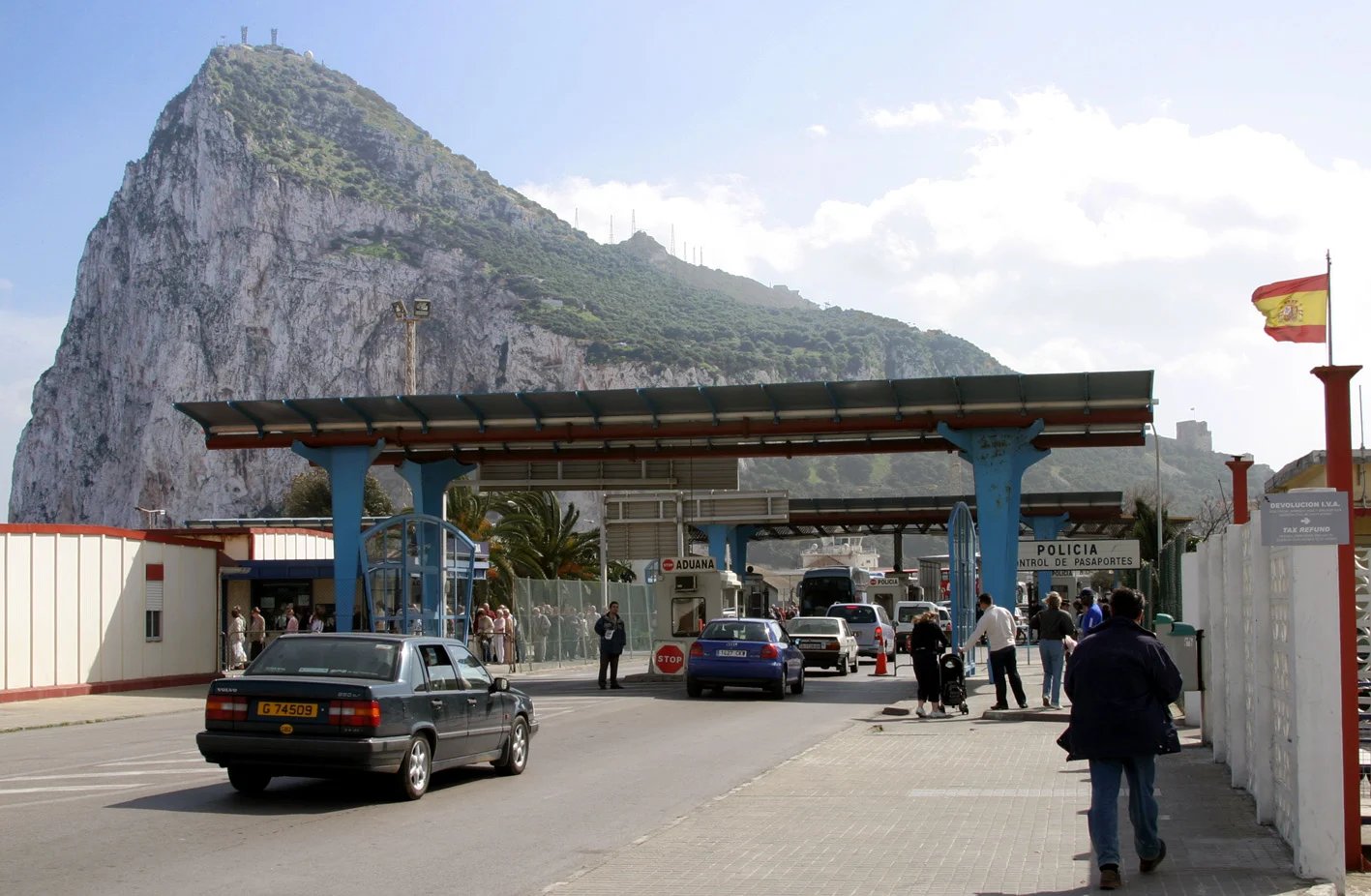
SPANISH border guards will hold the power to block British nationals from entering Gibraltar under the terms of a long-awaited post-Brexit treaty finally published by officials on Thursday.
The 1,000-page draft agreement sets out the future of the Rock after a decade of uncertainty following the UK’s vote to leave the European Union in 2016.
Currently, British travellers flying to the Rock from the UK pass through a single set of immigration checks carried out by Gibraltar’s border force.
From April, that will change with Spanish authorities carrying out a ‘second line’ of checks under the rules of the passport-free Schengen Area, an open-border system that encompasses 29 European countries.
That means British passport holders will have to provide fingerprints to Spanish border officials when they arrive in Gibraltar under the terms of the EU’s new Entry Exit System (EES), a digital border control system which requires non-EU nationals to register their biometrics before entry.
Spanish border guards will also be able to ‘perform any functions which are required to exercise border control’, including surveillance, checks and enforcement measures.
They will also be able to arrest, search or detain people and pursue suspects across the border under ‘hot pursuit’ arrangements.
Critics say the concession reneges on a commitment that there would be no ‘Spanish boots on the ground’ under the terms of any post-Brexit treaty deal.
But authorities say the move will help to eradicate Gibraltar’s hard land border with Spain, crossed every single day by around half of the British Overseas Territory’s workforce, ahead of implementation of the tightened EES protocol in April.
READ MORE: EU fast-tracks Gibraltar treaty to ensure fluid border ahead of April’s deadline
People cleared by immigration officials at the airport – rather than at the land border – will then be able to travel freely between Gibraltar, Spain and the wider Schengen Area, bringing an end to lengthy queues for businesses, workers and visitors crossing the frontier by foot or vehicle.
Since Brexit, Spanish officials have allowed Gibraltar residents to cross the border without having their passports stamped, although there have been frequent complaints about rogue police officers tightening checks and causing frustrating delays.
Gibraltar officials stress that the Rock will remain outside both Schengen and the EU, even though Schengen border rules will apply at its external frontier.
That means every day spent by a British traveller in Gibraltar will count towards the Schengen entitlement of 90 days of visa-free travel within any 180-day rolling period.
The new rules will allow officials to tear down the barbed-wire fence that separates the Rock from the Spanish border town of La Linea de la Concepcion, with Spanish prime minister Pedro Sanchez set to lead an official ceremony in celebration.
In terms of trade, Gibraltar will retain its long-standing VAT-free system, although the Rock will align some aspects of its customs regime with EU rules to reduce checks at the land border.
A new ‘transaction tax’ on the customs value of goods imported into or made in the territory for sale there will also be implemented, starting at 15 per cent and rising to 17 per cent by 2028.
The duty hike has prompted calls for additional government support from the Gibraltar Federation of Small Businesses (GFSB) and the Chamber of Commerce, who warn that the treaty’s provisional implementation on April 10 will disrupt business.
Gibraltar’s chief minister Fabian Picardo admitted that some products ‘might become a little more expensive’, but pushed back by claiming that the agreement would increase traffic to the territory’s shops.
Import duties will broadly mirror EU rates, meaning residents will be able to carry everyday goods across the border without declarations.
Goods destined for Gibraltar will also first be cleared by new EU custom control hubs in Spain and Portugal before crossing, removing the need for further time-consuming checks at the border.
The UK and EU have also agreed to make financial contributions towards a new fund that will ‘promote training and employment’ in Spanish regions surrounding the territory.
Rock leader Picardo said: “This is a safe and secure agreement we have negotiated alongside the UK that unequivocally protects our position on sovereignty, safeguards our economy and delivers the certainty our people and businesses need.”
Stephen Doughty, the UK’s minister of state for British Overseas Territories, said: “This treaty ensures Gibraltar’s economy, people and future are protected as an integral part of the British family.”
The treaty still requires ratification by both the UK and Gibraltar parliaments plus approval by the European parliament, which officials hope will come before the EES comes into force in April.
Military facilities, such as the RAF’s base at Gibraltar airport, will remain under British control.
