
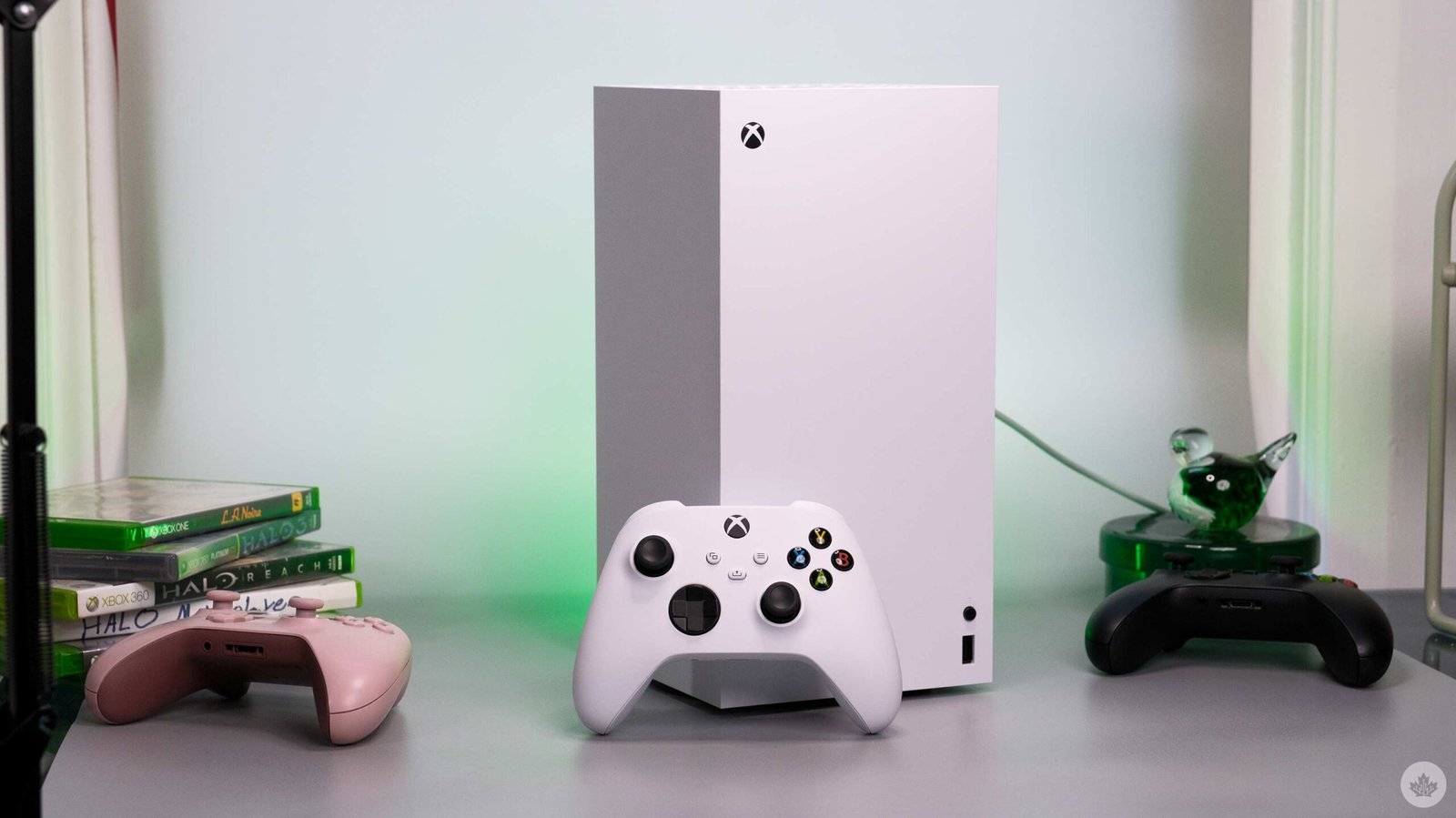
AMD has indicated that Microsoft’s next-gen Xbox console will arrive sometime next year.
In an earnings call, AMD CEO Lisa Su provided an update on some upcoming gaming systems that will leverage its chips, and this currently unnamed Xbox was one of them.
“From a product standpoint, Valve is on-track to begin shipping its AMD-powered Steam Machine early this year, and development of Microsoft’s next-gen Xbox featuring an AMD semi-custom [system on chip] is progressing well to support a launch in 2027,” said Su.
While we’ve heard several rumours pointing to a 2027 launch for the next Xbox, Su’s comments are the closest we’ve gotten to official word on the matter. Last year, Xbox president Sarah Bond announced a major multi-year partnership with AMD to co-engineer silicon “across a portfolio of devices,” including the next-gen consoles.
“Together with AMD, we’re advancing the state of art in gaming silicon to deliver the next generation of graphics innovation to unlock a deeper level of visual quality and immersive gameplay and player experiences enhanced with the power of AI — all while maintaining compatibility with your existing library of Xbox games,” said Bond at the time.
The executive added that Microsoft’s goal is to allow you to “play the games you want across devices anywhere you want” through an “Xbox experience not tied to a single store or tied to a single device.” This aligns with the company’s broader platform-agnostic “This is an Xbox” strategy in which Xbox games are available on everything from Microsoft’s consoles and PC to rival systems like PS5, handheld devices and even VR.
It should be noted that rumours have also suggested that Sony could be preparing to launch its next console, presumably called the PS6, in 2027. However, there’s also been speculation that memory shortages might cause these plans to be delayed.
Assuming everything pans out, though, 2027 would certainly make sense for the new consoles. After all, this would be seven years after the PS5 and Xbox Series X/S launched in November 2020. For context, the PS4 and Xbox One also lasted for seven years before their successors dropped, so these release cycles are normal.
The bigger question, then, is what these new consoles would even offer. PlayStation and Xbox’s current-gen systems are really not very different from their predecessors, which remain pretty popular. To that point, it was only last year that the PS5’s monthly player count finally surpassed the PS4’s, and even then, a significant portion of users were still gaming on the last-gen system.
Microsoft, meanwhile, has increasingly been looking towards merging the Xbox and Windows experience, and it suggested last year that its next console will be even more PC-like than ever. The company has also been bringing pretty much its entire catalogue to PS5.
All of that is to say that modern consoles don’t have nearly as much of a clear, unique identity anymore, so it will be interesting to see what, if anything, these next-gen boxes will do to shake things up.
