
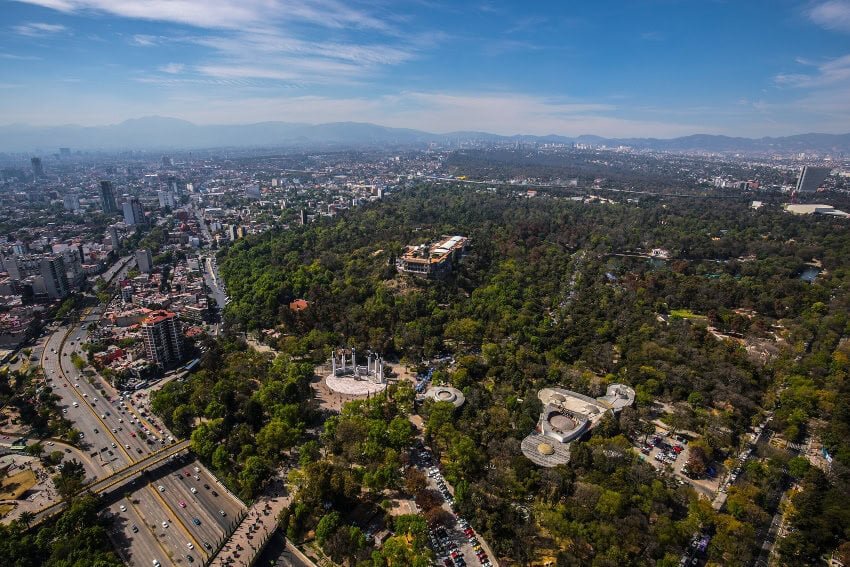
My favorite place in Mexico City is my backyard: Bosque de Chapultepec (Chapultepec Forest). Obviously, the forest and urban park — famously twice the size of New York’s Central Park — is not my actual backyard. But it might as well be. I live a five-minute walk from this nature paradise and gleefully visit it almost daily.
First, some impressive context
Chapultepec is so massive, approximately 1,700 acres, that it’s divided into four sections, which we’ll dive into later. Yes, it’s home to the only royal castle in the Americas, and that’s undeniably historic and cool. But the true star of Chapultepec isn’t the architecture or landmarks. It’s the nature.
With roughly 200,000 trees and hundreds of documented plant, fungi and wildlife species, Chapultepec is often called “the lungs of Mexico City,” offering fresh air and green space in the middle of one of the busiest cities in the world. Among its most revered residents are the ancient ahuehuetes, or Montezuma cypress, sacred trees that have stood for 500 to more than 700 years — quietly anchoring the city to its pre-Hispanic past.
And people come. A lot of them. Chapultepec receives an estimated 20 million visitors each year, with busy weekends and holidays drawing well over 200,000 people a day.
And because this is Mexico — magical and sometimes wildly absurd — no other massive green space I’ve ever visited has an iconic mascot quite like Chapu does. If you’ve been, you’ve seen them: the colorful changuitos miones (peeing monkeys), perched cheekily atop visitors’ heads, squirting water as if to remind you not to take anything too seriously.
A brief history of Chapultepec
Long before it became Mexico City’s most beloved green escape, Bosque de Chapultepec was already sacred ground.
The name Chapultepec comes from Nahuatl and roughly translates to “grasshopper hill.” For the Mexica (Aztecs), the hill and surrounding forest were both spiritually powerful and strategically vital, thanks to the natural springs that supplied fresh water to Tenochtitlán. Aqueducts built centuries before European arrival once carried water from Chapultepec directly into the heart of the empire, and remnants of that ancient system can still be found today.

Chapultepec’s history stretches back even further. Archaeological evidence shows people living along the shores of Lake Texcoco here as far back as 3,000 years ago, long before the Mexica made it a sacred retreat. Over time, Mexica rulers transformed the forest into a place of rest, ritual and power. Emperors, including Moctezuma II, planted trees, shaped the landscape, built baths and early zoological gardens, and used the hill as a royal refuge. Many of the ancient ahuehuete trees still standing today trace the original boundaries of that pre-Hispanic park.
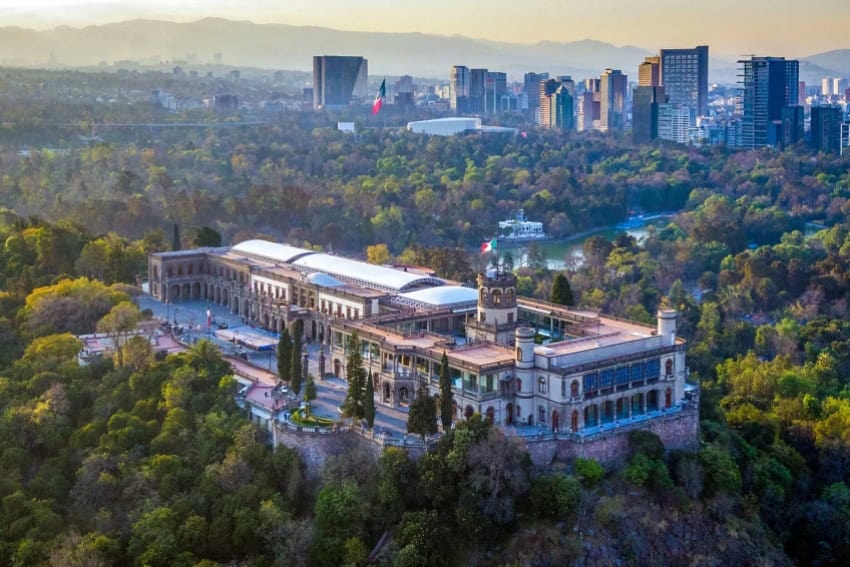
The Spanish conquest reshaped Chapultepec’s role entirely. It became the site of one of the final battles in 1521, and later a privileged retreat for colonial elites. In 1785, construction began on what would become Chapultepec Castle, built atop the hill and surrounded by forest largely reserved for the powerful.
Chapultepec continued to mirror Mexico’s political shifts. It served as a military academy, a battleground during the Mexican-American War, an imperial palace, and later the official presidential residence. It wasn’t until the late 19th and early 20th centuries, during a period of modernization, that Chapultepec began to transform into a public park, with landscaped paths, lakes, monuments and museums.
Chapultepec had fully become a shared civic space. Presidential functions moved out, cultural institutions moved in, and the forest expanded, allowing Chapultepec to remain not just a park, but a living archive of Mexico’s history.
The park is divided into four sections. Here’s an overview of my personal favorites in each one, along with a few highlights not to be missed.
Section I: My everyday Chapu
Section I is the most visited of Chapultepec’s four sections, largely because it holds many of the park’s most iconic attractions and is also the most accessible. The main entrance, Puerta de los Leones, sits along Reforma, and walking in from here always feels a bit cinematic. Almost immediately, you’re greeted by the monument to the Niños Héroes, honoring the six young cadets who lost their lives during the Battle of Chapultepec in the Mexican-American War.
Just behind the monument, the castle rises above the trees, which somehow makes the entrance feel even more epic. While I usually enter Chapu through a side entrance near the metro, I still walk along the main path that leads past the monument. Parque México and Amsterdam Avenue get a lot of hype, but for my daily walks, Chapultepec wins every time. When pollution levels cooperate, I like to jog along Gran Avenida and often end my walks with a short meditation under a tree. I can’t recommend this enough.
Depending on my mood and how much time I have, I’ll sometimes stop by the Audiorama to unwind, unplug and let the classical music do its thing. If you go, make sure to say hello to the ahuehuete known as “El Sargento” just outside. Planted in 1460 by order of Emperor Moctezuma, the tree stood for more than 500 years and grew nearly 40 meters tall before it finally died in 1969. Even now, its presence feels grounding.
I also love picnicking near the Totem Canadiense or around the José Martí monument. Nearby is Los Pinos, the former presidential residence until 1940, now a museum and cultural space that’s fascinating to explore even without an exhibit. Close by, the Cablebús connects different sections of Chapultepec to Santa Fe from above. It’s fast, inventive and surprisingly peaceful, and I highly recommend using it if you’re exploring more than one section.
Other popular stops in Section I include Chapultepec Castle, the National Museum of Anthropology, the Botanical Garden, the zoo, the lake and Librería Porrúa.
Section II: Art, water and wide-open space
One of the biggest perks of Section II is that dogs are allowed, which immediately gives it a different energy. It feels looser and more lived-in, with people lingering longer rather than passing through.
One of my favorite stops here is Lago Algo, a space that’s part farm-to-table restaurant, part contemporary art venue, all set right on the water. I’ve come here for brunch and loved it, then wandered straight into whatever exhibit they had on view at the time. They’re constantly hosting thoughtful exhibitions and cultural events, so if artsy vibes are your thing, it’s worth checking their website or Instagram before you go.
Nearby is the Museo Cárcamo de Dolores, a small but fascinating museum dedicated to Chapultepec’s relationship with water. Outside stands a monumental sculpture of Tlaloc, the Mexica god of rain and water. Inside, you’ll find a structure that once carried water through the space itself. The walls were painted by Diego Rivera, though the water didn’t end up being kind to the murals. Today, an audio installation recreates the sound of water flowing through the building, making for a quiet, unexpected visit.
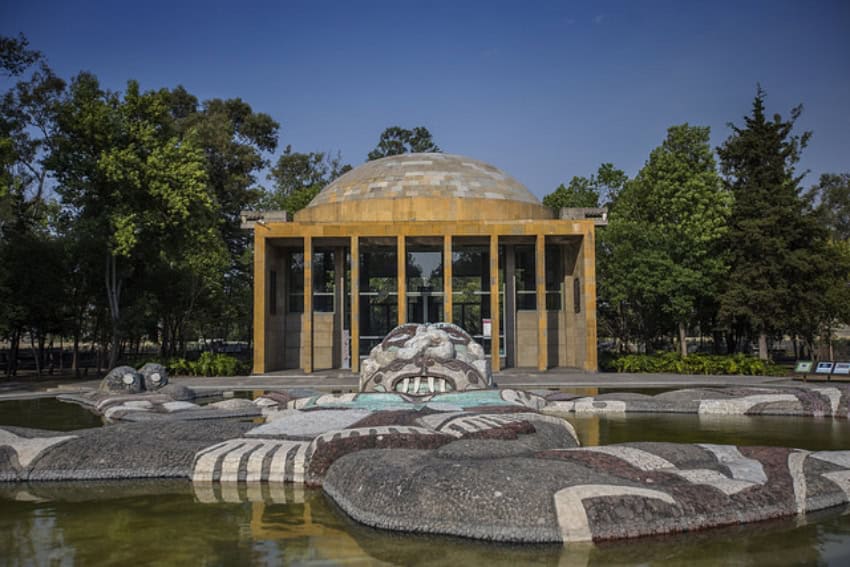
Section II is also home to more playful attractions. Aztlán 360, an 85-meter Ferris wheel opened in 2024, offers sweeping views of the city and anchors the revamped Aztlán Parque Urbano. Nearby are classics like Papalote Museo del Niño and the Museo de Historia Natural.
Section III: Where the city disappears
Section III feels like stepping out of Mexico City altogether. The first time I wandered into this part of Chapultepec, I genuinely felt like I was no longer in the city but deep inside a forest far away from it. The trees grow denser, the paths feel less intentional, and the noise of traffic finally drops away. This is Chapu at its most untamed.
There isn’t much to “do” here in the traditional sense, and that’s exactly the point. Section III is ideal for slow wandering, quiet walks, a peaceful solo picnic and moments of stillness. It’s also one of the best places in the city to practice “forest bathing,” or shinrin-yoku, a Japanese concept centered on simply being present in nature. It’s not about hiking or exercise, but about engaging your senses, breathing deeply, and letting the forest regulate your nervous system. This part of Chapultepec practically invites you to do just that.
When I’ve visited, there were no vendors selling food or drinks, so it’s best to come prepared with water or snacks if you plan to linger. Personally, I love that about it. Other than your attention, Section III asks very little of you.
Section IV: Chapu’s newest chapter
Section IV is the newest addition to Bosque de Chapultepec, officially incorporated into the park in the early 2020s after formerly being military land. Added as part of the Chapultepec: Naturaleza y Cultura project, it represents the park’s most recent evolution.
The main draw here is the Cineteca Nacional Chapultepec, the second location of the beloved Cineteca Nacional in Coyoacán. The programming leans artsy and international, with thoughtfully curated films and occasional exhibitions. Compared to the original location, it still feels calm and uncrowded, which only adds to the experience.
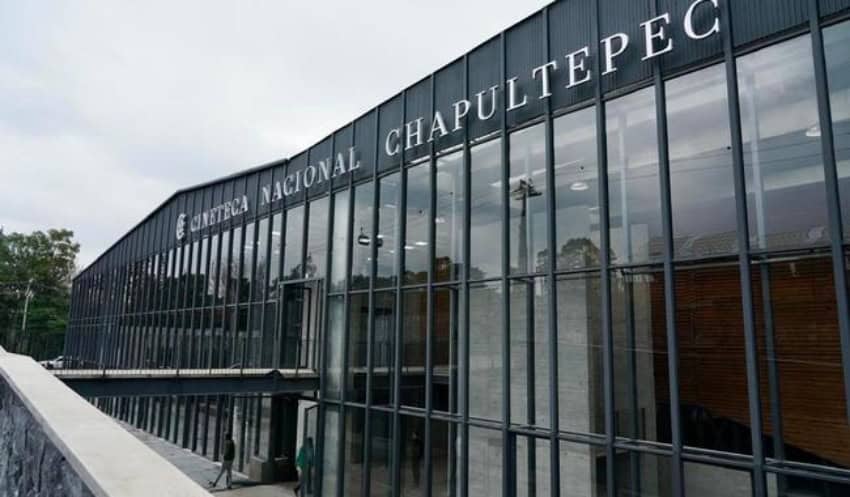
Section IV doesn’t yet have the density of attractions found in the earlier sections, but it offers a glimpse into where Chapultepec is headed next. It’s a reminder that this park isn’t frozen in time. It’s still growing, still expanding, and still making room for new ways to experience culture and nature side by side.
Chapultepec, my love
I’m a sucker for parks and green spaces, and wherever I travel, I always find myself drawn to them. Not in a box-checking way, but because parks reveal how a city rests, plays and takes care of itself. I’ve been lucky to experience many beautiful ones, but Chapultepec stands apart. Its layers of history, culture and everyday life make it feel deeply alive.
What I love most about Chapu is that it has always been a place of leisure, not just power or history. It’s a space where Mexico City feels comfortable being playful in public, where fountains & mascot souvenirs can be a little absurd, where families linger for hours, and where nature is woven into daily life. This is where I come to slow down, breathe and reconnect. That’s why it feels like my backyard. Not because it’s close to home, but because it’s where I return to myself.
Rocio is a Mexican-American writer based in Mexico City. She was born and raised in a small village in Durango and moved to Chicago at age 12, a bicultural experience that shapes her lens on life in Mexico. She’s the founder of CDMX IYKYK, a newsletter for expats, digital nomads, and the Mexican diaspora, and Life of Leisure, a women’s wellness and spiritual community.
