
Listen to this article
Estimated 4 minutes
The audio version of this article is generated by AI-based technology. Mispronunciations can occur. We are working with our partners to continually review and improve the results.
The B.C. government’s 2026 budget announced a series of tax increases, capital project delays, and a reduction of 15,000 public sector jobs over three years. Despite this, major deficits are still forecasted for the indefinite future.
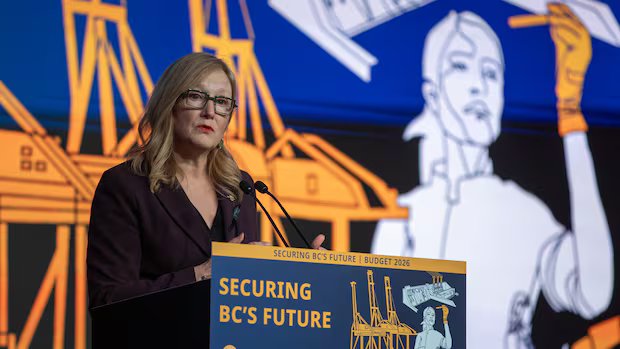
“This budget is different from our past budgets, because this moment is different,” said Finance Minister Brenda Bailey in her speech to the legislature on Tuesday.
The speech blamed the province’s economic condition on challenges such as U.S. tariffs and a cooling housing market.
“It’s time to take a pause on some of the things we want to do to focus on the things we need to do.”
A $13.3 billion deficit is forecast for the 2026-27 fiscal year, up from $9.6 billion for this year.
The government is forecasting deficits of $12.1 billion and $11.4 billion the following two years, with the province’s total debt expected to rise over the next three years from $154 billion to $235 billion.
“There are those … who said we want deep cuts, we want an austerity budget,” said Bailey, defending the debt increase by comparing the province’s net liability as a percentage of GDP to the rest of Canada.
“And there are others who say we want to keep making historic investments in important areas … the approach is to try and balance the two.”

Tax hikes
The government announced a diverse range of tax increases that it said would primarily impact higher-income earners, causing an average increase of $76 a year.
The province will increase the basic tax rate on the first bracket paid by all people from five per cent to 5.6 per cent, the first universal tax raise since 2008, while increasing the tax reduction credit by $115 to $690.
It will also increase the provincial portion of property taxes (known as the School Tax) for homes over $3 million in assessed value, and the speculation and vacancy tax from three per cent to four per cent.
And it will expand PST to a host of professional services, removing the exemption for clothing alterations, basic cable and landline telephone services.
The province is also reforming the controversial property tax deferment program so that people using it will have to pay two per cent above the prime interest rate, compounded monthly, to use the service.

“Under our government, B.C. is among the lowest-taxed provinces for working and middle-class families,” said Bailey.
“This doesn’t change that.”
Daycares, housing, health
While the government framed the budget as making “careful choices … through investments to protect services,” the number of new spending announcements was relatively minimal and most were previously announced, including $283 million over three years for skilled trades programs, and a $400 million strategic investment fund.
In addition, the government is freezing the number of new providers for $10 a day childcare, and slowing down a number of capital projects, including seven long-term care facilities, phase two of the new Burnaby Hospital and student housing at the University of Victoria.
Of the government’s 15,000 job cuts over three years, 2,500 are projected to come directly from the B.C. Public Service.
The rest is coming from various Crown corporations, health agencies and schools, though the government is hopeful many of those will happen from early retirements and hiring freezes.
Despite the cuts and freezes, Bailey repeated several times that it was “not an austerity budget” but did not make any guarantees on when the budget would eventually be balanced.
“My hope would be that British Columbians would see we’re taking protective action. This isn’t about rolling out new shiny programs,” she said.
“We have to get that deficit down. Yes, we’ve had to replace things this year, but we are getting it down through structural changes.”
