
For decades, we’ve been told that the smartest organizations are “data-driven.” The phrase carries moral weight. To be guided by data is to be serious, rational, modern. If you’re not, you’re seen as ideological or sentimental. In the workplace, quantification has become synonymous with credibility and competence.
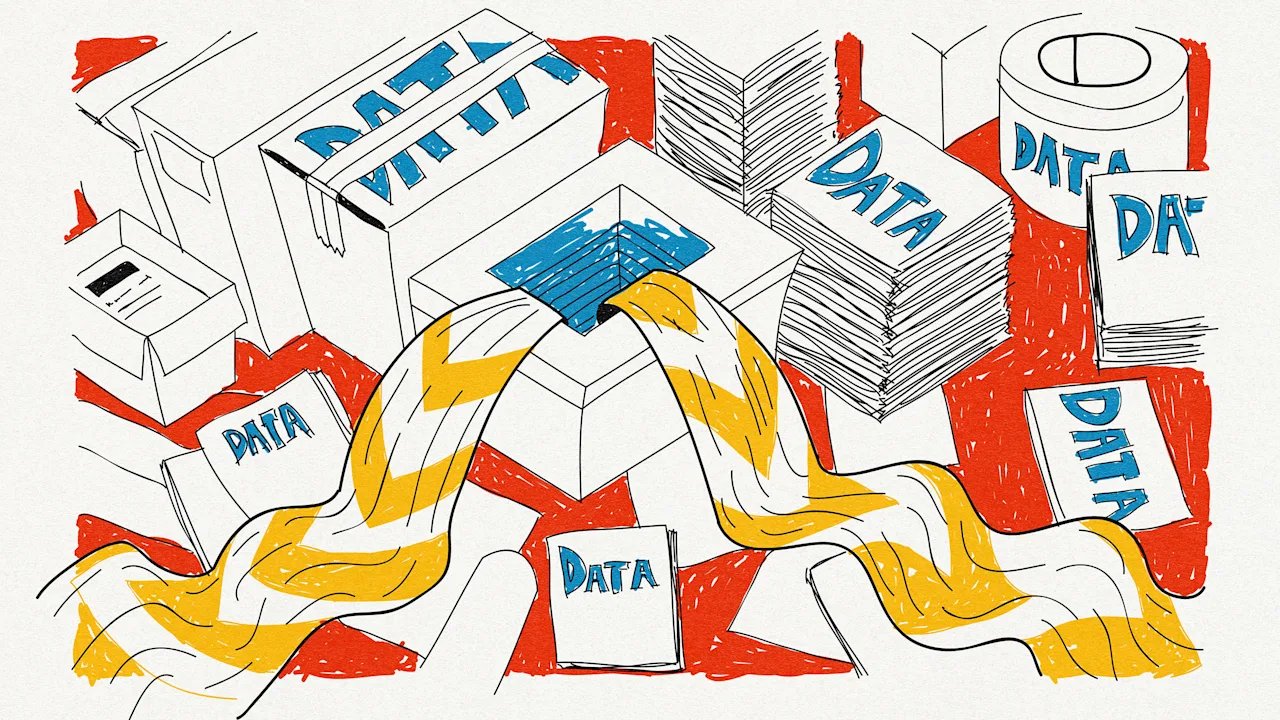
And yet, the more data we accumulate, the less certain we seem to be that we are making better decisions. There’s a paradox. Organizations are drowning in dashboards, KPIs, performance metrics, behavioral traces, biometric indicators, predictive scores, engagement rates, and AI-generated forecasts. We have more data than we know what to do with. We pretend that the mere presence of data guarantees clarity. It does not.
That’s data hubris—the arrogant belief that because something can be measured, it can be mastered.
{“blockType”:”mv-promo-block”,”data”:{“imageDesktopUrl”:”https:\/\/images.fastcompany.com\/image\/upload\/f_webp,q_auto,c_fit\/wp-cms-2\/2026\/01\/PhotoLVitaud-169.jpg”,”imageMobileUrl”:”https:\/\/images.fastcompany.com\/image\/upload\/f_webp,q_auto,c_fit\/wp-cms-2\/2026\/01\/PhotoLVitaud-11.jpg”,”eyebrow”:””,”headline”:”\u003Cstrong\u003ESubscribe to Laetitia@Work\u003C\/strong\u003E”,”dek”:”Women power the world’s productivity — it’s time we talked more about it. Explore a woman-centered take on work, from hidden discrimination to cultural myths about aging and care. Don’t miss the next issue — subscribe to Laetitia@Work.”,”subhed”:””,”description”:””,”ctaText”:”Learn More”,”ctaUrl”:”http:\/\/laetitiaatwork.substack.com”,”theme”:{“bg”:”#2b2d30″,”text”:”#ffffff”,”eyebrow”:”#9aa2aa”,”subhed”:”#ffffff”,”buttonBg”:”#3b3f46″,”buttonHoverBg”:”#3b3f46″,”buttonText”:”#ffffff”},”imageDesktopId”:91472264,”imageMobileId”:91472265,”shareable”:false,”slug”:””}}
The Illusion of Objectivity
In executive meetings, a slide filled with graphs and percentages signals authority. Numbers appear to silence dissent and create the impression of neutrality. But behind every dataset lies a series of human decisions: what to measure, how to measure it, what to ignore, and how to interpret it. Metrics are never neutral; they are constructed within particular frameworks, assumptions, and interests.
Too often, data is used not to inform decisions but to justify them after the fact. It lends post-hoc legitimacy to strategies already chosen, wrapping subjective choices in the language of objectivity. Take creative industries, for example, where algorithms supposedly predict success. Netflix built part of its reputation on data sophistication, claiming to understand viewers better than traditional studios ever could.
Yet insiders have described how metrics shift, interpretations vary, and executives selectively highlight numbers that support their preferred projects. The result can be content engineered to be “watchable” but forgettable—optimized for fragmented attention rather than lasting cultural impact.
Also, the problem is that data reflects the past. It captures what has already worked, not what might resonate tomorrow. It struggles to grasp the emerging mood of a society—the intangible zeitgeist that makes a story, product, or idea feel timely. Focusing on backward-looking indicators institutionalizes mediocrity.
When Data Confirms What We Already Know
The same pattern appears in corporate HR, where the rise of people analytics promised revolutionary insight into engagement and performance. Sensors track badge swipes, algorithms map collaboration networks, and predictive models estimate attrition risk. After enormous investment, companies often discover that good managers matter, that employees dislike micromanagement, and that people leave when they feel undervalued.
These findings are hardly revolutionary. Some of the most celebrated “data-driven” insights simply confirm what experienced people already suspected. There is a widening gap between the sophistication of measurement tools and the banality of many of the conclusions they generate. In open, messy environments, organizations often produce vast quantities of noise and mistake it for knowledge.
Healthcare offers another revealing example. Radiology once seemed perfectly suited for AI transformation: millions of standardized images and clear diagnostic categories. Early systems performed impressively on routine cases. However, real-world practice quickly exposed limitations. Radiology reports are filled with cautious phrases—“cannot rule out,” “clinical correlation recommended”—the product of decades of medico-legal prudence. Algorithms struggle with this ambiguity and may flag excessive urgencies because they cannot distinguish legal caution from genuine clinical risk.
More fundamentally, medicine is defined by exceptions. AI may handle 90% of common cases effectively, but it is the rare and atypical cases that truly test expertise. A seasoned radiologist can reason through an unprecedented situation; an algorithm remains confined to its training data. Abundant historical data does not eliminate the variability of reality.
The Blind Spots of Overconfidence
One of the most dangerous effects of data hubris is overconfidence. When decisions are backed by numbers, leaders may lose caution. Digital traces capture clicks and transactions but not informal conversations. Not everything meaningful leaves a digital record, and dashboards rarely display their own blind spots.
We face what we don’t know we don’t know. In his work on uncertainty, Vaughn Tan distinguishes between risk—where probabilities are calculable—and deeper forms of not-knowing where probabilities themselves are unknown. Treating all uncertainty as if it were calculable risk is a category error.
Mathematics cannot resolve questions about emerging values and unprecedented events. The COVID-19 crisis illustrated this confusion vividly. Some leaders relied heavily on models built from previous diseases, assuming that all unknowns were simply risk variables awaiting calculation. In reality, many were genuine uncertainties that required experimentation, humility, and adaptive learning.
From Data Mastery to Uncertainty Literacy
Data hubris can also extend into one’s personal life through the quantified self movement. Wearables measure sleep cycles, heart rate variability, step counts, and glucose levels, promising unprecedented self-knowledge. But more information does not always mean better well-being. In medicine, excessive testing increases the risk of false positives, detecting anomalies that may never cause harm but may trigger anxiety and invasive follow-ups. Constant self-tracking can fuel obsession. Instead of asking whether we feel rested or hungry, we defer to numerical indicators, thus ignoring more intuitive signals (feeling hungry, rested . . .).
None of this means we should reject data. Of course not. Data is invaluable. But it must sit within a broader understanding of how knowledge is actually produced—through field observations, expert judgment, and lived experience. Data demands interpretation. It requires humility and open conversations. What is missing here? What assumptions shaped these metrics? Who decided what to measure—and why?
In genuinely uncertain environments, small, reversible experiments often outperform grand predictive models. Instead of pretending to know, organizations can probe, learn, and adapt. Intuition—far from being irrational—represents compressed experience accumulated over time. Above all, leaders must remain humble in the face of unknown unknowns. The most sophisticated analytics cannot absolve decision-makers of responsibility.
As sensors multiply and AI systems proliferate, the temptation to equate measurement with mastery will only intensify. Beware of data hubris. Knowing that we do not fully know is the foundation of sound judgment in a world that remains irreducibly complex.
{“blockType”:”mv-promo-block”,”data”:{“imageDesktopUrl”:”https:\/\/images.fastcompany.com\/image\/upload\/f_webp,q_auto,c_fit\/wp-cms-2\/2026\/01\/PhotoLVitaud-169.jpg”,”imageMobileUrl”:”https:\/\/images.fastcompany.com\/image\/upload\/f_webp,q_auto,c_fit\/wp-cms-2\/2026\/01\/PhotoLVitaud-11.jpg”,”eyebrow”:””,”headline”:”\u003Cstrong\u003ESubscribe to Laetitia@Work\u003C\/strong\u003E”,”dek”:”Women power the world’s productivity — it’s time we talked more about it. Explore a woman-centered take on work, from hidden discrimination to cultural myths about aging and care. Don’t miss the next issue — subscribe to Laetitia@Work.”,”subhed”:””,”description”:””,”ctaText”:”Learn More”,”ctaUrl”:”http:\/\/laetitiaatwork.substack.com”,”theme”:{“bg”:”#2b2d30″,”text”:”#ffffff”,”eyebrow”:”#9aa2aa”,”subhed”:”#ffffff”,”buttonBg”:”#3b3f46″,”buttonHoverBg”:”#3b3f46″,”buttonText”:”#ffffff”},”imageDesktopId”:91472264,”imageMobileId”:91472265,”shareable”:false,”slug”:””}}
