
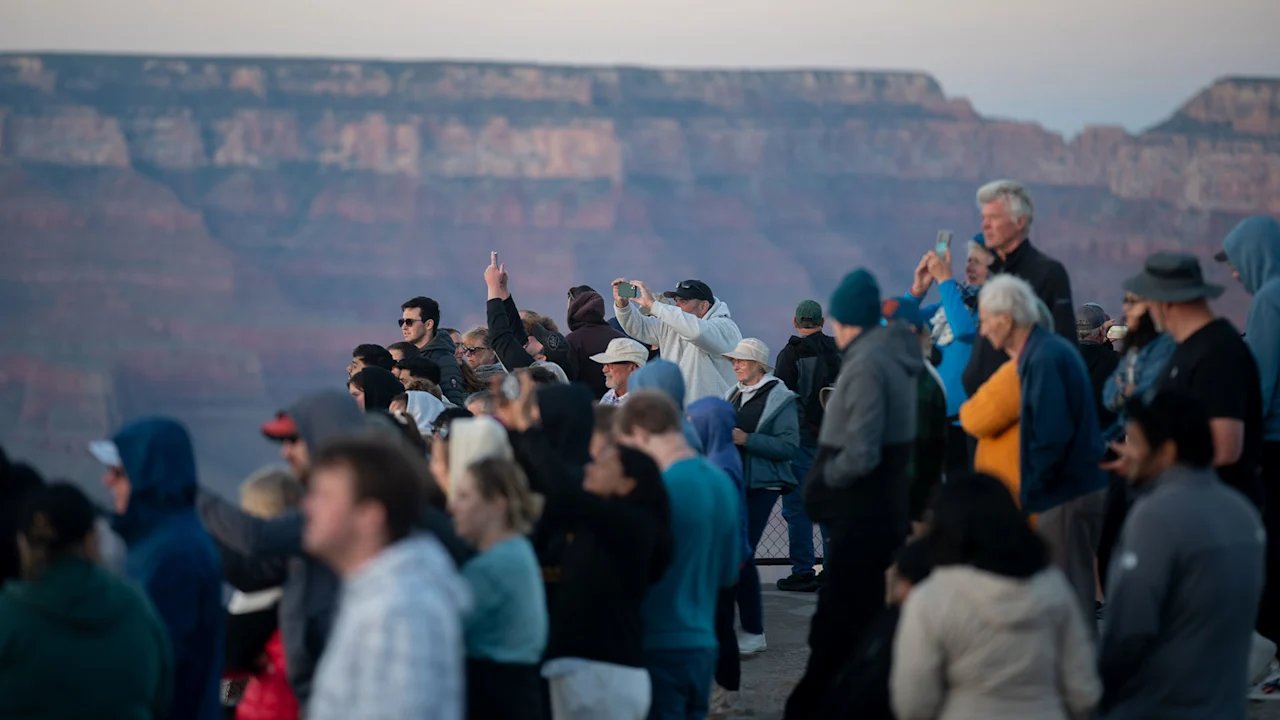
America’s national parks offer some of the country’s most impressive vistas—and that fact draws hundreds of millions of people to them each year. But more changes are on the way in 2026, and visitors aren’t likely to be happy with all of them.
Anyone traveling to visit a destination that’s part of the National Park System—especially from abroad—should expect to see an array of new policies implemented under the Trump administration, which already made sweeping budget cuts to the National Park Service (NPS) and began to weave its “America First” agenda into some of the country’s most cherished places in 2025.
On some level, the Trump administration is trying to reshape the National Park System into a microcosm of its own ideology, with perks for Americans, higher costs for everyone else, and a new aesthetic that puts a very specific idea of patriotism at its center.
Entry changes on the way this year
Starting in 2026, the parks will offer more dates with free entry for visitors, but only U.S. residents will get in at no charge. The Trump administration will remove existing free admission dates on Martin Luther King Jr. Day and Juneteenth, while adding a new holiday for President Trump’s birthday. The new “patriotic fee-free” dates for 2026 are as follows:
- Presidents Day (February 16)
- Memorial Day (May 25)
- Flag Day/President Trump’s Birthday (June 14)
- Independence Day Weekend (July 3-5)
- 110th Birthday of the National Park Service (August 25)
- Constitution Day (September 17)
- Theodore Roosevelt’s Birthday (October 27)
- Veterans Day (November 11)
For days with normal admission, entry into the parks can be obtained through a day pass (previously $35 or less for a vehicle, with a lower cost for visitors without a car) or with the annual America the Beautiful pass. While some parks don’t charge admission at all, the most visited parks do, and that’s where park visitors are likely to notice the changes.
In many instances, day pass pricing will go up for non-U.S. residents, who will now need to pay $100 per person to get into 11 of the most popular parks. National parks with higher day fees starting this year are Acadia, Bryce Canyon, Everglades, Glacier, Grand Canyon, Grand Teton, Rocky Mountain, Sequoia and Kings Canyon, Yellowstone, Yosemite, and Zion. The annual pass will continue to cost $80 for U.S. residents, but the price will shoot up to $250 for visitors who don’t live in the U.S.
“President Trump’s leadership always puts American families first,” Secretary of the Interior Doug Burgum said. “These policies ensure that U.S. taxpayers, who already support the National Park System, continue to enjoy affordable access, while international visitors contribute their fair share to maintaining and improving our parks for future generations.”
Motorcycle riders will also get special status under the 2026 changes. Starting this year, one annual pass covers entry for two motorcycles, “making national park adventures more accessible for riders and families who travel on two wheels.”
While that news is a boon for motorcyclists, it may also put an additional burden on parks where two-wheeled accidents are common. Because many of America’s most beautiful places also feature winding roads, dramatic cliffs, and quick-changing weather, motorcycle accidents feature prominently in the incident reports that track injuries and fatalities inside the national parks.
Changing a well-loved design to be “patriotic”
Controversially, the administration will also change the design for the annual passes, which traditionally feature animals and nature scenes showcasing a particular park’s natural beauty.
This year, the Trump administration will introduce “new, modernized graphics for all annual passes, featuring bold, patriotic designs,” a change that has many annual passholders on social media brainstorming work-arounds to avoid a possible Trump-centric design, including vinyl stickers that raise money for the National Park Foundation. Many annual pass holders, this author included, collect the passes from year to year and enjoy discovering each year’s fresh nature design.
The look and price of the annual pass isn’t the only thing changing. This year will be the first to introduce a digital version of the America the Beautiful pass. The system previously relied on park visitors holding onto a credit card-size pass for a full calendar year, with little recourse if they misplaced it. The digital pass option, new designs notwithstanding, is one of the only new pass changes that even Trump’s critics will probably appreciate in 2026.
Many changes already swept the National Parks in 2025
2025 was a year of dramatic change to the National Park System, which is still reeling from the government shutdown, budget cuts, and additional strain to its already tight resources.
In March, the Trump administration directed the U.S. Department of the Interior to remove any displayed signage, books, monuments, or installations that “inappropriately disparage Americans, past or living.” In an executive order, the Trump administration claimed that a “corrosive ideology” spread by political opponents like the Biden administration unfairly painted a picture of America as “inherently racist, sexist, oppressive, or otherwise irredeemably flawed.”
Instead of capturing accurate historical accounts that place the national parks into context, the Trump administration prioritizes painting America in a positive light and glossing over the more complex human story of many of the country’s most beautiful places, which often sit on land once occupied by Native American tribes.
A rocky year for park employees
New policies reshaping the national parks in 2026 may do little to address the underlying problems the NPS faces, many of which have been worsened by the Trump administration.
An investigation by The New York Times found that, between April and July 2025, more than 90 national parks reported problems related to federal budget cuts, staff departures, and a freeze on hiring. Those problems include reduced visitor center hours, skipped visitor fees, vanishing educational programming, and even dirtier bathrooms, as a smaller parks workforce is spread even thinner than before.
Since Trump took office, the NPS has lost a quarter of its permanent workers, including many who accepted the administration’s buyout offer for federal employees. At least 20% of the national parks were understaffed or significantly strained in 2025, according to internal Interior Department data obtained by the Times. Many parks also face other serious issues that could impact visitor safety, including a growing backlog of trail maintenance tasks and a reduced emergency services response—a risky proposition in some of America’s wildest landscapes.
Outgoing National Park Service Director Charles F. “Chuck” Sams, the first Native American named to lead the NPS, expressed deep concern about the impact on park staff in an interview with Underscore Native News early this year.
“How can the national parks be healthy and happy if their staff are not healthy and happy?” Sams asked. “I have great concerns for the staff of the National Park Service. You can feel their angst, their confusion, their frustration, and their anger.”
