
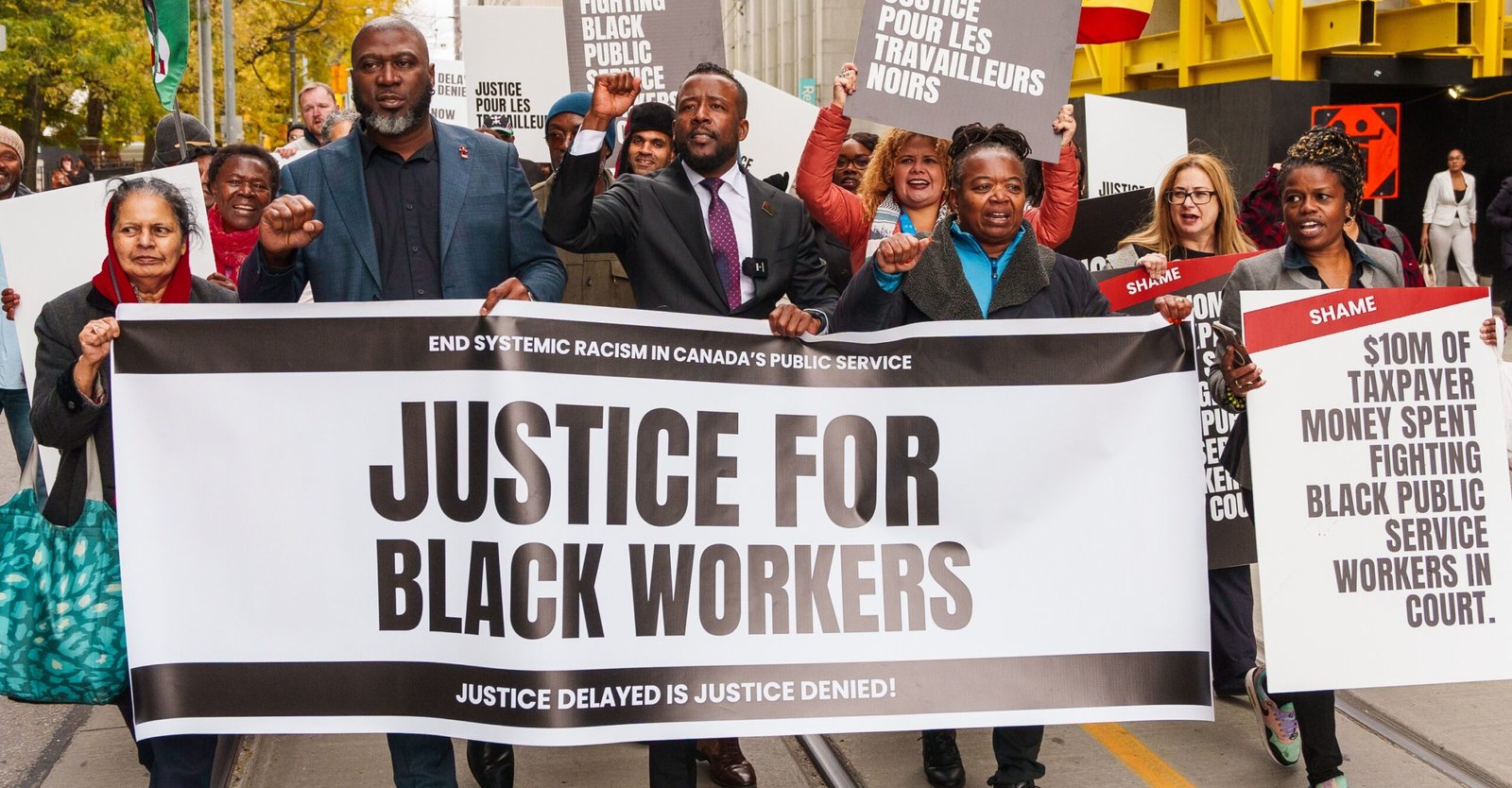
As this year’s Black History Month draws to a close, rabble.ca heard from various Black leaders in the labour movement to capture a snapshot of the current moment in the fight against anti-Black racism inside and beyond labour. Interviewees agreed that Canadian workers are facing a historic moment and now is the time to ensure racial equity advances in lockstep with gains to secure broader workers’ rights.
Over the last few years, the labour movement has secured numerous victories in the fight for racial equity at work. Gabriel Allahdua, a former migrant farmworker and longtime migrant rights advocate, noted that there are two class action lawsuits certified that could result in significant changes that combat systemic racism by addressing laws that put migrant workers in vulnerable positions.
In September 2024, the Quebec Superior court certified a class action lawsuit alleging that Canada’s system of closed work permits are exploitative. Allahdua said pushing this class action forward is a crucial step in recognizing the predominantly racialized workers that perform necessary labour in areas like farming or health care.
“Putting our essential jobs and essential tasks in the hands of people who are treated well, that should be a concern for everybody,” he said in an interview with rabble. “Who are the best people to do that? The people who have power. Who are the people that have power? The people that politicians listen to. These are the voters.”
LISTEN: Dissecting the closed work permit system with Gauri Sreenivasan
Another issue Allahdua has joined in on addressing is the lack of Employment Insurance (EI) for migrant farm workers. On February 23, Justice Edward Morgan of the Ontario Superior Court released a decision to certify a class action lawsuit against the Government of Canada. The lawsuit seeks redress for more than 750,000 migrant farm workers who paid into the EI system but were unable to access benefits.
“The people that are producing our food, the people that are doing the important work in society, they are people of color,” Allahdua said. “It’s important that people become aware of the issue that the food we are eating, for example, has been produced by people who are not treated well. If you have a system where the people that are producing your food are not treated well, do we have confidence in that?”
While there has been progress in lawsuits to hold the government accountable for the treatment of Black and racialized migrant workers, the fight against anti-Black racism for non-migrants has had to take a different form.
In 2020, the Black Class Action Secretariat (BCAS) filed a potential lawsuit that alleged systemic racism in the federal public service. Plaintiffs said that the discrimination resulted in barriers to entering the public and barriers to promotions. The court decided not to certify it in March 2025.
Despite this, there have been gains for workplace equity in the public service. Nicholas Marcus Thompson, President of the BCAS, said there has been increased hiring and promotion for Black people and other marginalized groups. The government has also amended the Public Service Employment Act to address discrimination and bias.
While there have been gains, Thompson said the BCAS will not stop the fight against anti-Black discrimination. In the first week of March, the BCAS will begin meetings of an implementation council for employment equity across Canada. This group aims to unite labour leaders, and workers from employment equity groups to fight for the modernization of the Employment Equity Act.
“That’s some serious Black history,” Thompson told rabble.ca “Anti-Black racism remains a key hindrance to addressing systemic discrimination for all groups. Labour is still largely divided on addressing these issues… Moving forward, I’m hopeful that there’s a chance that labour would get its act together. Labour has, collectively, given workers all of the basic human rights that are enjoyed today.”
Larry Rousseau, vice president of the Canadian Labour Congress (CLC), said highlighting past struggles and learning from them will be key in paving the way forward. He said a major fight that lies ahead is the push for the federal government to implement changes to the Equity Employment Act that they promised to implement in 2024.
“It’s never been easy to be Black in this country. The racism is there, and it will continue to be there,” Rousseau said. “I think that it is only more apparent and more important that we engage now, that means political action.”
In acknowledging the struggles and racism Black workers still face, Rousseau said it is important to keep faith in the power of political movements.
