
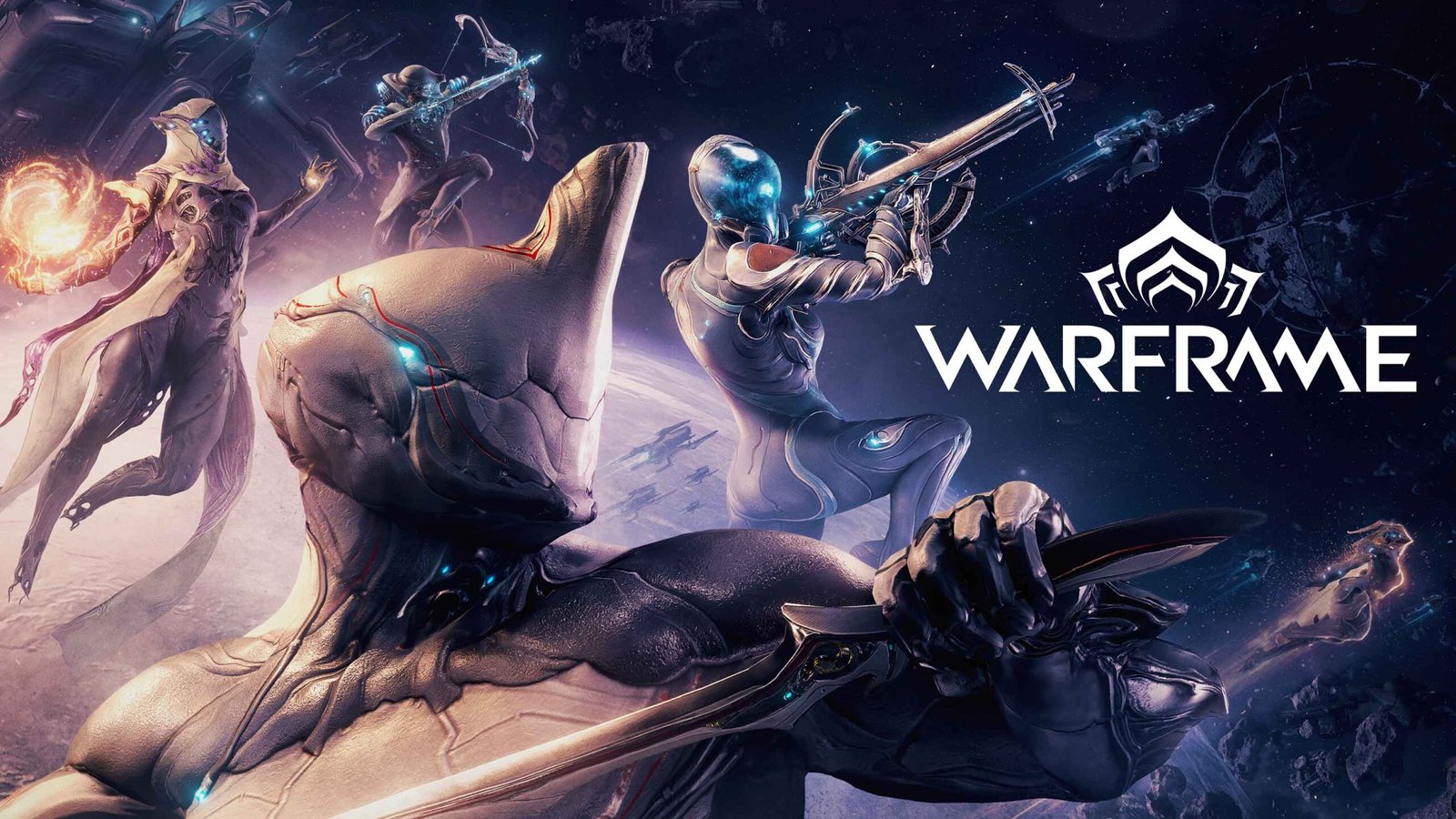
The world of Warframe continues to grow.
Over the past few weeks, London, Ont.-based Digital Extreme‘s massively popular multiplayer game rolled out worldwide on Android. As with the iOS version before it, this mobile version of Warframe is the exact same experience that players have been enjoying on console and PC for over a decade now, making it easy to jump in regardless of your preferred platform.
To learn more about the new Android port, MobileSyrup sat down with Corey Van Den Hoogenband, DE’s community project manager and the main community representative for the mobile versions of Warframe. He talked about the biggest lessons that DE and mobile port co-developer Nitro Games learned from the iOS version, the challenges of translating an ever-evolving game across all of these different devices and the studio’s continued embrace of its local Canadian roots amid all of its global popularity.
Can you tell me a bit about your role and what you do at DE?
Corey Van Den Hoogenband: My title changed in fall of last year [from associate community manager] — it’s cooler now. Now it’s community project manager, which is really exciting for me, because I work on a lot of launches, communications, and the pre- and post-comms of something like an Android launch or an iOS launch, cross-save when that was coming out… And then I work on two other programs really closely: the TennoGen program, which is like this funnel for 3D artists to get their work in Warframe. We work with them to provide feedback and testing. Their pieces are paid for, there’s this really cool revenue split. And we’re constantly shipping new items with every major update. We try to ship like five or six TennoGen pieces from the community artists.
And then I do a lot of the charity stuff with my co-worker[s], Ronnie [community coordinator Veronica Botnick], who will organize, and Danielle [Sokolowski, principal senior community manager] will work on Quest to Conquer Cancer in the fall and around TennoCon. We always have that charity partner who we announced last year was Make-A-Wish. Prior to that, Canada Learning Code and Sick Kids and stuff like that. So we’ll coordinate to have those charities on-site, or do the stuff we did with James [Conlin, a young fan with spina bifida who got to voice act in Warframe] from Make A Wish last year, where we had him up on stage. Yeah, launches, charity, TennoGen, mobile in general is the stuff I work on.
The mobile version came to iOS first two years ago, and now you’re bringing it to Android. What did you learn from that previous iOS version that you’ve applied to the Android version?
Van Den Hoogenband: Yeah, I think they’re very similar products. Obviously, they’re both versions of Warframe. It is definitively Warframe on mobile rather than “Warframe Mobile.” It’s not a condensed, mobile-first version of the game. And I think part of the reason it took so long, because we are aware of that two year gap, was just because we wanted to polish and iterate and get as close — I never want to say perfect with Warframe, because it’s this growing, ongoing thing — as possible to having the best version of Warframe on mobile before we opened the floodgates to Android.
So in terms of learning, we did some really cool UI stuff with our internal team, and with the help of Nitro Games, our co-development partner on this one where we added some really mobile- friendly, mobile-first touch UI. And I think that stuff like that, we wanted to have it happen and be in a great state on iOS before we moved to Android. We really like what’s there right now on Android and iOS. We’re super proud of it. It’s definitely the best Warframe has been on mobile. And again, that long kind of waiting period was because we just wanted to get it as good as we could on one platform before we suddenly tried juggling feedback for two.
iOS is more of an insular walled garden compared to Android, where there’s many different kinds of devices that are considered Android. What were some of the technical challenges in getting the massive and ever-evolving game that is Warframe on Android?
Van Den Hoogenband: Right now, the technical challenges really have been and continue to be the sheer volume of devices. A lot of people would come out and ask us at TennoCon and at meetups and stuff like that [and say] “Oh, it’s interesting that you shipped on iOS first and not Android first or not simultaneously.” And to us, it makes sense, because there’s, like, 10 iPhones and iPads really to consider, versus, I think our last head count, we’re on over 4000 eligible Android devices. So that’s kind of horrifying, because you think about when we’re launching on a new platform, we’re on six platforms, if you count PlayStation, Switch, Xbox, PC… But really, we just launched on 4,000 new things is kind of the reality of it. [laughs]
So we had this regional test in Canada, and that was really invaluable for feedback. We were able to diagnose and find a lot of what I would call platform-agnostic issues. But now the issue is there’s all these phones and variations and play styles that are popular outside of Canada that are not entirely new to us — we’ve had some QA testing, we’ve gone and explored really niche devices — but just logistically, I don’t know how we could ever test 4000 plus devices in-house. So that jump to international, to global, is kind of the biggest challenge right now.
Something that’s really interesting here is you’ve done a lot of work into translating that experience to make it Warframe on mobile, as opposed to “Warframe Mobile.” How have you expanded those [optimizations] for this Android version?
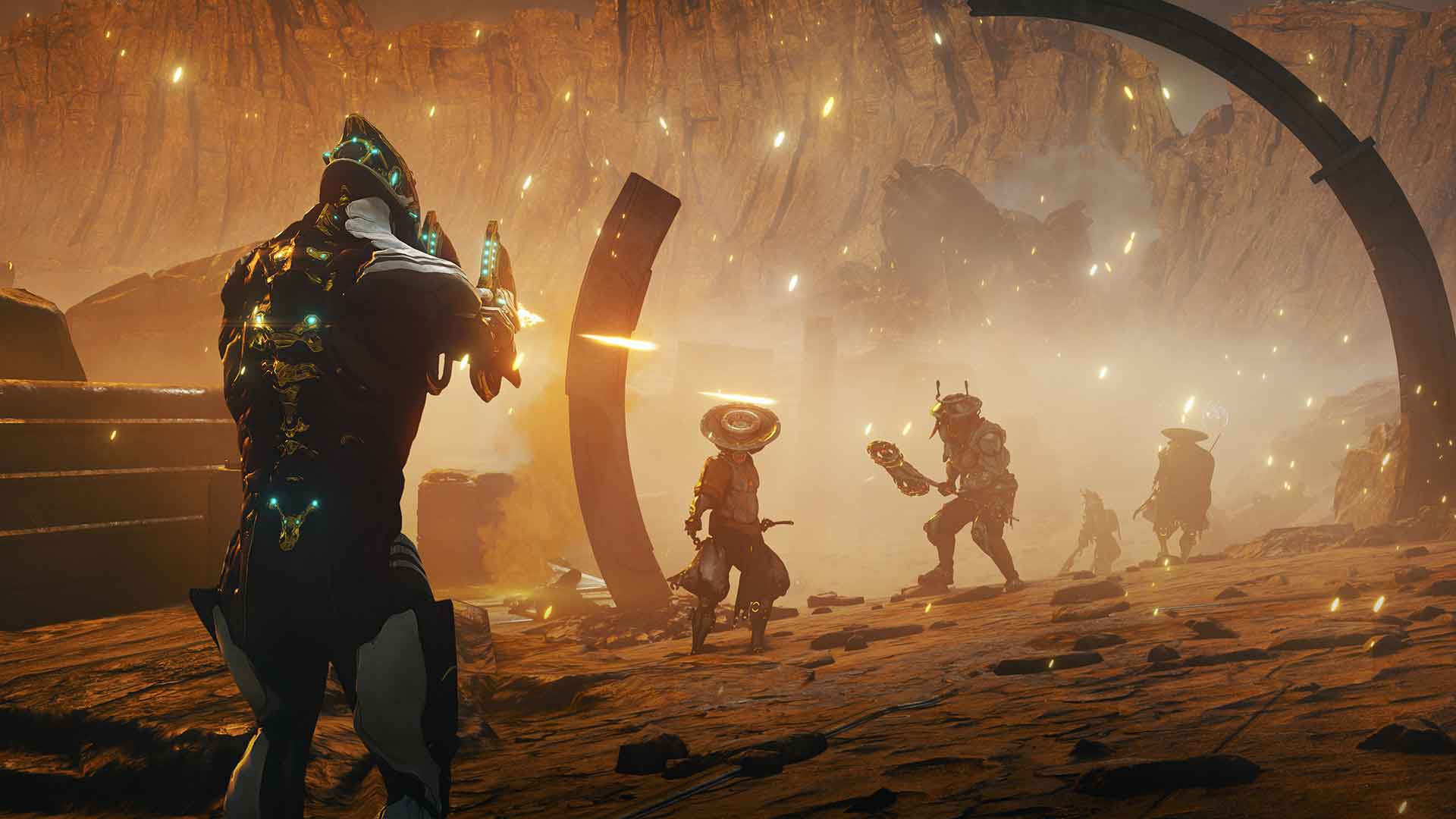
Van Den Hoogenband: That’s what’s great about having Niro involved, because they really do specialize in mobile and mobile ports. So they had some feedback for us. Historically, DE has not been a mobile game developer. So a couple things that come to mind, something we shipped last fall that I was really stoked about, and it’s here on Android for day one, is this unified movement system. So some bits of feedback we got were that there’s too many virtual buttons on screen if you’re playing with the touch play style. So what we have now is this really interesting system where you can play where there’s three virtual buttons for jump, crouch and bullet jump. But if you switch to the unified movement style, it’s this really interesting flow where you hold down the unified button and you push up with the virtual joystick and you do this almost Assassin’s Creed parkour thing, where it’s like, “slide, bullet jump, double jump, slide, bullet jump…” And it’s this continuous movement loop.
Stuff like that is understanding that, yeah, on platforms like PC and console, we’re very well aware that people want to zip around these maps. How do we make that happen on mobile? And so that was a really cool innovation that I saw happening internally. Other than that, we have this really cool move assist type system that’s single-player only at the moment, because we’re very aware of concerns people might have about auto-playing — like, they don’t want Warframe to be an auto-battling game or an auto game, so it is solo only. But it’s really neat for brand new players who maybe are a little overwhelmed. It’s this move assist, where you’re still in charge of shooting, you’re still in charge of targeting and collecting items and stuff, but it will loosely guide you through the map on early missions like exterminate and sabotage and capture. Things like that have been really neat for me to watch unfold on mobile.
When the iOS version came out two years ago, I talked to Nitro and [creative director] Rebecca Ford, and she was mentioning how the updates used to be a little more staggered between platforms, but now you’ve really put in a lot of work to unify and everyone gets everything at the same time. And now, you have two mobile platforms and Switch 2 coming up as well. So how do you balance all of that to ensure that you’re delivering this great content to people on all these platforms that they’re playing on?
Van Den Hoogenband: Yeah, we kind of have to do it that way now because of cross-platform save. There’s really no way to not ship simultaneously anymore without cutting off one platform from the rest of the ecosystem. How do we do it? We have platform teams. We’re all working on Warframe, but we have the mobile team, and there’s a dedicated PlayStation team and an Xbox team, and then we have this great community. We have a live ops manager who kind of oversees these platforms and works with the various producers and says, “This is our submission date, this platform needs us to submit at this date, so even if platform X or Y can accommodate a later ship date, we’ve got to do this date to sync up with everybody.” And we just have a ton of communication and dedicated roles where the producers and the live ops manager are constantly in communication to make sure that we’re hitting these dates for cross-save. It’s certainly not easy. I’m sure it was easier back in the day when they did put out an update on PC, and then PlayStation and Xbox maybe got it a couple months later. But these days, yeah, it’s all happening simultaneously.
On the subject of scope, something that I really love about Warframe is that it’s this big Canadian success story. Obviously, you have people around the world working on it, and you have fans all around the world and the world tours and people will come to you at TennoCon. But you’re still deeply connected to your roots through TennoCon in London, Make-A-Wish Canada work that you do, etc. What’s it like to be able to maintain that Canadian identity and be this big Canadian success story in a world where we don’t hear a lot about those in games, or really media in general?
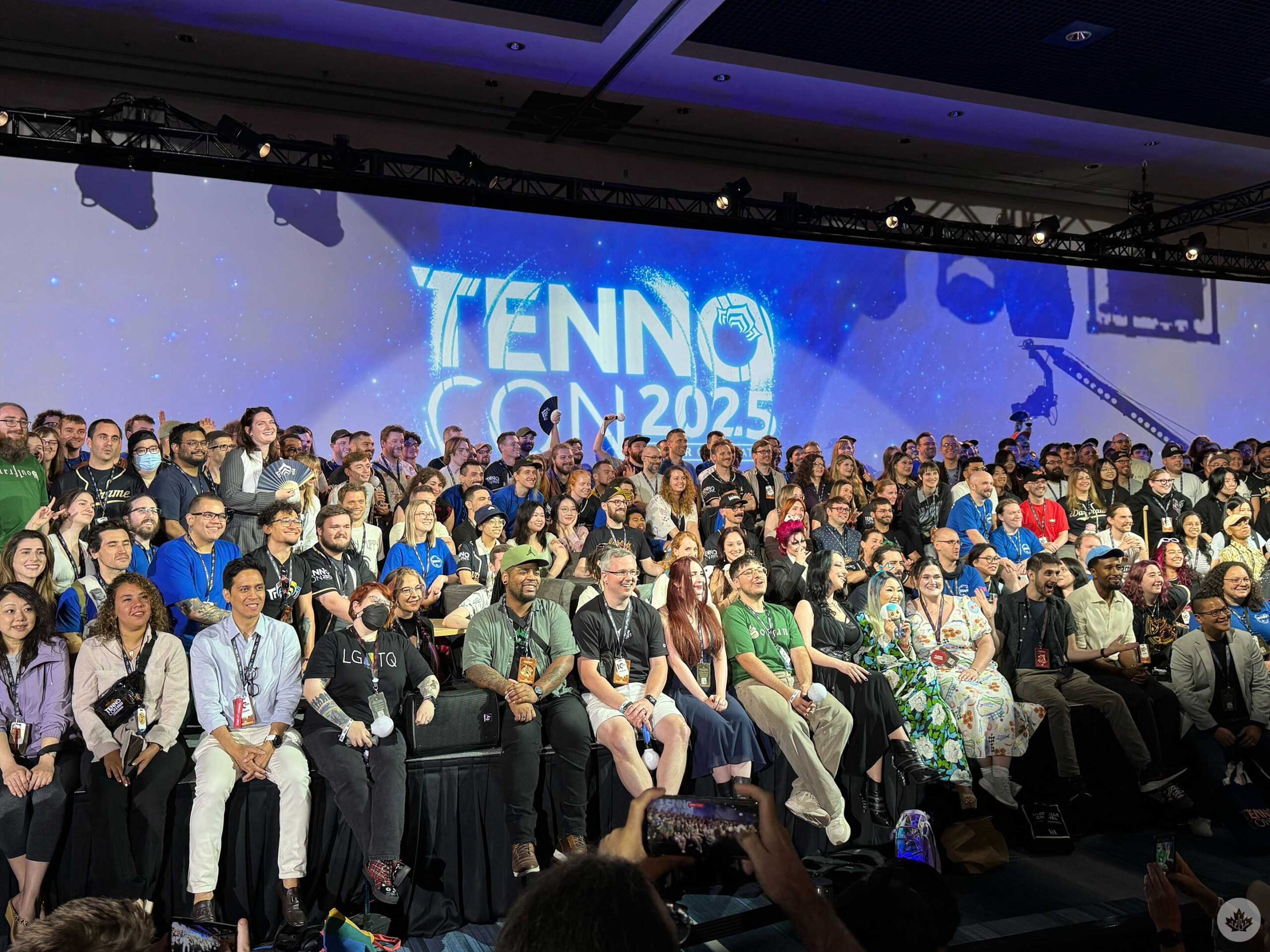
TennoCon 2025.
Van Den Hoogenband: I think about it a lot. We were just talking about Nirvanna the Band the Show. There’s this Canadian habit of being all like, “Gosh golly and gee whiz” about what we produce, rather than really pumping at our chest. And I think that’s intrinsic to Canadians, maybe, that we’re a little more quiet about what we do. But then there’s especially the fact that DE’s in London, as opposed to Toronto. And so even among the Canadian developer scene, we’re kind of a little hidden.
It’s this idea that I think we’re very aware that London, Ont., is the home of Warframe. I know there’s been discussion of “TennoCon, has it outgrown London? Is there a way that we could do the show elsewhere?” But we want it to be in London because of just that backyard nature. And I think even for fans, it’s cool to see the city where the game is made, they know that, “Oh, the office is in this neighbourhood,” or they see the RBC Centre and other locations where we have the TennoConcert, there’s just this, for lack of a better word, kind of “London lore” at this point, between all the dev streams and and other kind of Canadian-isms that we present outside the game on [developer streams like] DevShorts and Prime Time and stuff, I’m really proud of it. I grew up with YTV and Reboot and stuff like that, and so to me, I’m really happy that we get to have this little Canadian product, this little mark on Canadian sci-fi with Warframe.
Something that’s obviously really cool about a port like this is you’re able to bring in more players. You talked a little bit about some of streamlining movement controls. But in a larger sense, what are some of the ways — and obviously this is always an ongoing effort with Warframe — that you’re looking to maybe ease new players in?
Van Den Hoogenband: All of these revisions end up coming to all platforms for the most part. But we have this remaster coming for Awakening, which is the opening quest of Warframe, that should be out in the near future, and that’s targeting for new players. There’s just a better lighting pass and a sort of a visual rework of that, plus there’s some NPC behaviour changes and new player experience changes. We’re always focused on how to appeal to new players. I know last year we made this decision to cut Defense, the minimum Defense, the rounds, from five to three. So that was definitely like 2013 era, early Warframe game design, of a minimum of five Defense waves. And then in 2025, being aware that we had people playing on touch controls and playing on their phones, we thought, “Okay, maybe three makes more sense.” So we’re thinking about the platforms and bringing that back to the game design table.
Springboarding off of that, what advice would you give to a new player jumping in to Warframe to ease them in — what to check out, that sort of thing?
Van Den Hoogenband: I know it’s still intimidating. We’ve made a lot of great improvements, in my opinion, to the new player experience and a lot more guidance in terms of what you see in-game and where the game points you. But I think just completing the Star Chart is the way to go. And just along the way, you’ll find all these nooks and crannies where you might say, like, “Oh, this quest line really intrigues me,” or this system, whether it’s dojos or companions or building a NecraMech, and it becomes your obsession for the week or for the month. I always advise people to work their way through the Star Chart and get to The Second Dream.
This interview was edited for language and clarity.
Warframe is free-to-play on PS5, PS4, Xbox Series X/S, Xbox One, Nintendo Switch, PC, Android and iOS. A Nintendo Switch 2 version is also coming on March 25.
Image credit: Digital Extremes
