
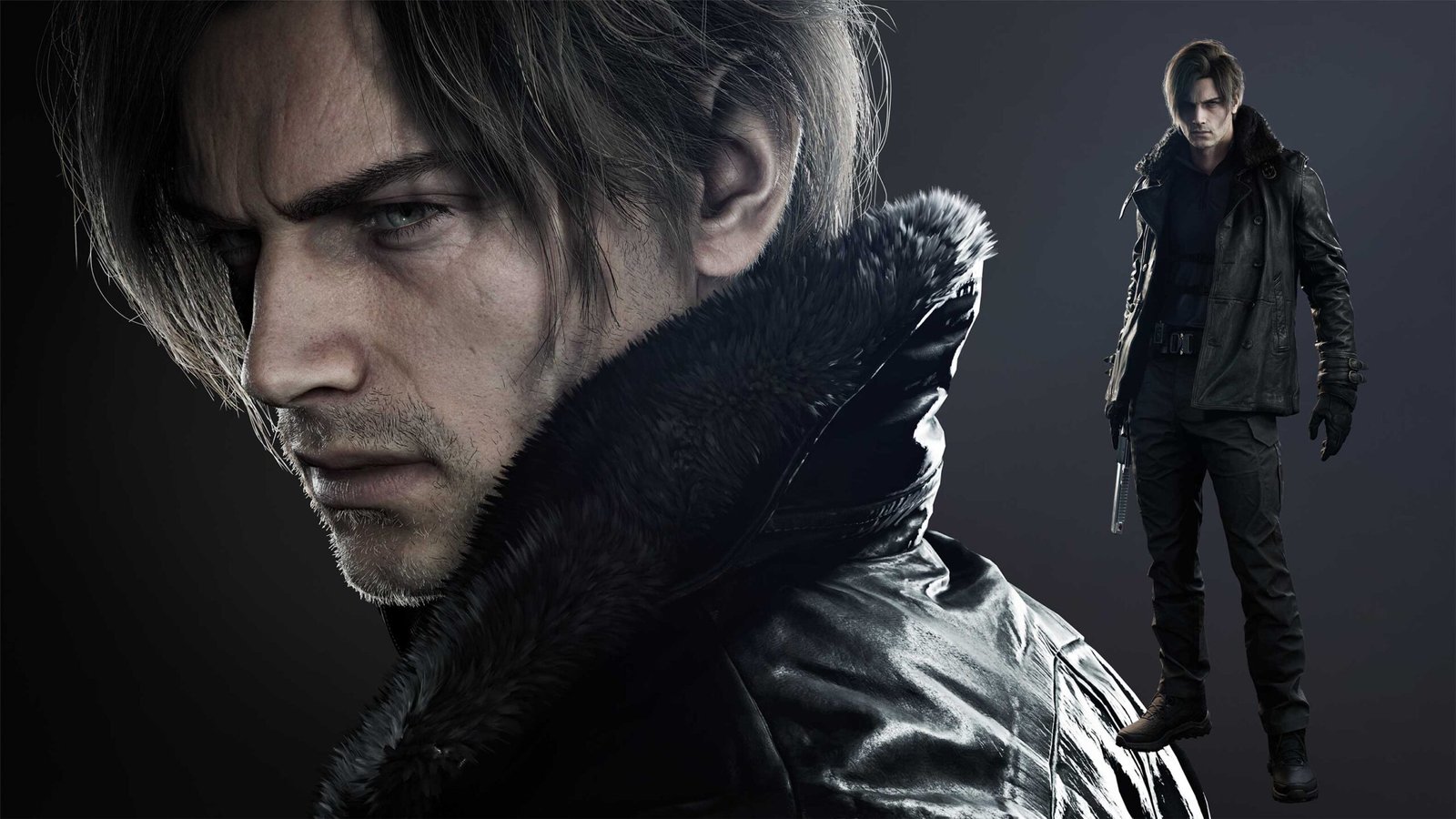
For nearly 30 years, Leon S. Kennedy has been one of the most iconic characters in video games.
Following his debut in 1998’s Resident Evil 2 as a rookie cop surviving the T-virus zombie outbreak, he’s made numerous appearances in other games, movies, and TV shows, including 2004’s Resident Evil 4, widely regarded to be one of the greatest games of all time.
Now, one of gaming’s biggest heroic heartthrobs is back in Resident Evil Requiem, the series’ ninth mainline installment in which he teams up with timid FBI analyst Grace Ashcroft to investigate a larger conspiracy tied to Umbrella Corporation. It’s his most personal mission yet, forcing him to confront how the many years and a mysterious new infection have ravaged his body and soul.
To learn more about Leon in Requiem, MobileSyrup sat down with Nick Apostolides, the voice and performance capture actor behind Leon in Requiem and several other projects, including the modern remakes of Resident Evil 2 and 4. In a wide-ranging interview, we talked about the greater edge and physicality he brought to the character in Requiem, how his humanitarian work has shaped his performance, working with Canada’s Digital Extremes on Warframe and what 30 years of Resident Evil means to him.
Note: This is a spoiler-free discussion of Requiem.
Part of what I love about the remakes that you’ve done so far and your performance in them is that they really hone in on that progression of Leon from the sort of fresh-faced cop to the more hardened presidential agent. And in Requiem, your performance so brilliantly captures Leon’s older, grizzled state. It simultaneously does and doesn’t sound like you, which is really interesting. How did you settle on exactly how you wanted Leon to move and sound in this game?
Nick Apostolides. (Image credit: Nick Apostolides)
Apostolides: I slowed down his cadence a lot with his speech and his body, so his movements are a little less springy. He’s more grounded — there’s a little bit more weight in his step. And then with the voice, I’ve changed the voice slightly for all the games that I’ve been in. The reason I wanted to go with a slight change is because, to be honest, I’ll be 42 in a couple days, and this is what my voice sounded like when I was 20. I really haven’t changed that much, and when I’m 50, it might be just about three per cent deeper.
But with RE4, I just spoke more from my chest. I put a lot of breath into it, and just [makes voice a bit deeper] kind of sounded like this a lot, and I took it down just a little bit, made it “cool.” And then with Requiem, I had to do something a little different, and kind of swallow it a little bit, and [puts on an even deeper voice] throw it in the back of my throat just for a deeper register. So a lot of the lines just sat right back there, and I gave just a little bit of gravel, too. And that’s kind of how I came to it. And just trusted that the story that they present as well, with the graphics, the music, the feeling behind all those scenes, it’s just all going to work really cohesively.
It comes together amazingly — I really, really loved it. I’ve seen you talk before about how Capcom really encouraged you in the previous games to make the role your own, rather than sort of copy previous iterations of Leon. In that spirit, this is the first game that you’ve done where it’s a wholly new story for Leon. So to that point, were you given any sort of opportunity to experiment or improvise a little bit more with him this time around?
Apostolides: Totally. I have gained a lot of trust with Capcom with this character. They give me a lot of agency. And at the very least, they are open to all of my ideas. So anything that I pitched to them, whether it’s a line change, a scenario change, the way that Leon would react — they always just listen to me. And they take it into consideration, which is a great honour.
Something else that I really loved about playing through Requiem is its sort of structurally different from the other games that you’ve done. In RE2, Claire’s campaign and Leon’s campaign are completely separate things. And in RE4, you have companions with you more directly, like Ashley and Luis, but it’s still very much Leon’s story. But in Requiem, this is you sharing the spotlight with Grace. What was it like to have that co-lead dynamic with Grace, and how did you and Angela [Sant’Albano] collaborate to bring it to life?
Apostolides: I think it’s always great when they introduce new characters. I think Grace Ashcroft is a very, very likeable new character. The way that her gameplay works, it’s like you’re surviving through a slightly inexperienced person in the field, and I think that just lends perfectly to horror. It was a pleasure working with Angela. She was such an easy co-star to be acting with, because she just provided so much authenticity with her deliveries. We always had a great time on set. We would also be on the sidelines. If she was doing something just herself with her character, or vice versa, we’d be watching each other perform. And we learned a lot from each other. I think it’s going to be a perfect dynamic between action-y type Leon and the limited resources, worse survival instincts of a newbie.
You’ve done a lot of humanitarian work on The Fixers in terms of going around the world to rebuild communities, which is really wonderful. When I was thinking about that, there is a little bit more of a direct overlap here with Requiem in the sense that Leon’s revisiting this destroyed Raccoon City and reconciling with this ruined community and the lingering impact of that. How did those experiences of travelling the world and doing that humanitarian work inform your approach to Leon, especially in Requiem?
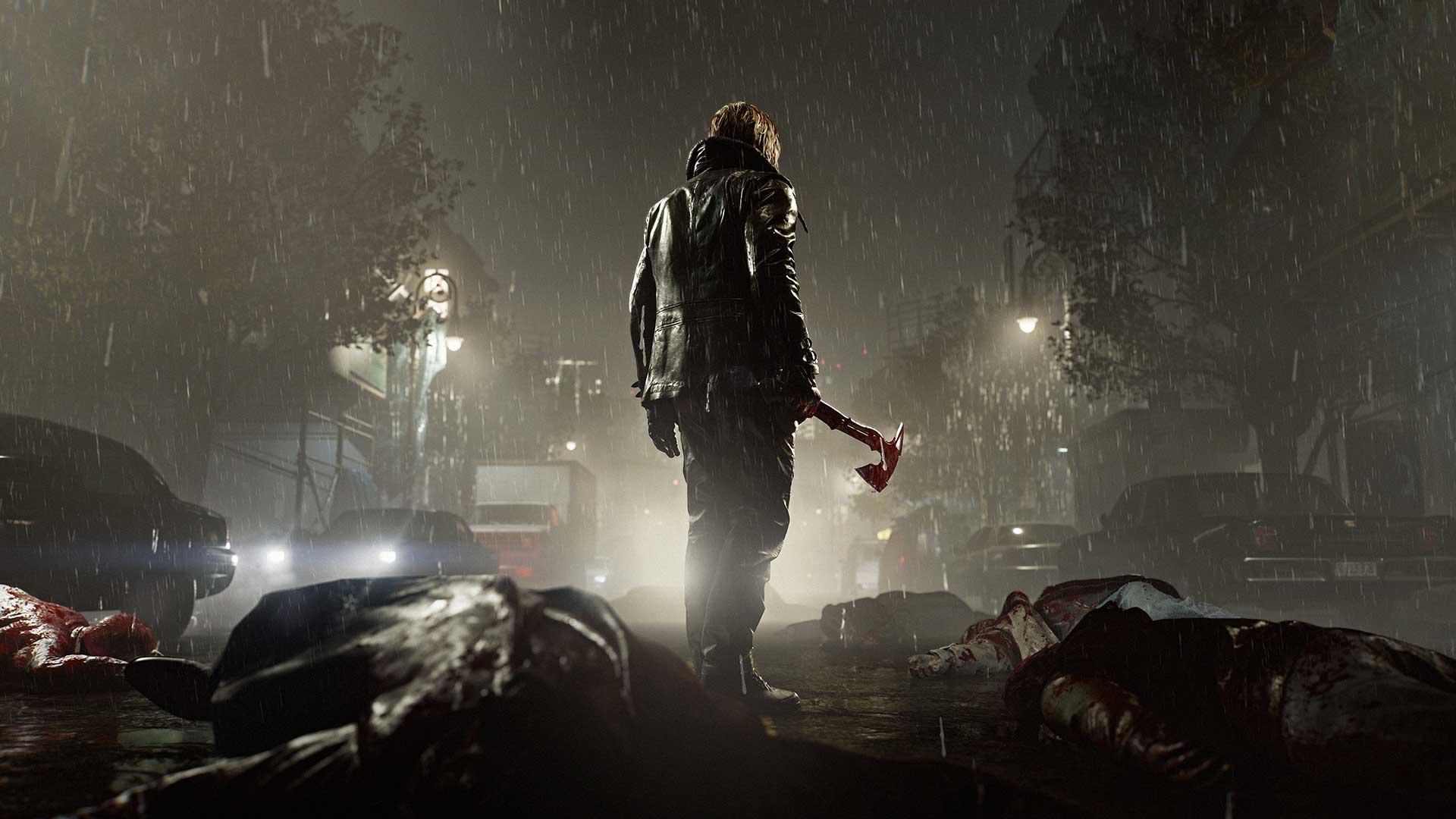
Apostolides: That’s a really interesting parallel I didn’t think anyone was going to bring up during these interviews, so you take the cake for that, man. Good question, Brad, and thank you for doing your research. What I will say is, as an actor, as you get older, you just experience more life, and you can draw from more things in life to relate to different scenarios, with different characters, different scenes. And yes, that humanitarian work all around the world — I did that for about four to five years, on and off. I have built projects in, I think, over 30 countries at this point. And you just learn so much about humanity. You learn to break through the language barrier, and you see the nuts and bolts about what makes people tick in different cultures.
And it’s not any one thing that I would draw from to help inspire my performance in Requiem going to a dilapidated place; it’s really just that you trust that everything that you’ve have experienced influences and colours your delivery moving forward when you’re faced with a similar situation. And although the backstory is a little different — the city got bombed because there were zombie outbreaks, and they’re trying to cover it up — it’s still about survivors. It’s about the people hanging on, struggling just to survive. There are through lines and there are things that you just think about. So yes, it absolutely affects my performances moving forward in all of my projects, not just this one.
Something that’s really fun about Leon in this game is there’s that greater physicality to him. He’s always [had some of that], especially in RE4, flipping around and doing roundhouse kicks and suplexes. But playing the game, especially with the hatchet, there’s much more of a crunchiness to the way he fights, like even how he’ll kick a zombie in the head and then crush its head against the wall. How did you explore bringing out another level of physicality to him — still emphasizing that it’s this cool, badass Leon that we know, but maybe he’s got a little bit more of an edge and haggardness to him?
Apostolides: I always thought that, going into this project, Leon had to be a little bit more brutal. But not out of hatred, out of necessity, because the stakes are higher. He’s getting older. He’s fighting a clock that is winding down, and every single fight this time around could be his last. And so he’s got to end that fight as quickly as possible, or he might not be in the next mission. That was the mentality behind it — it was brutality out of necessity.
To that point of the brutality, I remember reading a story you had shared at Fan Expo Canada when you were filming RE2 and doing the scenes where Tyrant was choking you out, and you had passed out because you really went all in on it. With Requiem, since you have even more of that physicality, do you have any sort of interesting anecdotes about taking his physicality to the next level in maybe extreme ways like that?
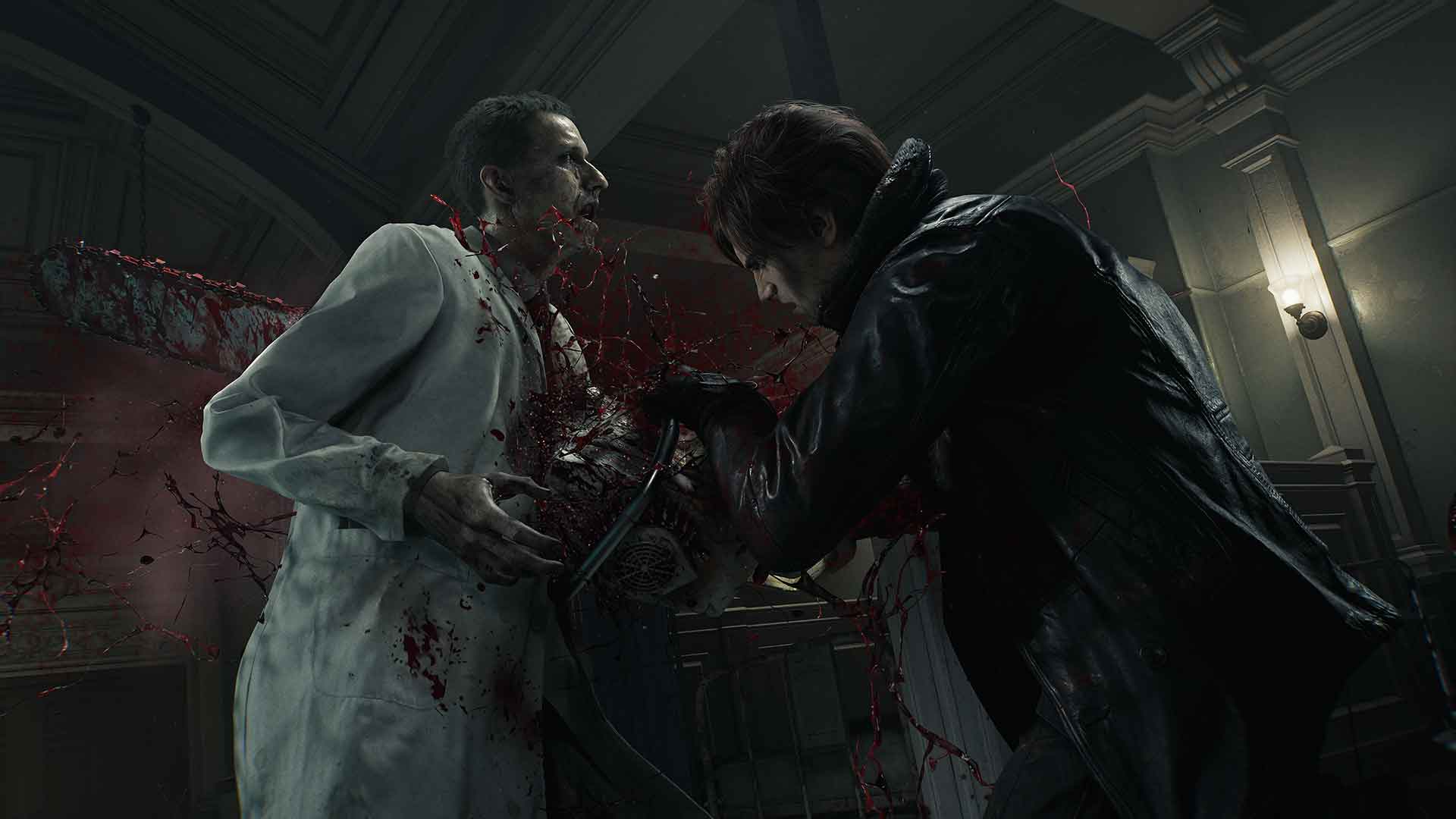
Apostolides: Like I said, the stakes were higher, and so whatever situation I might have been put in, in full performance capture, if we were doing something very physical, I just made damn sure that you could hear it in the efforts, in the voice. Whatever he was doing — jumping down, tumbling, falling off this thing, or climbing this thing, or fighting this monster — you had to hear it in the voice, and not necessarily the words. It’s the non-verbal stuff, the effort behind it all. And that’s a big difference that I wanted to distinguish there.
How did you react, both as a fan and as the actor who plays Leon, when you found out that you were going back to Raccoon City and, without spoiling anything, explore RPD, that sort of thing?
Apostolides: That blew my mind, Brad. I was beside myself when they said that this story is going to take Leon back to RPD. I was just all in from that point. I learned that about two years ago, and I was extremely excited. I saw some of the concept art, and I was just goosebumps all around. I was living my best life.
Oh, I can imagine. Even just playing it, it reminded me — I know you’re a gamer, too — of playing Metal Gear Solid 4 when you go back to Shadow Moses Island and they play the hits there. Going back to RPD and hearing you reflect on everything…
Apostolides: I love when games do that!
I hope it’s evident at least through some of your answers and the other interviews that you’ve done, but something that a lot of people probably don’t appreciate is just how much work goes into these games, especially from the performance capture side. It’s not just you sitting in a booth recording audio. So I’m curious, especially for such a physical role like this, what are some of the things that you think might surprise people when they hear, “Oh, hey, I’m the star of the new Resident Evil game,” and what that work entails?
Apostolides: It’s the fact that we do a lot of the physicality. I happen to be an action actor of maybe 15 years, and anytime I do a project like this, the stunt coordinator will say, “Hey, we are here to support you. And if there’s any of the physicality, any of the stunts that you think you can handle and you want to do, we want you to do those.” Because the more that you can do as your character, the more seamless the splice will be between your acting and that one stunt where you get slammed against a wall and thrown 30 feet. Those get dangerous, and that’s when you hand it off to professionals, because God forbid, if I was to break an ankle, your lead actor is out for the shoot. That’s how it works, and so that’s why there’s quite a few things that I happily relinquish, and I’ll say, “Yes, can you please make this look really good?” Because your stunt people will be just that much better than I would be.
But yes, I wish more people knew that we do bake a lot of the movements, the mannerisms, the gun flips and everything. And also, for Angela — she had a very, very physical role. And a lot of that stuff she was doing, she was hanging upside down. Like in the reveal trailer where they were drawing her blood, she was literally upside down on a gurney-type thing. And we were doing that scene upside down, she was getting lightheaded. We really put ourselves into these roles, and I wish more people understood that.
I think one of the really cool things about the game, and it’s not even a spoiler, is that one of the things that you unlock when you beat it is a behind-the-scenes look at some of the filming.
Apostolides: I saw that!
Yeah, and there’s these close-ups on Angela’s face where she’s screaming, or all the [stunts] you’re doing. I think that’s super cool, and I hope people take the time to watch that […] Another role you’ve done in between your Resident Evil journey: you got to join the massive community of [London, Ontario-based Digital Extremes’] Warframe as Zeke [and Frost and Velimir] in 1999. As a newcomer to Warframe, I find it so kind of fascinating — that whole game and the community and how they’ve been able to create such a positive and massive fanbase. Even bringing thousands of fans from around the world to [TennoCon] in London, Ontario. Not London, England — London, Ontario.
Apostolides: It’s crazy.
Now that we’re coming up on nearly two years since 1999 released, what’s it like to be a part of this other big gaming community? And as you go to these conventions, has there been a lot of overlap between the Resident Evil fans and the Warframe fans?
Apostolides: No, a lot of Warframe fans don’t really know that I’m in the game. I kind of slid into this really fun new expansion [1999]. A lot of people don’t know that I also voice Frost/Velimir, that skin. It’s a crazy, crazy fandom. It just kind of slipped under the radar that I’m in that. Most people just know me for Resident Evil. But Warframe, the whole team, Digital Extremes — they are one of my favourite teams to work with. It’s like a big family environment there. And the fact that, yes, they throw on TennoCon every single year — they love their fans, holy shit. I just can’t say enough good things about them. I love them to death.
You mentioned Digital Extremes. What was it like to work with them and flesh out these characters?
Apostolides: They were so fun and collaborative. With Zeke, I kind of based my character loosely off of a young Justin Bieber in his trajectory in his career, doing a lot of those interviews and such. That was fun. And that was playing a version of myself — just excitable, energy was like 150 per cent dialled up. That was one version. And then about six months later, they asked me to voice Frost. Do you know who that even is, the character?
I don’t, actually! I’m still catching up, because there’s so much game to play.
Apostolides: There’s so much! It’s been around for a decade. So Frost is like a 50-year-old grizzled veteran. However, they didn’t want him to be a stereotypical war hero. They said, “Yes, he’s a veteran, and he kicks ass, however, we want to hear the ‘Christmas sweater’ in his voice.” And so he’s kind of also a fun uncle, and so he’s got that energy of, “Come here, buddy, I’m gonna give you a noogie!” And that was one of the funner characters I’ve ever voiced in a project, just because there weren’t many rules, and we were just like riffing in the booth, creating this character. And it was so fun. We had a lot of laughs.
Bringing it back to Resident Evil, you talked a little bit about playing RE2 for the first time, and you’ve been very open about how RE4 is your all-time favourite game, and now you’re a part of the series. Looking back on 30 years of the series and how important it is to people and how impactful it is to gaming as a whole, what does 30 years of Resident Evil mean to you?
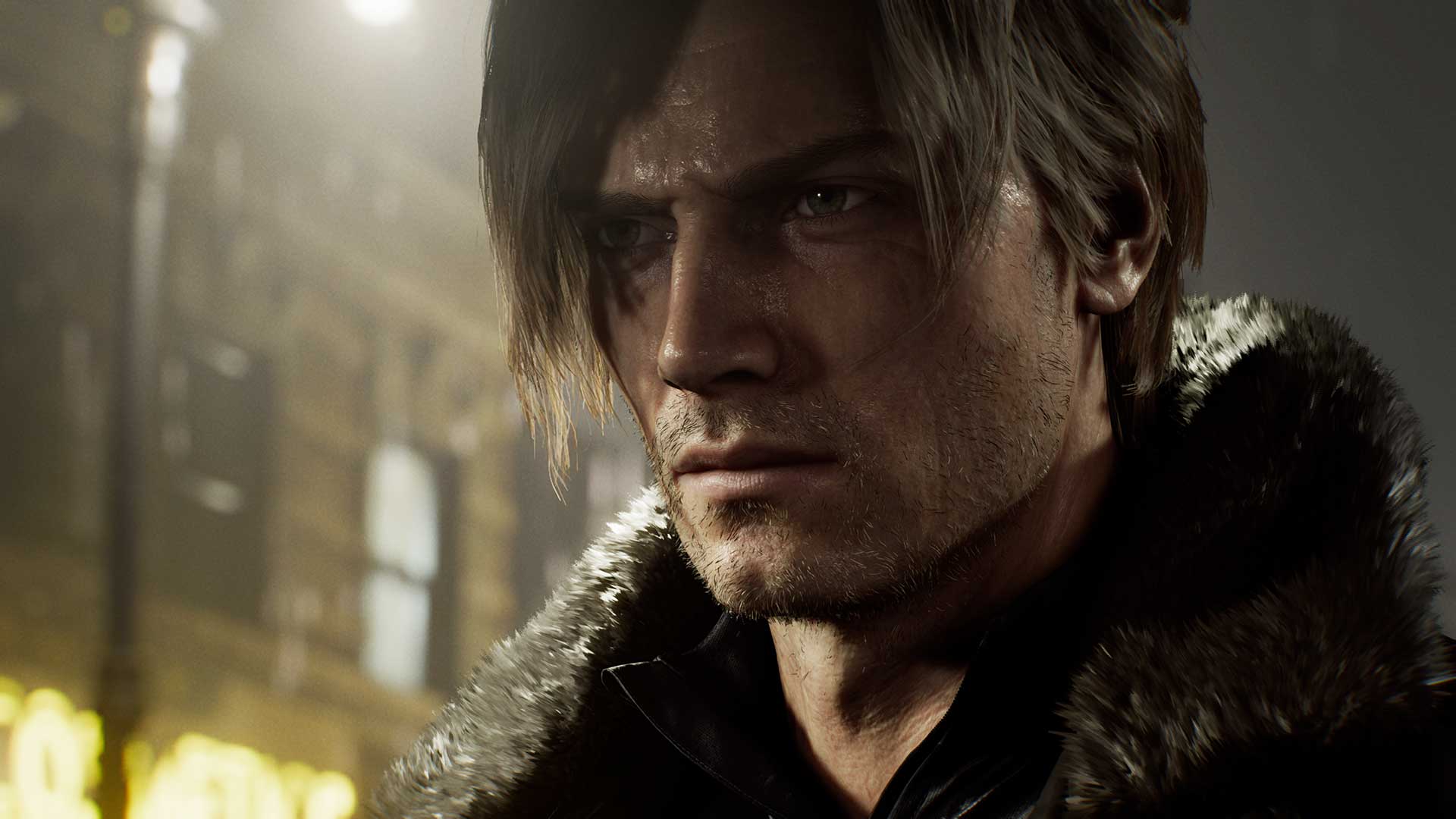
Apostolides: I’ve been very open that it’s my favourite franchise, and as 37-year gamer, I can understand the rarity of a very active ongoing IP celebrating its 30th birthday. It’s not common. And so I’m happy that people of all generations are still playing these games, because I wouldn’t have imagined that, back in 1998. The fact that it’s still going strong… When I have these conventions and appearances, when a 12-year-old comes up to me and says, “I love Resident Evil, it’s the best thing ever, my dad showed me!” I get so happy. I’m like, “Good on your dad for introducing you to this stuff,” because I remember that feeling. And the fact that younger generations are still experiencing this the same way I did just warms my heart.
You mentioned how you’re excited to play the game, and obviously, fans are going to get to as well. When you get to sit down and play a new game, especially for Requiem, what do you most look forward to?
Apostolides: Experiencing it with my little brother. We’ve had this tradition for 20 years now. We started with Resident Evil 4. That’s when he was old enough — he was nine. [laughs] That is my favourite thing to do. Even if I have to wait quite a few months to be with him because we live in different states, East Coast, West Coast. So even if we have to wait a few months, we play together, and it’s just a special bond that we have. And it’s so exciting to see how the new games work when we’re playing them, because we got to figure it out. It’s the same thing, sitting on a couch next to each other, strategizing, being like, “No, Dave, if you go in that room, you have two shotgun shells, you’re not going to survive, we’re just going to die. I suggest you go over here.” I just love doing that with my little bro. There’s something special about it.
Resident Evil Requiem is now available on PS5, Xbox Series X/S, Nintendo Switch 2, and PC. Warframe is free-to-play on PS5, PS4, Xbox Series X/S, Xbox One, Nintendo Switch, PC, Android, and iOS. The Fixers is available on YouTube.
Imate credit: Capcom
