
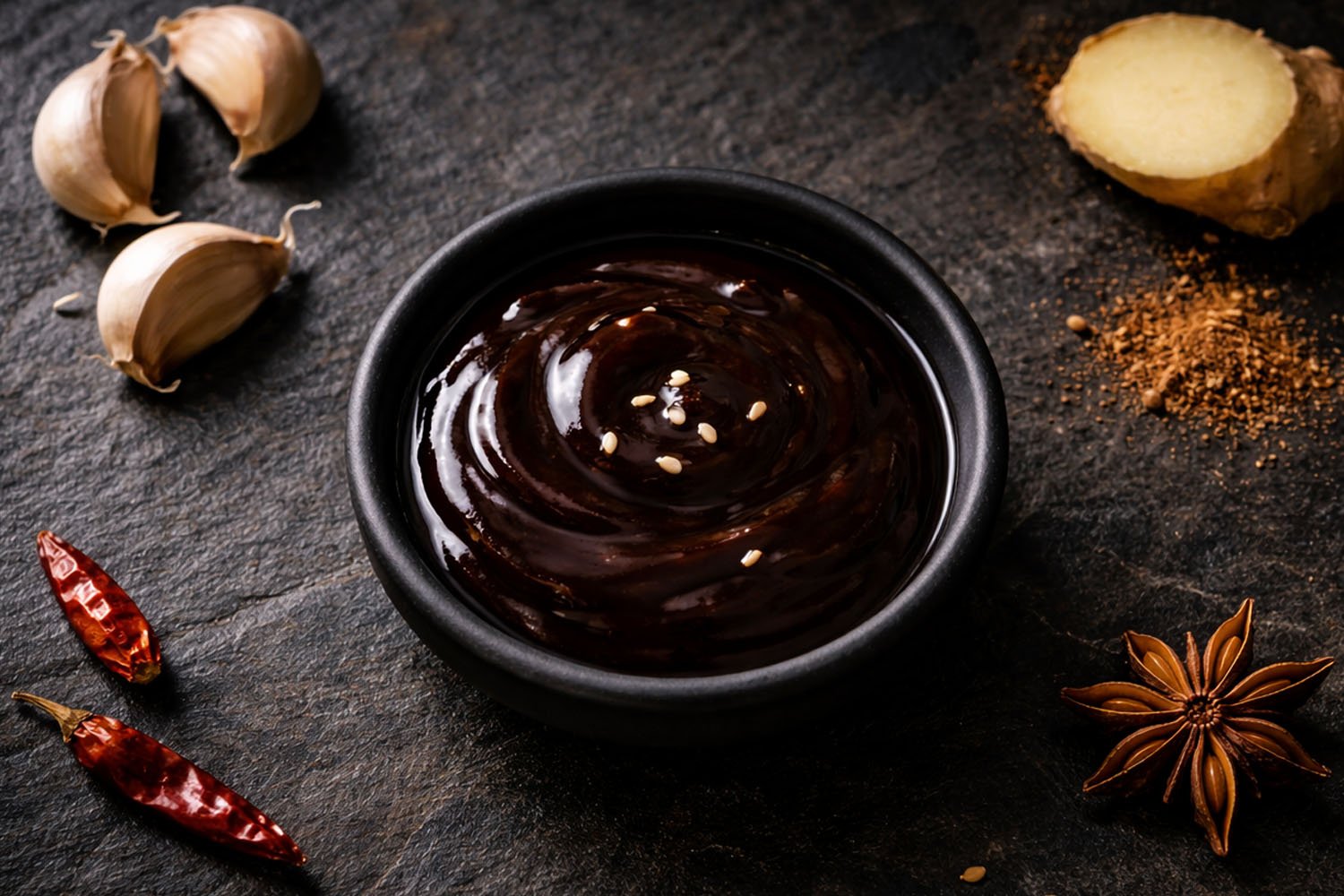
Does hoisin sauce go bad? Yes, hoisin sauce does go bad — and it spoils differently than most other Asian condiments in your fridge door. While fish sauce and soy sauce rely heavily on salt for preservation, hoisin sauce is loaded with sugar. That sugar gives it the rich, sweet-savory flavor it is famous for. It also makes it a better environment for mold and bacteria once the bottle is opened.
Most people buy hoisin for a single recipe — spring rolls, Peking duck, a quick stir-fry — and then forget it in the back of the fridge for months. Sound familiar? This guide covers exactly how long it lasts, the spoilage signs that are easy to miss, and how to store it so you are not throwing out half a jar every time.
For a complete reference on storing condiments and pantry staples, see our Food Storage Guide. For the refrigeration question specifically, see our companion post: Does Hoisin Sauce Need to Be Refrigerated?
⚡ Short answer: Yes, hoisin sauce goes bad. Unopened, it stays at peak quality for 18 to 24 months in the pantry. Once opened and refrigerated, expect 6 to 18 months of good quality. The first spoilage sign most people miss: the sauce dries out and turns rubbery before mold ever appears. If yours has that thick, cracked texture — it is past its prime.
📋 Key Takeaways
- Hoisin sauce goes bad faster than fish sauce or soy sauce — its high sugar content makes it more vulnerable to mold once opened.
- Unopened: 18 to 24 months in the pantry; often fine for months past the best-by date.
- Opened and refrigerated: peak quality for 6 to 12 months, usable up to 18 months.
- The spoilage sign most people miss: rubber-like texture and dried-out edges — this happens before visible mold.
- Separation and color darkening are normal — give it a stir and it is fine.
- Best-by dates are quality indicators, not safety deadlines.
🤔 Why Hoisin Sauce Goes Bad Differently Than Other Asian Condiments
This is the part nobody explains. And it matters for knowing what to look for.
Fish sauce is roughly 20 to 30% salt by weight. Soy sauce is similarly salt-heavy. That salt creates an inhospitable environment for bacteria and mold, which is why both can survive for years at room temperature after opening without obvious spoilage.
Hoisin is a different animal. Its base is fermented soybean paste, but it also contains significant amounts of sugar, vinegar, garlic, and sesame oil. The vinegar and fermentation provide some preservation, but the sugar creates conditions where mold can take hold — especially at room temperature.
💡 The sugar factor: High sugar content reduces water activity, which slows bacterial growth — but hoisin has enough moisture that mold can still develop, especially if the jar is left warm or contaminated with food particles. Refrigeration is not optional once the jar is opened.
The fermented soybean base is also worth noting. Some people mistake the normal slightly funky smell of hoisin for spoilage. It should smell deeply savory, sweet, and mildly pungent — think soy sauce meets molasses. If it smells sour, sharp, or yeasty in a bad way, that is a different story.
🕓 How Long Does Hoisin Sauce Last?
| Storage Method | How Long It Lasts |
|---|---|
| Unopened — Pantry | 18 to 24 months (check label); often fine past best-by |
| Opened — Refrigerated (peak quality) | 6 to 12 months |
| Opened — Refrigerated (still usable) | Up to 18 months if no spoilage signs |
| Opened — Room Temperature | A few weeks at best; quality drops fast |
| Past Best-By Date (unopened, stored properly) | Often still good — check for spoilage signs |
According to the USDA FoodKeeper app, hoisin sauce keeps best quality for several months once opened and refrigerated. The USDA FSIS confirms that best-by dates on shelf-stable products reflect peak quality, not a safety deadline. An unopened bottle in a cool, dark pantry can often be used well past its printed date if it shows no spoilage signs.
🔍 How to Tell If Hoisin Sauce Has Gone Bad
Fresh hoisin sauce is thick, dark brown, smooth, and glossy. It smells sweet, savory, and richly fermented. Here is what to look for when you are not sure.
🔴 Signs It Has Gone Bad
🧴 Rubbery or dried-out texture. This is the spoilage sign unique to hoisin — and the one most people miss. Because hoisin is thicker and stickier than other condiments, it can dry out and develop a rubbery, cracked, or leathery consistency before mold ever appears. If the sauce has lost its glossy flow and looks congealed or stiff, it is past its prime. Do not try to revive it with water — the flavor will have already degraded.
🦠 Visible mold. Fuzzy white, green, or grey spots on the surface or around the cap or lid are a clear sign. Discard the entire jar — mold roots extend deeper than what is visible.
👃 A sour, sharp, or fermented-off smell. Hoisin is supposed to smell rich and a little funky — that is normal. What is not normal is a sour or vinegary edge that was not there before, or a yeasty, fermented smell that catches in the back of your throat. Trust your nose on this one.
Swollen lid or bottle. Any pressure buildup inside the jar indicates bacterial activity. Discard it immediately and do not taste test.
🟢 Signs That Are Completely Normal
Separation — darker liquid on top, paste at the bottom. Hoisin sauce separates over time as the heavier particles settle. This is identical to natural peanut butter separating in the jar. Give it a good stir before using and it will be as good as new.
Darkening color. Like oyster sauce, hoisin naturally gets darker over time due to oxidation. Color change alone is not a spoilage sign — smell and texture tell the real story.
Slightly stronger flavor. The fermented notes may intensify with age. If it still smells right and looks right, use it. If the flavor is so strong it is unpleasant in a dish, that is a quality issue rather than a safety one.
🎯 The check: Open the jar. Stir it. Smell it. If it looks glossy and pours smoothly, smells deeply savory-sweet, and has no mold — it is fine. Rubbery texture or a sour smell means it is time to replace it.
⚡ What Affects How Long Hoisin Sauce Lasts?
Temperature — the biggest factor. Hoisin stored at room temperature after opening degrades significantly faster than refrigerated hoisin. The sugar content that makes it delicious also makes it more susceptible to microbial activity at warmer temperatures.
Lid hygiene. Wiping the jar lip before sealing keeps dried sauce residue from becoming a mold entry point around the cap. It takes two seconds and makes a real difference over months of storage.
Contamination from utensils. Dipping a used spoon directly into the jar introduces food particles and bacteria. Pour into a small dish for dipping rather than double-dipping back into the jar.
Brand and preservative content. Some commercial hoisin sauces contain sodium benzoate or acetic acid as preservatives, which meaningfully extend shelf life. Lee Kum Kee and Kikkoman formulations tend to keep longer than smaller-batch brands. Check the label — if yours contains preservatives, it will likely outlast the conservative estimates above.
🧊 How to Store Hoisin Sauce Properly
- Unopened: cool, dark pantry away from the stove or dishwasher. No refrigeration needed.
- Opened: refrigerate immediately. This is the single most important step.
- Middle shelf, not the door. Door shelves experience more temperature swings — consistent cold is key.
- Seal tightly after every use. Oxygen is the main driver of quality loss and drying.
- Wipe the jar neck clean before sealing to prevent residue buildup around the lid.
- Pour into a dish rather than dipping directly from the jar to prevent contamination.
- Note the opening date on the lid with a marker — saves guesswork six months later.
🍜 Using Hoisin Sauce? Try These Recipes
Hoisin is one of those sauces that works as a glaze, a dipping sauce, a stir-fry base, and a marinade all at once. If you have a fresh jar and need inspiration:
❓ Frequently Asked Questions
How long does hoisin sauce last after opening?
Opened hoisin sauce refrigerated and tightly sealed stays at peak quality for 6 to 12 months. Many bottles remain usable up to 18 months if stored properly and show no spoilage signs. At room temperature after opening, quality drops within weeks.
Can you use hoisin sauce past its expiration date?
Yes, if the bottle is unopened and stored properly in a cool, dark pantry, hoisin sauce is often still good for months past its best-by date. The USDA FSIS confirms best-by dates indicate peak quality, not safety. For opened hoisin, rely on spoilage signs — texture, smell, and mold — rather than the date alone.
What does bad hoisin sauce look like?
Bad hoisin sauce may show visible mold (fuzzy spots on the surface or around the cap), a rubbery or dried-out texture where it has lost its smooth glossy consistency, or a darker, duller color than normal. Separation alone is not a spoilage sign — stir it and see if it smooths out.
Does hoisin sauce smell sour when it goes bad?
Yes. Fresh hoisin has a rich, sweet-savory, fermented aroma. When it begins to spoil, it develops a sharp sour edge or an unpleasant yeasty smell that is distinctly different from its normal scent. If the smell has changed noticeably, discard it.
Is it okay if hoisin sauce has separated in the jar?
Yes, separation is completely normal. The heavier particles settle to the bottom over time, leaving a darker liquid layer on top. This is the same as natural peanut butter separating. Stir well before using and the sauce will blend back together.
Does hoisin sauce need to be refrigerated after opening?
Yes. Unlike fish sauce or soy sauce, hoisin’s high sugar content makes it more vulnerable to mold and bacteria at room temperature. Refrigeration significantly extends quality and shelf life. See the full breakdown in our companion guide: Does Hoisin Sauce Need to Be Refrigerated?
📚 Further Reading
Sources
