
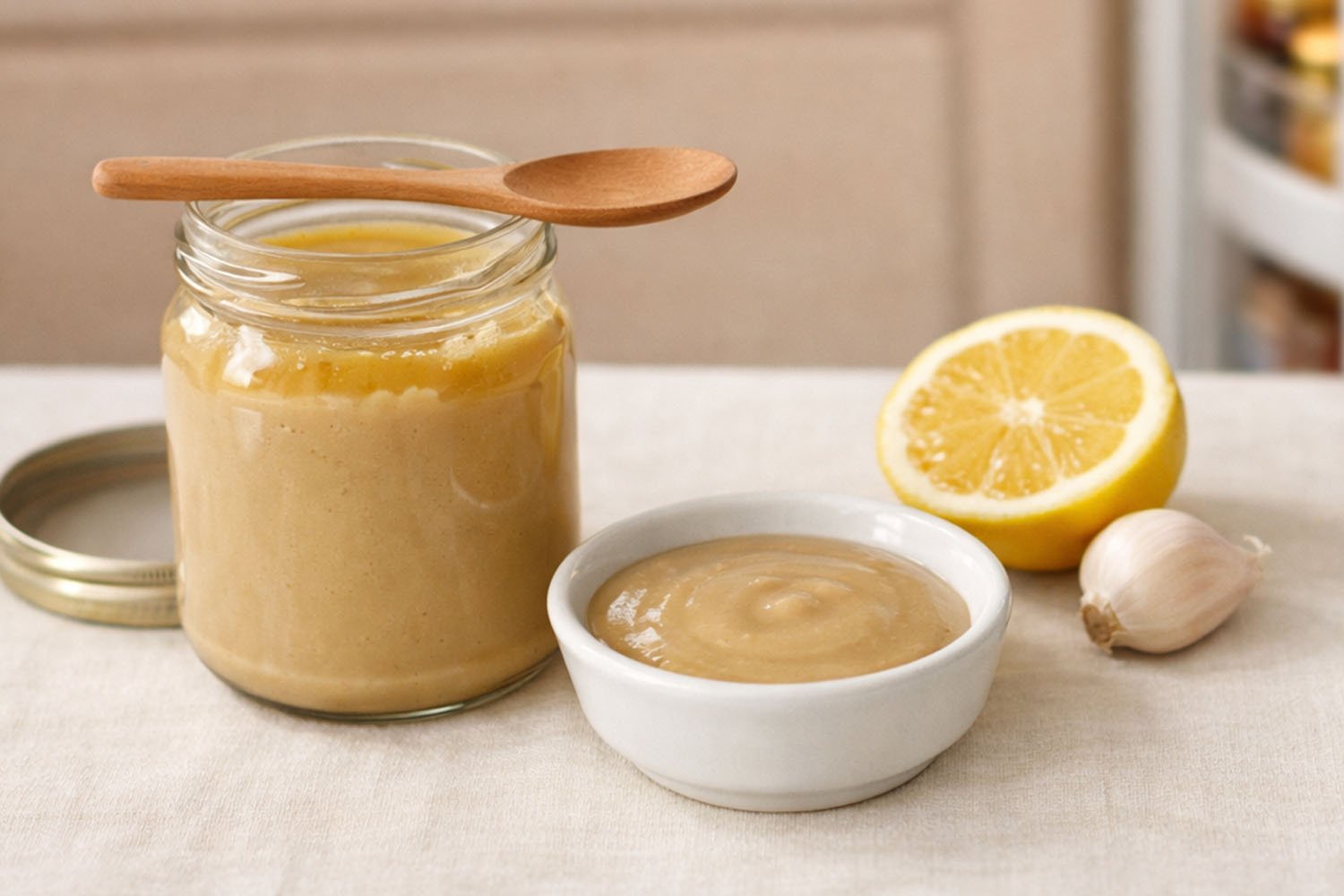
Does tahini need to be refrigerated? Technically, no. Tahini is a shelf-stable product and does not require refrigeration after opening. But the honest answer is: it depends on how fast you go through a jar. If you use tahini weekly, the pantry is perfectly fine. If a jar sits for months at a time, the fridge will protect it significantly better.
Unlike most condiments, tahini does not have a clear refrigerate-after-opening rule stamped on the label. The spoilage risk is not bacteria. It is rancidity, which is driven by heat, light, and oxygen over time. That distinction changes the storage calculus entirely.
For spoilage signs and shelf life details, see the companion post: Does Tahini Go Bad? For the full pantry condiment picture, visit our Food Storage Guide.
⚡ Short Answer
Tahini does not need to be refrigerated, but refrigeration does extend quality, especially once the jar is open. Frequent users (a jar every 1 to 2 months) can store tahini in a cool, dark pantry without issue. Infrequent users are better off refrigerating. Either way: keep it away from heat and light, always seal it tightly, and always use a dry spoon.
🤔 Why Tahini Does Not Strictly Need Refrigeration
Tahini is classified as a shelf-stable food. According to the USDA FSIS, shelf-stable foods can be safely stored at room temperature because their composition does not support the bacterial growth that causes foodborne illness.
In tahini’s case, the reason is its extremely high fat content and very low moisture. Bacteria and mold need water to thrive. Tahini’s environment is too oily and too dry for most microbes to establish themselves. The spoilage risk is not biological. It is chemical. Specifically, it is oxidative rancidity: the sesame oils slowly breaking down when exposed to oxygen, heat, and light.
That is important because rancidity is slowed by cool temperatures, not eliminated by them. Refrigeration does not prevent rancidity forever. It just slows the process down considerably, buying you months of additional quality.
🧊 Pantry vs. Fridge: Which Is Right for You?
🟢 Keep it in the pantry if:
- You use a jar within 1 to 2 months of opening
- Your pantry is genuinely cool and dark (not near the stove or a sunny window)
- You prefer a pourable, easy-to-stir consistency
- Your label does not specifically say to refrigerate after opening
🧊 Refrigerate if:
- A jar lasts you 3 months or more
- Your kitchen runs warm or gets direct sunlight
- You want to maximize shelf life after opening
- Your label says to refrigerate after opening. Follow it
Soom Foods states on their website that they prefer storing tahini in the pantry for everyday use, treating it similarly to olive oil or natural peanut butter. They also note that refrigeration is a good choice for longer-term storage. This reflects the general consensus across most tahini producers: pantry is fine for active use, fridge is better for infrequent use.
This is the same logic that applies to does olive oil need to be refrigerated and does peanut butter go bad. All three are fat-based, low-moisture products where cool, dark conditions matter more than cold temperatures.
🕓 How Storage Location Affects Shelf Life
| Storage Method | Opened Shelf Life | Texture |
|---|---|---|
| Cool, dark pantry | 3 to 6 months peak; often up to best-by date | Smooth, pourable, easy to stir |
| Refrigerator | 6 to 12 months peak quality | Thick and stiff; needs warming before use |
| Warm counter or near stove | Weeks to a couple of months (rancidity risk) | Fine initially, degrades fast |
| Freezer | Up to a year or longer | Firm until thawed; stir well after |
⚠️ The Refrigerator Tradeoff: Texture
The main reason people avoid refrigerating tahini is texture. Cold temperatures cause the sesame oils to thicken significantly, turning a pourable, silky paste into something dense and stiff that can be genuinely difficult to stir or scoop.
A few ways to manage this:
- Let it come to room temperature for 10 to 15 minutes before using. The paste softens noticeably.
- Stir warm water into your bowl: not the jar, to thin the tahini you are using right now. A teaspoon at a time works well.
- Use a hand blender or small food processor to re-emulsify a very thick or separated refrigerated jar.
- Do not microwave the jar. Spot heating can cause uneven texture and degrade the oils at the hot spots.
📋 What Your Label Is Actually Telling You
Tahini labels vary. Some say nothing about refrigeration. Others say “refrigerate after opening,” while some simply recommend “store in a cool, dry place” without specifying refrigeration.
If your label says to refrigerate after opening, follow it. The manufacturer designed their product with that recommendation in mind and it likely reflects something about the formulation or seed quality. If your label says “cool, dry place,” pantry storage with a well-sealed lid is the intent.
The USDA FSIS notes that best-by dates on shelf-stable products reflect peak quality rather than a safety cutoff. Tahini that has been stored properly and shows no signs of rancidity is generally still good past the printed date, regardless of storage method.
📦 How to Store Tahini After Opening
Once you open a jar of tahini, the main goal is limiting its exposure to oxygen, heat, light, and moisture. The storage method matters less than getting those four basics right.
Pantry: Works well for frequent users. Keep the jar in a cool, dark cupboard away from the stove and out of direct sunlight. Seal the lid tightly after every use and always use a dry spoon. Expect peak quality for 3 to 6 months.
Refrigerator: Better for infrequent users or if you want to extend quality beyond 6 months. The tradeoff is texture: refrigerated tahini thickens considerably. Let it warm up for 10 to 15 minutes before using, or stir a small amount of warm water into your portion bowl to loosen it.
Freezer: A good option for bulk purchases or a large jar you will not finish quickly. Freeze in small portions, thaw at room temperature, and stir well before using.
Regardless of where you store it: stir the jar well before each use to redistribute the separated oil, and write the opening date on the lid so you are not guessing later.
⚡ The Non-Negotiable Storage Rules
Whether you choose the pantry or the fridge, these rules apply either way:
- Never store near the stove, oven, or dishwasher: heat is the main driver of rancidity.
- Never store in direct sunlight: UV light breaks down the sesame oils faster.
- Always use a dry spoon: moisture introduced into the jar can cause mold, which is rare with tahini but preventable.
- Seal the lid tightly every single time: oxygen exposure drives rancidity regardless of temperature.
- Stir well before each use: oil separation is normal; redistribute it evenly rather than pouring it off.
🧊 Can You Freeze Tahini?
Yes. Tahini freezes well and can last up to a year or longer in the freezer. It is a useful option if you buy in bulk or have a large jar you will not use quickly. Freeze in small portions (ice cube trays work well) for easy thawing. When you are ready to use it, thaw at room temperature and stir well. The texture comes back once it warms up.
🥙 Putting That Jar to Good Use
Staying on top of an open jar is the best storage strategy of all. A few ways to keep tahini moving:
❓ Frequently Asked Questions
Does tahini go bad if not refrigerated?
It can, but slowly. The risk is rancidity, not bacteria. Tahini stored in a cool, dark pantry with the lid sealed tightly can last 3 to 6 months after opening at peak quality. Exposure to heat or light speeds that timeline up significantly. For longer storage, the fridge is the better choice.
How long does tahini last in the fridge after opening?
Refrigerated tahini holds peak quality for 6 to 12 months after opening. It is often still good beyond that, but flavor and texture gradually decline. Check for rancidity (sharp, chemical smell or taste) rather than relying solely on the date.
Why does my tahini get so thick in the fridge?
Cold temperatures cause the sesame oils to thicken considerably. This is normal and not a sign of spoilage. Let it sit at room temperature for 10 to 15 minutes before using, or stir a small amount of warm water into your bowl to thin it out.
Should I stir tahini before putting it in the fridge?
Yes — give it a good stir before refrigerating so the oils and paste are evenly combined. This makes it easier to work with later and reduces the chance of a hard, separated layer forming at the bottom.
Can you store tahini at room temperature after opening?
Yes, as long as conditions are right: a genuinely cool, dark spot away from heat and light, tightly sealed lid, and a dry spoon every time. If your kitchen runs warm or you will not finish the jar within a couple of months, refrigeration is the safer choice.
What happens if you leave tahini out on the counter?
A counter away from heat and sunlight is fine short-term. A counter next to the stove, in direct sun, or in a warm kitchen will accelerate rancidity noticeably. Cool and dark is the key — not necessarily cold.
📚 Related Posts
Sources: USDA FSIS — Shelf-Stable Food Safety | USDA FSIS — Food Product Dating
