
Two rising U.S. technology firms have formalized a US $500 million investment agreement to deploy clean transportation infrastructure in central Mexico and the Bajío region.
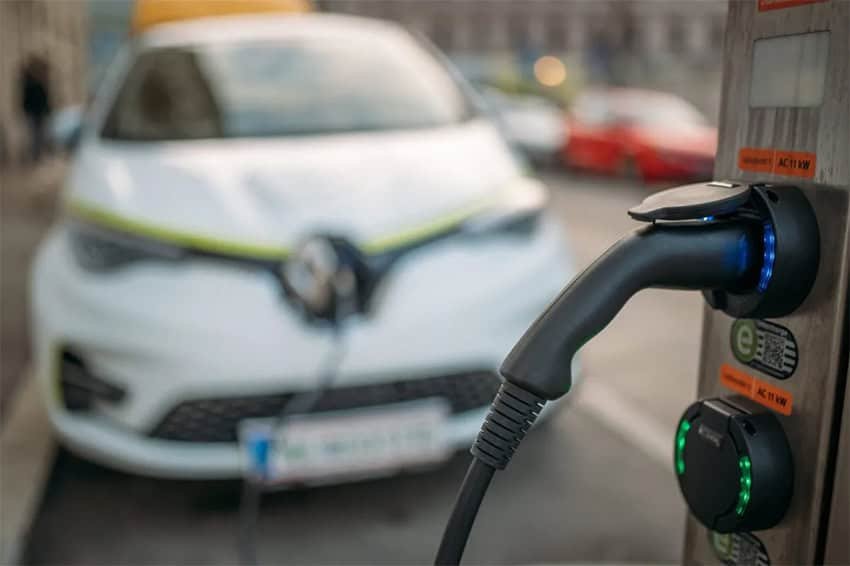
Invisible Urban Charging Inc. (IUC) and ATX Smart Mobility, LLC will manage an investment to address one of the biggest obstacles to the adoption of electric vehicles in Mexico: the lack of charging stations.
Jake Bezzant, IUC’s CEO, met with Eduardo Kuri, CEO of ATX Smart Mobility, in Mexico City this week to finalize the partnership which he described as “an evolutionary step” aligned with President Claudia Sheinbaum’s Plan México.
According to the two companies, the project will begin with an immediate rollout in the Bajío region in central Mexico, “marking a milestone in the energy transition of Mexican public and commercial transportation.”
In a statement on Linked In, IUC said it will work with ATX “to fund new electromobility infrastructure, starting with 140 electric buses and 38 dual-port IUC DC fast chargers.”
According to Bloomberg News, IUC will “provide funding for charger installations … hardware sourcing and servicing, a software platform for site owners and an app for drivers.”
For its part, ATX will use an AI-driven platform to provide technology that will optimize routes and energy use within public transport systems.

“This isn’t just about chargers or buses,” ATX’s Kuri said in a statement. “It’s about building the full ecosystem — energy generation, charging infrastructure, electric fleets, public transit and AutoTren — in a way that makes the transition to electric mobility inevitable, not optional.”
Kuri believes Mexico “has the fundamentals: high public transit adoption, a growing logistics sector, and increasing international investor confidence.”
The cities that will benefit from the initial arrangement are Querétaro in the Bajío, as well as Puebla and the Mexico City Metropolitan Area.
Kuri said Mexico has a ratio of 280 cars per charger, while the ideal standard for an efficient transition should be 40 cars per charger.
This gap represents the “huge opportunity” on which U.S. investors can capitalize, especially given the massive arrival of Chinese electric vehicle brands, such as BYD and Geely, which are accelerating demand among Mexican consumers.
“If we do what we need to in the fleet segment,” Bezzant said, “it will create an environment where the everyday user will have the necessary infrastructure to easily make the decision to switch to electric.”
The deal also features a partnership with real estate company CBRE Group Inc, which will select sites for EV charging hubs.
The financial backing comes from reputable sources, including DLL Group (a Rabobank subsidiary) and the U.S. firms Redaptive and EIG.
The initial US $500 million is just the beginning, with IUC saying it intends to deploy another US $3 billion in the Mexican market over the next 18 to 36 months.
With reports from Bloomberg News and El Imparcial
