
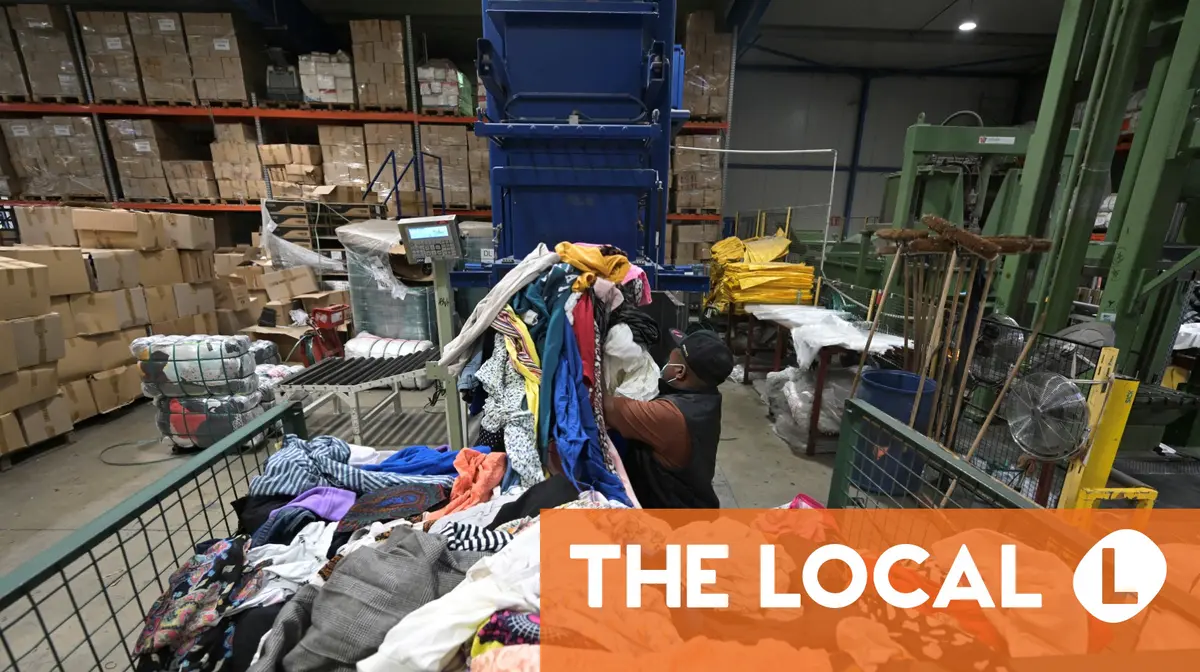
A new pilot programme launching this year will mean people in Spain will receive financial compensation for recycling their second-hand clothes in special containers.
The European Union has launched a new initiative to try and reduce fashion and textile waste, and it is using Spain for its pilot project.
The idea is for residents to receive financial compensation when they discard their used garments in special containers, similar to how it works when selling second hand clothes online.
The project is called TexMat and is funded by the Horizon Europe programme with a budget of €6.25 million. It is designed to run until March 2029.
The plan is being led by the VTT Technical Research Centre of Finland and brings together 14 partners from seven European countries, including the University of A Coruña in Spain. They will all collaborate on development, testing and validation, but the main pilot projects are being carried out in Spain and Finland.
Fast fashion continues to grow in Spain, where nearly 1 million tonnes of textile waste is discarded annually. This is equivalent to about 14 to 20 kg of used clothing per person per year.
In the European Union, textiles account for about 5 percent of the bloc’s overall environmental footprint, according to the EC Joint Research Centre.
Up until now, most second hand clothing in Spain ends up in traditional containers or directly in the bin. Part of the problem is that there aren’t as many charity shops in Spain as some other European countries, but fast fashion is also a growing problem throughout the world.
READ ALSO: All the ways to donate or sell second-hand clothes in Spain
Advertisement
Spain and the EU want to change this by introducing a direct economic incentive to people for recycling their clothes in new smart containers.
These smart containers will be capable of automatically sorting garments and will be able to distinguish whether the item can be sold second-hand or whether it should be recycled for fibres.
It will use AI-based imaging and digital product passport data to assess garment condition, materials and resale potential.
The amount users will receive for their item will depend on its quality and condition. For now, the exact amounts haven’t been made public.
The project will begin this year with two pilot containers, one in an urban environment and the other in a more rural and less populated area.
Advertisement
The initiative is part of the EU’s obligation to implement a separate collection of textile waste. It has been adopting new measures in a bid to reduce textile waste and increase the life cycle and recycling of textiles.
Improving the sustainability of the fashion industry is part of the plan to achieve a circular economy by 2050.
If the containers work, they could be extended to other parts of Spain and the rest of the EU.
Last year, textile waste collection already became mandatory in EU member states, but the hope is this initiative will improve it and help more people dispose of their old clothes properly.
