
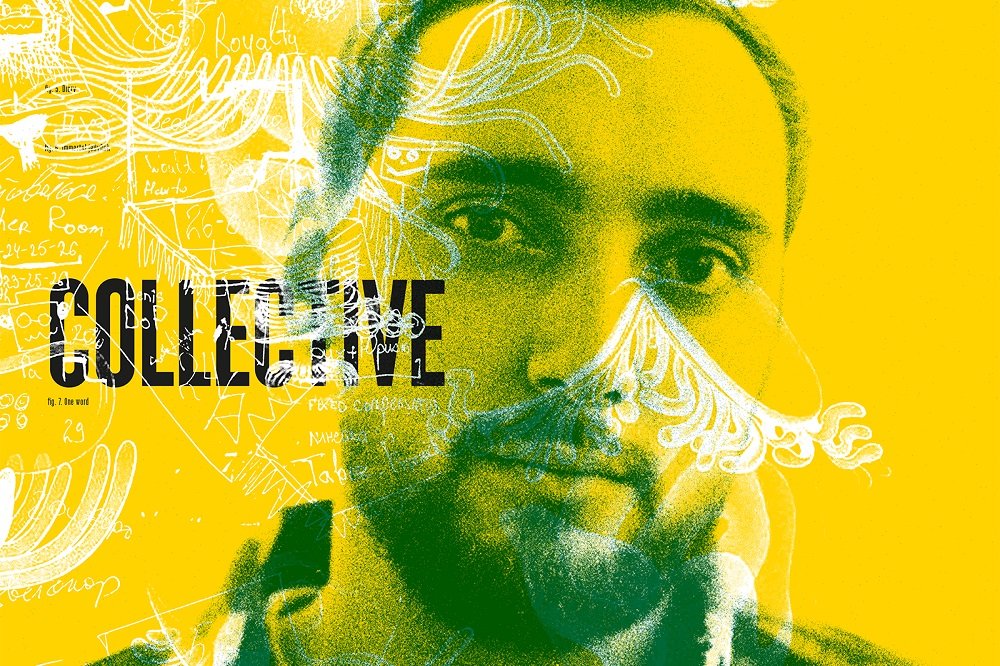
– The Ukrainian producer thinks documentary work is closely linked to activism, especially in his country today, when its culture and identity are under attack
Eugene Rachkovsky is a film producer based in Kyiv, Ukraine. He is part of the TABOR Collective and and is the CEO of the TABOR production company. A participant of EURODOC22 and ARTE Ukraine Generation, he produced Black Dog by Nikita Zarkh and Ukraine: Nightlife in Resistance by Maksym Nakonechnyi. His latest film, Militantropos [+see also:
film review
interview: Yelizaveta Smith, Alina Gor…
film profile], had its world premiere at the 57th Directors’ Fortnight at the Cannes Film Festival. An interview with him, now selected for the 2026 Emerging Producers programme (read his EP profile here).
Why do you produce documentaries? Do you see documentary cinema as an instrument of social and political change?
Eugene Rachkovsky: I produce documentaries because this is my way of exploring and understanding the world around me. It is a way of listening, learning, and staying connected to reality. For me, documentary work is closely linked to activism and to the need for cultural representation, especially today, when Ukrainian culture and identity are still under constant attack.
I do believe documentary cinema can be an instrument of social and political change, but not in a direct or propagandistic way. Its power is in creating emotional connection. A documentary allows people to enter experiences they may never live themselves and to feel close to other lives and realities.
We live in a time of endless information and images. Everything moves very fast, and it is easy to stop really feeling. Documentary cinema offers another rhythm. It invites people to slow down, to look more carefully, and to stay with complex situations. This kind of attention is already a form of resistance.
How do you achieve and maintain work-life balance and foster overall well-being?
To be honest, I don’t really have a good work-life balance. Work often becomes a way to escape from the anxiety of what is happening in the world. There is always more to do, and it can feel impossible to stop.
At the same time, I work so much because I want to stay useful. I want to keep creating and to feel that I am contributing something meaningful. Cinema gives me a sense of purpose and helps me transform melancholy into action.
I’m slowly learning that well-being is not about reaching perfect balance, but about finding ways to keep going, protect oneself from burnout, and let small moments restore you.
Where do you find audiences for your films?
Our films are mainly author-driven, so we look for audiences who are interested in personal and challenging cinema. Festivals are the main place where we meet these viewers.
Festivals are important not only for premieres, but also for dialogue. We can feel how people react, hear their questions, and understand how the film travels across different countries and cultures. Travelling with our recent film Militantropos has had a strong impact on me, especially hearing how people from different backgrounds and historical contexts interpret its meanings.
After festivals, we continue through theatrical releases, cinematheques, and special screenings with discussions. For us, it is important that films create conversation.
What projects do you have underway (including fiction films and other projects)?
Right now, my main focus is finishing the second part of the triptych The Days I Would Like to Forget. The first part, Militantropos, premiered last year at the Directors’ Fortnight, and this gave us confidence to continue developing this long-term project.
I am also working on several documentary films, including Listening to the World by Yelizaveta Smith and Missing in Action by Kateryna Holovko and Marharyta Melnychuk. Both films focus on stories of women whose lives and identities are transformed by war, loss, and absence.
In fiction, I am developing three feature films: the debut features Those Who Inherited the World by Alina Gorlova and In Vacuo by Yelizaveta Smith, and the second feature by Maksym Nakonechnyi, The Earth Is Flat, I Flew Around and I Saw It. For the latter two films, we are currently looking for production financing in order to begin shooting next year.
———-
EMERGING PRODUCERS is a leading promotional and educational project, which brings together talented European documentary film producers. The programme is organised and curated by the Ji.hlava International Documentary Film Festival.
Deadline for applications to the EMERGING PRODUCERS 2027 edition is 31st March 2026.
